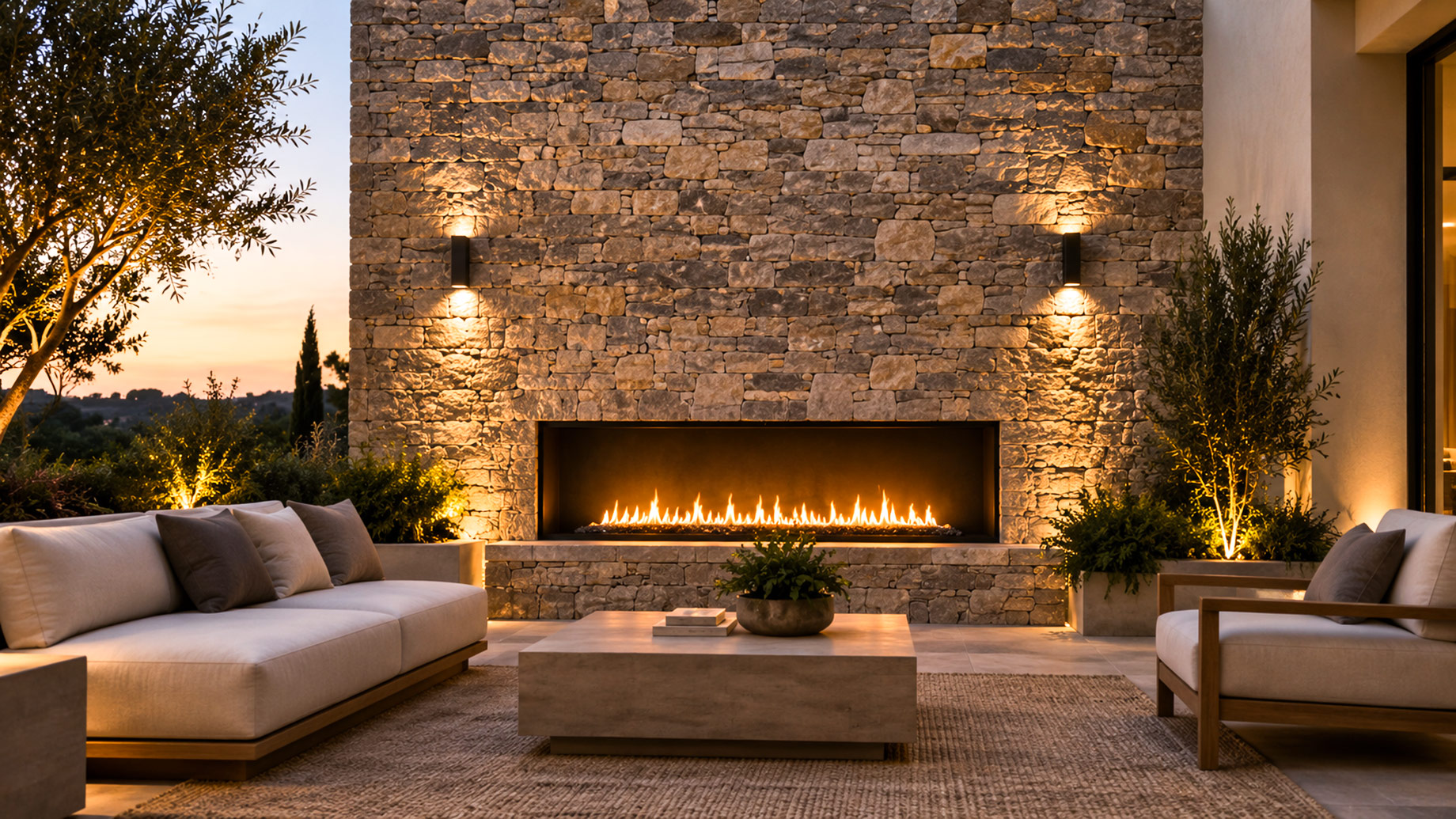
Outdoor walls do more than divide one part of a property from another. They can frame gardens, create privacy, define entertaining areas, and give an outdoor space a stronger visual identity. When planned alongside features such as a fireplace, patio, or planting scheme, the right wall design can make an otherwise simple yard feel more considered without making it overly complicated.
The choice of material, height, texture, and placement all influence how a wall works within the wider landscape. Here are six wall designs that can add structure and character to an outdoor space.
1. Natural Stone Walls
Natural stone is one of the more versatile choices for outdoor walls because every piece has its own texture, shape, and variation. A stone wall can work particularly well in gardens where the goal is to create a connection between the built structure and the surrounding landscape.
Why Choose Natural Stone?
Stone can give a wall a substantial appearance without relying on decorative details. Rougher finishes tend to suit rustic or natural gardens, while carefully cut stone can create a more structured and contemporary appearance.
Where Does a Stone Wall Work Best?
Natural stone walls can be used to frame planting areas, define pathways, separate seating zones, or create a visual boundary around an outdoor living area. Their natural variation also means they can complement greenery rather than competing with it.
2. Modern Slatted Walls
Slatted walls offer a different approach, combining privacy with an open visual structure. Timber or composite slats can be arranged vertically or horizontally depending on the desired look.
How Do Slatted Walls Create Privacy?
The spacing between the slats can be adjusted to control how much of the surrounding area remains visible. Tighter spacing creates greater privacy, while wider gaps allow more light and visibility through the structure.
What Materials Work With This Design?
Natural timber creates a warmer appearance, while composite materials can provide a more uniform finish and may require less routine maintenance. Either option can work alongside contemporary patios, gardens, and outdoor furniture.
3. Rendered Walls
Rendered walls provide a relatively simple surface that can suit modern properties. Their smooth appearance creates a neutral background for plants, lighting, furniture, and other outdoor features.
Why Use a Rendered Finish?
One advantage of rendered walls is the ability to create a consistent surface across a large area. The finish can also be selected to complement the property’s existing exterior rather than introducing another competing material.
Can Rendered Walls Be Used Around Outdoor Living Areas?
Yes. A rendered wall can form a backdrop for seating, dining, or cooking areas. It can also help visually connect an outdoor space with the architecture of the main building.
4. Brick Walls
Brick remains a practical choice for homeowners who want an outdoor wall with texture and a familiar architectural appearance. Different brick colours, laying patterns, and joint finishes can create noticeably different results.
What Makes Brick Suitable for Outdoor Walls?
Brick provides a durable masonry surface while adding visual warmth. Its smaller individual units also create a consistent pattern that can make a long wall more visually interesting.
Where Does Brick Work Well?
Brick walls can be particularly effective around patios, garden boundaries, and outdoor entertainment spaces. They can also provide a natural transition between the home’s exterior walls and the landscape.
5. Feature Walls
A feature wall can turn an otherwise ordinary part of a yard into a focal point. Rather than using the wall simply as a boundary, the design can incorporate an architectural feature such as an outdoor fireplace, seating area, lighting, or built-in storage.
Why Add a Fireplace to a Feature Wall?
A fireplace can give an outdoor wall a practical purpose while also creating a central point around which people naturally gather. The surrounding masonry can be designed to frame the fireplace and connect it with the rest of the outdoor living area.
For properties in colder climates, incorporating a cozy fireplace installation in Calgary for added warmth, allows projects to feature masonry walls that provide both a visual backdrop and a defined space for outdoor entertaining.
What Materials Can Frame a Fireplace?
Brick, natural stone, concrete, and other masonry finishes can all be used depending on the design. The important consideration is choosing materials that are appropriate for their location and exposure to heat.
6. Multi-Purpose Walls for Outdoor Living
An outdoor wall can help give a larger outdoor area a clearer sense of structure without making the space feel enclosed. Depending on the layout, it can define a seating area, create a backdrop for planting, provide some privacy, or separate different parts of the yard.
How Can a Wall Help Define an Outdoor Space?
A well-placed wall can create subtle boundaries between areas without completely separating them. Low masonry walls, partial-height structures, and feature sections can guide movement through the space while keeping the overall layout open.
These walls can also provide a useful backdrop for furniture, landscaping, lighting, and other outdoor features. The result is a space that feels more organized without relying on multiple standalone structures.
What Features Can Be Incorporated Into an Outdoor Wall?
The possibilities depend on the property’s layout and how the space is intended to be used. Some walls may include built-in seating, planters, shelving, lighting, or other functional details.
In larger outdoor living areas, a wall can also provide a natural setting for features such as long lasting pizza oven, a fireplace, or other cooking and entertaining elements without making that feature the sole focus of the design.
How Should Outdoor Wall Materials Be Chosen?
The appearance of a wall is only one consideration. Climate, moisture, maintenance, structural requirements, and the surrounding architecture all influence which material makes sense.
A natural stone wall may work well in a landscaped garden but feel out of place against a highly minimalist property. Similarly, a sleek rendered wall may complement contemporary architecture but require more maintenance if exposed to conditions that encourage staining or surface deterioration.
Can Outdoor Walls Add More Than Privacy?
Yes. Walls can help divide an outdoor space into zones without requiring complete enclosure. A low wall can separate a patio from a garden, while a taller structure can provide privacy or shelter.
They can also help manage changes in elevation, create seating edges, provide backgrounds for planting, or conceal less attractive service areas. In this sense, the wall becomes part of the overall landscape rather than simply a boundary.
How Can Lighting Improve an Outdoor Wall?
Lighting can change how a wall looks after sunset and can also highlight its texture. Recessed lights, wall-mounted fixtures, or low-level landscape lighting can be used depending on the design.
Stone and brick are particularly responsive to directional lighting because shadows emphasize their texture. Smoother walls can instead provide a more uniform backdrop for subtle illumination. Lighting should be planned alongside the wall rather than added as an afterthought, especially when electrical access and fixture placement need to be incorporated into the construction.
How Do You Keep an Outdoor Wall From Looking Too Heavy?
Proportion is one of the easiest ways to prevent a wall from dominating a yard. A very tall or solid structure can make a smaller outdoor space feel enclosed, while lower walls and partially open designs can maintain a greater sense of space.
Planting can also soften the appearance. Trees, climbing plants, grasses, and garden beds can break up large surfaces without hiding the wall completely. The most effective design usually considers the wall together with everything around it, including the home’s architecture, planting, furniture, pathways, and outdoor features.
Final Thoughts
Outdoor walls can change the character of a property without requiring a complete redesign of the landscape. Natural stone, timber slats, rendered surfaces, brick, feature walls, and outdoor kitchen structures each offer a different combination of appearance and function.
The right choice depends on how the space will actually be used. A privacy wall needs different qualities from a garden boundary, while a wall surrounding a fireplace or pizza oven has additional structural and heat-related considerations.
