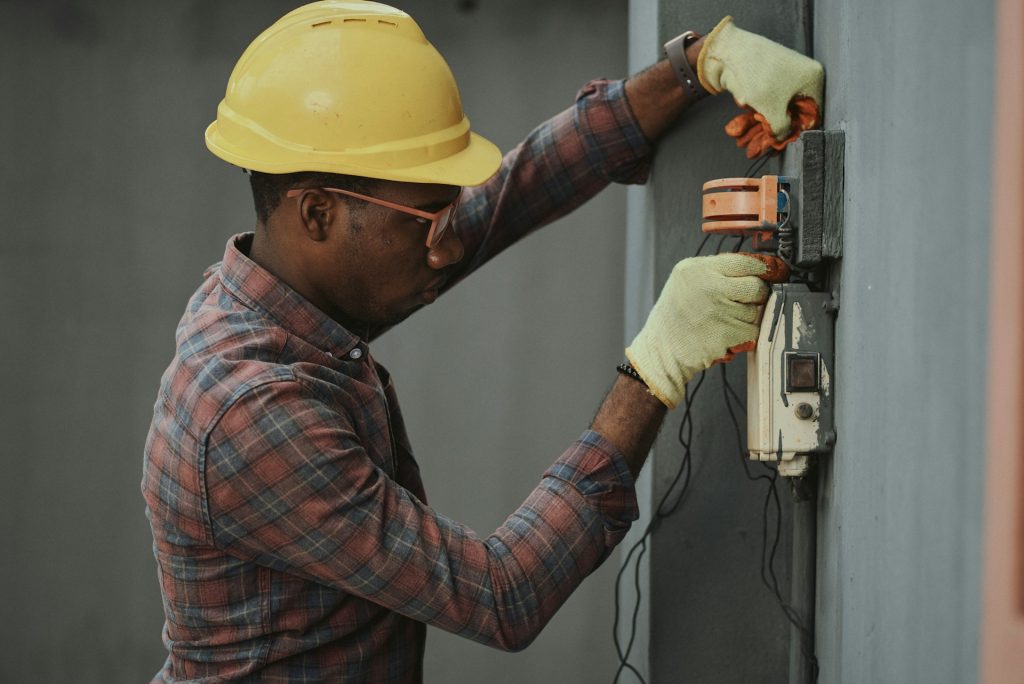
Most people wait too long before calling an electrician. They assume the problem is small. They hope it fixes itself. It does not fix itself.
Here is how to read what your home is telling you and what to do about each signal.
Step 1: Check Whether the Problem Is at One Outlet or Many
This is always the first question.
A problem at one outlet is usually a wiring issue at that specific location. A problem at multiple outlets at the same time is usually a circuit issue. A problem across many circuits is a panel issue.
What to do:
Walk through your home and test each outlet with a phone charger or a plug-in night light. Write down which outlets do not work. If only one or two fail, they likely share a circuit with a tripped GFCI outlet somewhere. Find the nearest GFCI outlet (usually in a bathroom, kitchen, or garage) and press the reset button. If the dead outlets come back, the GFCI will trip.
If the reset does not restore the outlets, the problem is in the wiring at the device location. This is when you call a Residential Electrician Golden CO.
If outlets across multiple rooms are all dead and no GFCI reset fixes them, check your panel for a tripped breaker. A tripped breaker sits in the middle position between ON and OFF. Push it fully to OFF first, then back to ON.
If the breaker trips again immediately, there is a fault on the circuit. Do not keep resetting it. Call an electrician.
Step 2: Test Whether the Problem Happens With Load or Without Load
Turn off everything on the circuit that is failing. Then turn the circuit back on.
If it holds with nothing on it but trips when you plug something in, the load is too high for the circuit. This is a capacity problem, not a wiring problem.
If it trips with nothing on it, there is a wiring fault somewhere on the circuit. This is more serious.
What the difference means:
A capacity problem has a specific solution: add a dedicated circuit for the high-draw appliance. Hair dryers, space heaters, and air fryers all draw 10 to 15 amps. Running them on a shared 15-amp circuit with other devices causes overloads.
A wiring fault needs physical inspection. The electrician opens each outlet box on the circuit and checks connection quality at every point.
Step 3: Look for These Physical Warning Signs
Walk your home and look for each of these:
Discolored outlets or switch plates. Yellowing, brown marks, or scorch marks around outlet covers mean heat has been generated at that location. This is an active warning.
Cracks in outlet covers. A cracked cover exposes the wiring inside the box. This is a safety hazard in any room, and a code violation in bathrooms and kitchens.
Outlets that feel warm. Touch each outlet cover with the back of your hand. Warm means heat is building at the connection. Hot means stop using it now.
Outlets that spark when you plug something in. A brief, tiny spark when plugging in is normal as the circuit completes. A large spark, a sustained spark, or a spark accompanied by a smell is not normal.
Buzzing or humming sounds from outlets or the panel. Electrical systems are silent when they are working correctly. Buzzing from a specific outlet means arcing. Buzzing from the panel means a breaker is failing.
Step 4: Check Your Panel for These Specific Issues
Open your panel box and look at each breaker.
Breakers should all be in a clean ON or OFF position. Any breaker sitting in the middle position has tripped. Reset it by pushing to OFF first, then ON.
Look at the panel brand. If the label says “Stab-Lok” or if the breakers are orange, you have a Federal Pacific Electric panel. If the breakers have a distinctive look with a thin toggle and the brand name Zinsco, you have a Zinsco panel. Both have documented reliability problems. Write down the brand and include it when you call for an inspection.
Look for double-tapped breakers. These have two wires connected to a single breaker that is rated for one wire. This is visible as two wires going into the same breaker terminal. This is a code violation in most configurations.
Firefly Electrical Services, which serves Golden and the surrounding Jefferson County area, provides panel inspections that cover each of these issues in order.
Step 5: Document What You Found Before Calling
Before you call an electrician, write down:
- Which outlets or circuits failed
- Whether the failure is constant or only happens with load
- Any physical warning signs you found (discoloration, warmth, sparking, smell)
- The brand name on your panel
- Approximately how old your home is and whether any electrical work has been done in the last ten years
This information cuts the diagnostic time. An electrician who arrives knowing these facts focuses on the most likely causes first.
Step 6: Know What to Expect During the Visit
A residential electrical service call for an unclear problem begins with the electrician asking the same questions you just documented. Then they inspect the panel, test the affected circuits with a multimeter, and open the boxes at the problem locations.
A repair for a single failed outlet takes 30 to 60 minutes. A repair that requires tracing a fault through multiple boxes takes longer. Panel replacements take four to eight hours and require coordination with the utility for meter pull.
Costs in the Golden area run:
- Outlet or switch replacement: $80 to $175 per device
- GFCI outlet installation: $100 to $200 including parts
- Dedicated circuit addition: $200 to $450 depending on distance from panel
- Panel replacement (200-amp): $2,000 to $4,500 installed
Step 7: Know Which Problems Cannot Wait
Some electrical problems need same-day attention. Not next week. Not when it is convenient.
Call immediately for:
- Burning smell from any outlet, switch, or the panel
- Visible scorch marks on any electrical device
- Sparking that is large, repeated, or accompanied by smell
- Any outlet or device that feels hot to the touch
- Power loss that cannot be explained by a tripped breaker or GFCI
These are not problems to monitor. They are problems that have already started becoming dangerous.
Key Takeaways
- Test one outlet first before concluding the problem is widespread
- Tripped breakers sit in the middle position. Push fully to OFF then ON to reset
- Federal Pacific Stab-Lok and Zinsco panels warrant professional assessment
- Double-tapped breakers are a code violation and should be corrected
- Burning smell, scorch marks, and hot outlets are same-day problems