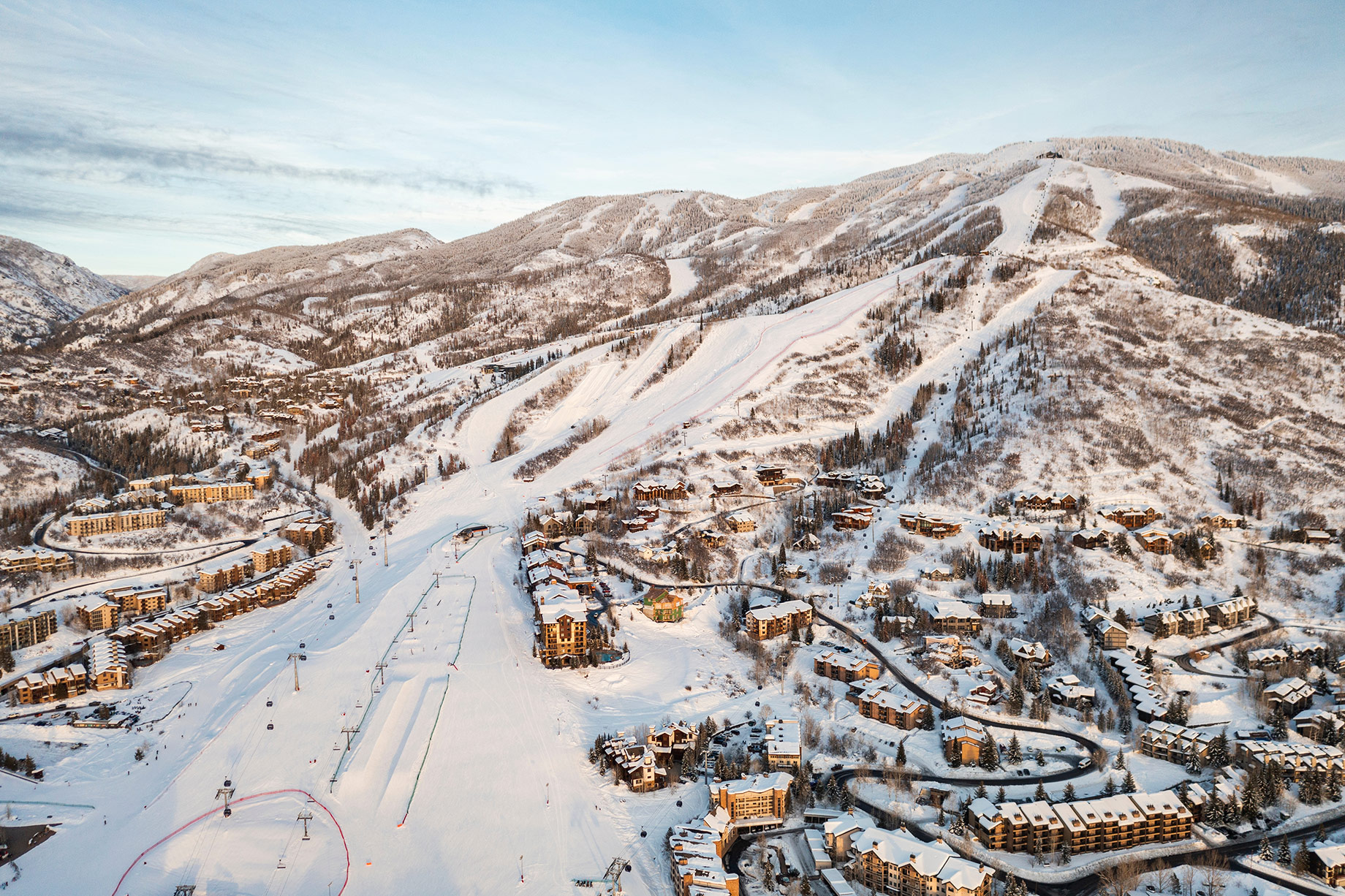
Resort markets rarely change character quickly. Inventory is thin, land is constrained, and the same houses tend to trade between the same kinds of buyers for years at a time.
Steamboat Springs has just done something more abrupt. In the first half of 2026, residences completed in 2024 or later accounted for just under 29% of every sale in the market — 76 transactions out of 283, totaling $126 million.
A year earlier, that same category represented three sales and $6.5 million, or 1.7% of the market.
That is not a trend accelerating. That is a market segment arriving.
Why the Shift Registers Nationally
The scale of the change is easier to appreciate against a national baseline.
New construction has been an unusually large share of American housing inventory in recent years, largely because existing owners locked into low mortgage rates have declined to sell. Census data recorded new single-family home sales running at a seasonally adjusted annual rate of 628,000 in June 2026, with 485,000 new houses for sale and a supply of 9.3 months.
Nationally, though, new build remains a minority of transactions. In Steamboat it briefly became close to a third of them.
Small mountain markets amplify this kind of movement. Housing unit estimates published by state demographers in Colorado are built from local permit data adjusted for construction time, which is a reminder that in counties this size, a handful of buildings reaching completion in the same quarter can reshape an entire year’s statistics.
That is precisely what happened here.
What the Steamboat Springs Market Report Shows About Delivery Timing
The mechanics matter more than the headline percentage, and this is where the local reporting is unusually candid.
Broker Jon Wade of The Steamboat Group publishes a half-year breakdown of the Steamboat Springs real estate market that separates new-build closings from the resale market rather than blending them, and the distinction turns out to be essential to reading the numbers correctly.
A single development, The Amble, accounted for 27 of those closings at roughly $3.1 million each — approximately $83.2 million. A second project, the Cottonwoods, delivered 39 attainable condominiums at an average of about $344,000.
Together those two buildings represent roughly 87% of the year-over-year increase in condominium and townhome volume.
The report’s own conclusion is the important one: strip both projects out entirely and the remaining condo and townhome market still grew, from $172.6 million to $186.5 million, with a median essentially flat. The underlying market was healthy before the new product arrived. The new product simply arrived all at once.
| First half | New-build sales | Value | Share of market |
|---|---|---|---|
| 2025 | 3 | $6.5M | 1.7% |
| 2026 | 76 | $126.0M | 28.9% |
Buildings deliver in tranches. Statistics do not.
The Contracted Pipeline Behind the Numbers
What makes the Steamboat case instructive for other resort markets is that the closings recorded so far understate committed demand considerably.
Beyond the units that closed, the report documents roughly $32 million in contracts at ROAN, a townhome development delivering into 2026 and 2027, and approximately $136 million in contracts at the Stockman — a project that will not register as closed sales until around 2030.
Those figures reflect purchasing decisions already made. They simply sit outside the reporting period.
For anyone assessing this market from the outside, that gap between contracted and closed is the single most important thing to understand. Conventional market statistics capture completed transactions, which in a development cycle means they describe decisions made eighteen months to four years earlier.
What It Means for Existing Inventory
The more interesting question is what new supply does to everything already standing, and the evidence here is mixed in a way that rewards attention.
The luxury single-family segment recorded twelve sales in both years, but volume fell 43.4%, driven almost entirely by the absence of trades above $6 million rather than by softening values. Meanwhile the high end of the condominium market strengthened, with five whole-ownership sales at One Steamboat Place averaging roughly $5.4 million.
The report raises a possibility worth taking seriously: in 2025, eight single-family homes sold between $2.775 million and $3.5 million; in 2026, none did. Three Amble closings landed squarely in that range.
Some portion of that demand may simply have moved between segments — from older detached homes to new construction within walking distance of the mountain.
That substitution effect is familiar to anyone who has watched a branded residence open in an established resort. It is rarely captured in segment-level reporting, because the buyer never appears in the statistics for the category they abandoned.
The Broader Signal
Two conclusions follow, and they generalize beyond one Colorado town.
The first is that price per square foot is a more reliable indicator than average price in markets undergoing supply delivery. Steamboat’s average price fell 5.7% while price per square foot rose 11.7% to $881 — a contradiction that dissolves entirely once the 39 attainable condominiums are accounted for.
The second is that a resort market absorbing 29% new construction without a decline in underlying values is demonstrating depth rather than fragility. Total volume rose 14.5% to $440.5 million on 283 units, up 21.5%.
Harvard research tracking two decades of residential improvement data has documented how substantially the construction and remodeling sector has expanded, with a large number of new firms entering to meet demand — capacity that eventually shows up as completed product in markets like this one.
Pricing context helps too. HUD reported a median new-home sales price of $446,300 nationally in January 2025, against an average of $510,000. Steamboat’s new-build closings at roughly $3.1 million sit in an entirely different tier, which is precisely why the local delivery schedule, rather than national construction trends, governs what happens next.
For buyers and sellers alike, the practical lesson is to ask when the next building completes before drawing conclusions from any six-month figure.
