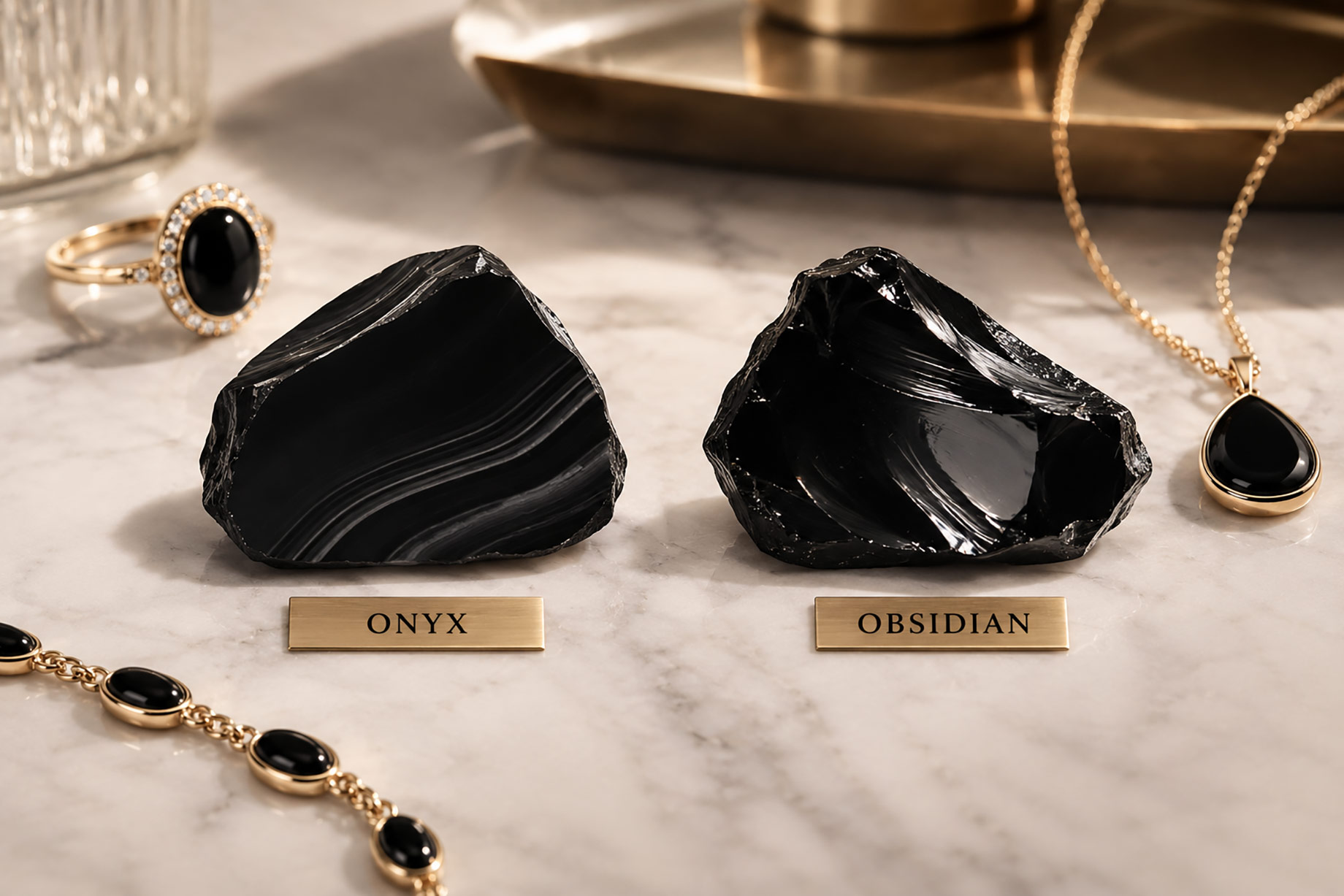
Black jewelry has shaken off its old reputation as a strictly-for-funerals color choice and settled into something far more versatile: a wardrobe staple that pairs as easily with denim as it does with an evening dress. Scroll through any street-style feed this season and you will spot the same two stones again and again — onyx and obsidian. They look similar in a thumbnail photo, but they are not the same material, and the difference matters if you are shopping for a piece that will hold up over years of wear.
Two Very Different Origins
Onyx is a banded variety of chalcedony, a form of quartz, which means it is a mineral that forms slowly underground and is prized for its density and durability. Obsidian, on the other hand, is volcanic glass — it forms almost instantly when lava cools too quickly for crystals to develop. That single fact explains almost everything else about how the two stones behave: onyx is opaque and matte-to-satin in finish, while obsidian tends to take a glassier, sometimes almost reflective polish, and varieties like “rainbow” or “snowflake” obsidian show flecks of color or pattern that pure onyx never will.
Why It Matters When You’re Shopping
For everyday jewelry — rings, bracelets, and pieces that see daily wear — hardness and durability are worth paying attention to. Onyx sits higher on the Mohs hardness scale and is generally more resistant to scratching than obsidian, which as a natural glass can chip along an edge if knocked hard enough. That does not make obsidian a poor choice; it simply means it suits statement pieces like pendants and earrings better than a ring you will bump against countertops and car doors all day. Neither stone is inherently “better,” but knowing which one you are actually buying helps you choose the right piece for how you plan to wear it.
Jewelry brand AJLuxe put together a helpful side-by-side breakdown covering the real differences between onyx and obsidian jewelry, including care tips, how to spot which stone you are looking at, and which pieces tend to hold up best over time.
Styling Black Gemstones This Season
Both stones are having a moment in minimalist, mixed-metal settings — think a slim onyx band stacked next to gold rings, or a single obsidian pendant worn close to the collarbone rather than as a heavy statement piece. Because both stones read as a true, deep black rather than a colored gemstone, they pair unusually well with almost any other jewelry in your rotation; you are not trying to match undertones the way you would with, say, a sapphire or an emerald. That neutrality is a big part of why black gemstone jewelry has moved from occasion-only pieces into everyday rotation.
If you are building out a capsule jewelry collection for fall, a single well-made onyx or obsidian piece is a reasonable place to start — durable enough for onyx to become a daily-wear anchor, or striking enough with obsidian to work as the one statement piece that elevates a plain outfit. Either way, knowing what is actually in the setting before you buy means you will pick the stone that fits how you actually get dressed, not just the one that photographed well online.
