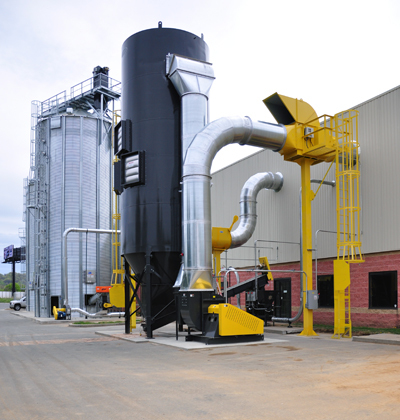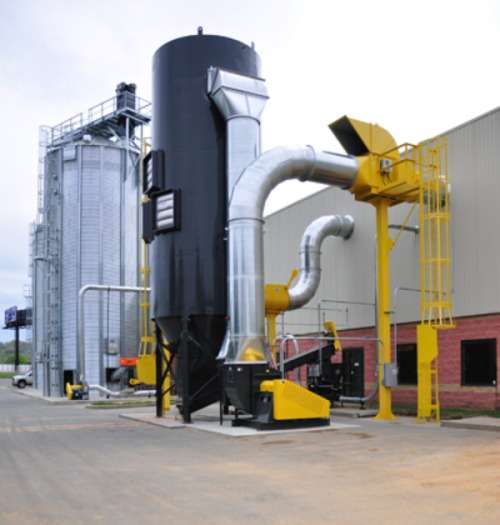
Imagine that a dust collector filter gets clogged in the middle of the shift, fine particulate is going through the media, and a clipboard in the hand of an inspector is unintentionally turned into the most frightening thing in the facility.
This situation occurs more frequently in plants nationwide than plant managers would care to acknowledge. The level of production is lower, maintenance budgets are reduced, and the goals in air quality get more difficult to achieve with each shift.
Most of these headaches are solved simultaneously by a properly sized baghouse dust collector that traps the particulate prior to it becoming an air quality or safety issue on the floor. This technology continues to outperform carriage filters, cyclones, wet scrubbers, and electrostatic precipitators, year after year, in a wide variety of industries. But how?
Here are five reasons why baghouse systems always emerge as the winner.
1. Higher Filtration Efficiency Than Many Alternatives
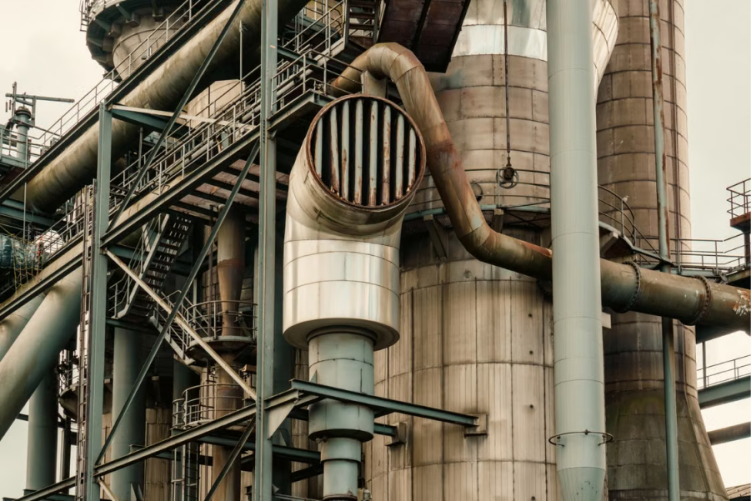
Unlike other systems that regularly miss the fine particulate, baghouse dust collectors catch it, and that is why so many facilities turn to this technology to reach their air quality goals.
Fabric filtration forces dust-filled air through woven or felted bags, and the more the particles accumulate on the surface of the bag, the sharper the filtration becomes rather than weaker. Due to this self-reinforcing effect, baghouses collect particles less than one micron, a size at which cyclones and settling chambers lose most of their hold.
A few points worth noting:
- In ideal conditions, electrostatic precipitators can achieve that fineness; however, performance varies with dust resistivity.
- Those shifts may be observed with variations of material and operating conditions.
- Properly designed baghouses can provide more consistent performance across those variations.
2. Better Handling of Heavy Dust Loads
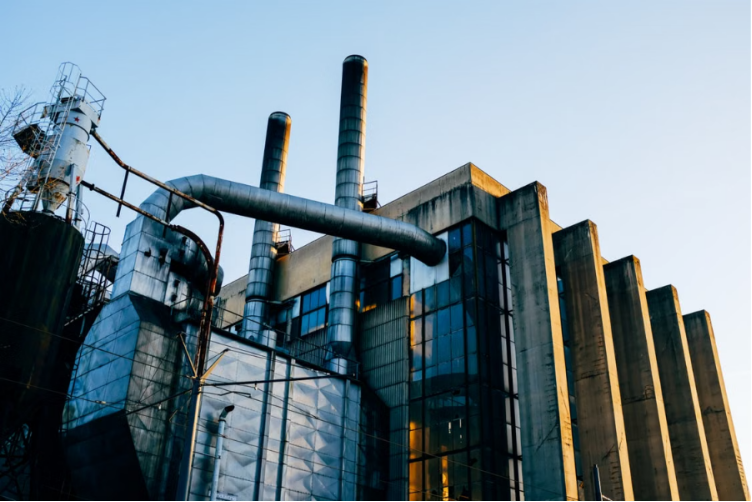
Not all dust streams act in a similar fashion, and that is where baghouses differ from the pack.
Wet scrubbers fail as soon as the concentration of particles increases, and cartridge filters blind very fast when fed abrasive dust. Baghouse media, however, can withstand heavy grain loading due to the much greater surface available on the bags than on compact cartridge elements.
The following maintains throughput constant:
- Pulse-jet cleaning cycles rap the deposited cake off at a programmed time.
- Capacity can sustain even peak production runs.
This versatility is the reason baghouses are found everywhere, in woodworking shops, cement plants, grain elevators, and industries with various dust properties, yet a common requirement of reliable capture.
3. Lower Long-Term Operating Costs Than Cartridge and Scrubber Systems
Initial price tags are not the only part of the story, and there are enough facilities to realize this after opting to use a cheaper filtration alternative. Replacing the bags is simple and cheap when compared to cartridge swaps, and pulse-jet cleaning requires little compressed air when adjusted appropriately.
Scrubbers carry a cost baghouse simply don’t have:
- Constant attraction of water and chemical additives.
- Wastewater treatment not seen by cartridge and bag systems.
This is not guaranteed because pressure drops still depend on design and type of dust.
Nevertheless, baghouses tend to stay out of the most expensive cost curve. Such savings contribute to a larger total-cost gap than alternatives within themselves over a multi-year service life.
4. More Consistent Compliance Performance
There has been an increase in regulatory pressure regarding industrial dust, and baghouses have an advantage: well-installed and well-maintained baghouses are likely to provide stable performance in different conditions, which is rewarded by compliance reporting. Dust type, humidity, filter media, and cleaning cycles are still important to performance, and maintenance can be an issue. Consider the alternatives:
- This causes the loss of efficiency of precipitators due to the movement of dust resistivity.
- Most wet scrubbers do not collect submicron particulate as well as fabric filtration.
- They both can lose their tracks when there is nothing on the floor that has changed.
Baghouses are less likely to take that swing, relaxing the requirements of the Clean Air Act and the National Ambient Air Quality Standards of particulate matter. The presence of combustible dust is an urgency factor, and baghouses may be engineered with explosion venting and spark detection.
5. Greater Scalability for Growing Facilities
Production hardly remains constant, and a filtration system that cannot expand with a facility becomes a bottleneck quickly. Baghouses are easy to scale since more compartments, or bag rows, can be added to existing housing in most cases instead of completely replacing them. Modularity is important to facilities that expect new lines of equipment, increased number of shifts, or seasonal peaks of dust generation. For comparison:
- Whatever size they are assembled, cyclones strike a severe limit on fine-particle capture.
- Scrubbers require scaling up water and wastewater handling along with capacity.
A baghouse is just a matter of expanding by section.
The Bottom Line
Fine dust does not wait for the right time to create a problem, and neither do the inspectors and headaches caused by it.
Baghouse dust collectors lead the alternatives in five areas: sharper filtration, heavy load tolerance, less running expense, more consistent compliance, and expansion. Cyclones, scrubbers, and ESPs have their measure or two, but none of them compete with baghouses in all five ways, which is why this technology is widely used.