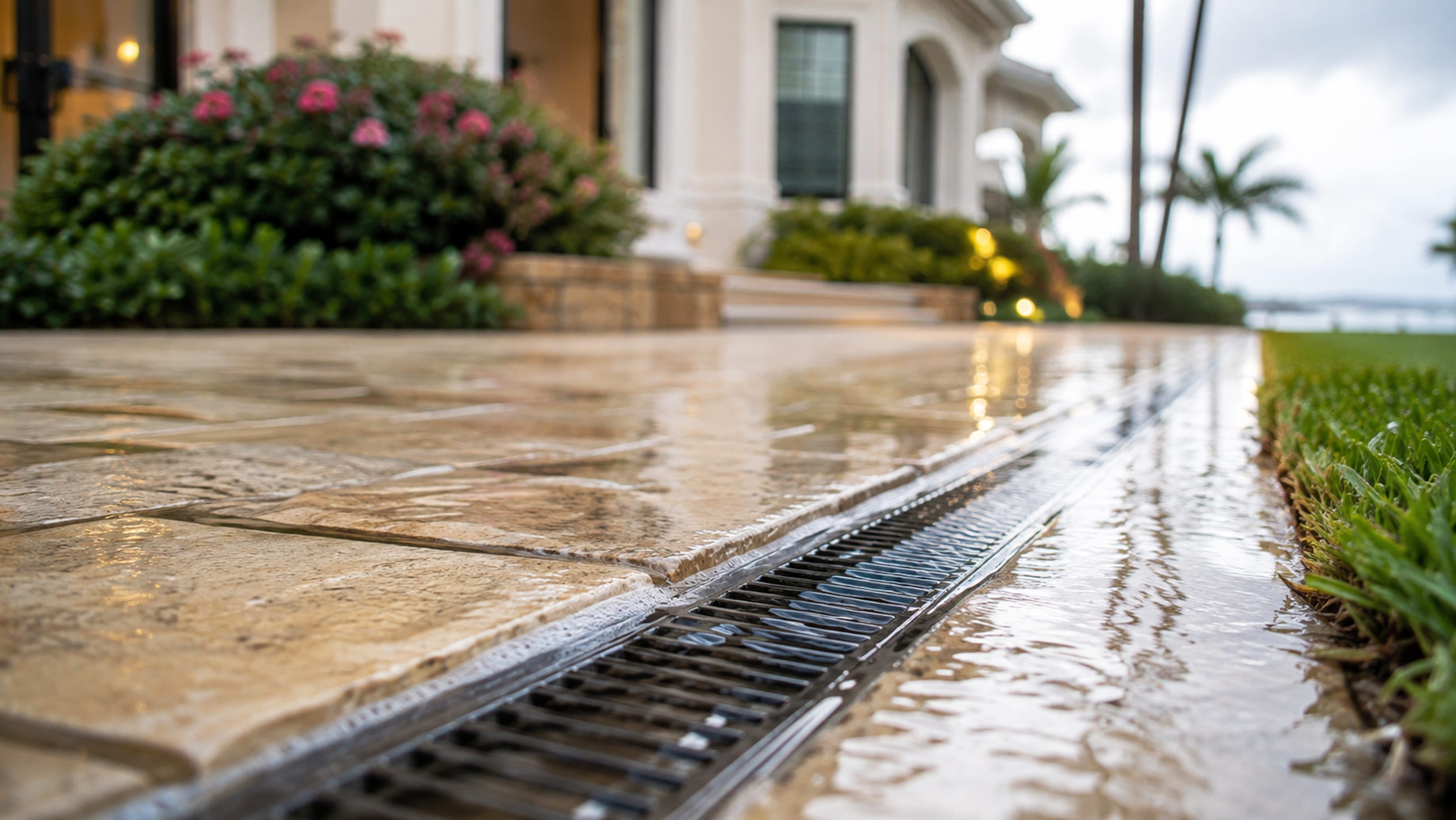
If you own, manage, or plan to buy a luxury home, drainage deserves more attention than it usually gets. In a market where curb appeal and structural integrity both carry serious financial weight, water can quietly chip away at value. In places like Tampa, where heavy rain, flat terrain, and coastal conditions collide, drainage planning isn’t a minor maintenance item. It’s part of protecting your investment, your landscape, and your peace of mind.
Tampa Homes Face a Very Specific Drainage Challenge
Not every region deals with water the same way, and Tampa has its own playbook. You’re looking at frequent storms, intense seasonal rainfall, humid conditions, and many properties built on relatively flat lots. Water doesn’t always have a natural downhill escape route.
That local context matters when evaluating water drainage services in Tampa. A solution that works in a hilly suburb elsewhere may fall apart in a Gulf Coast setting where saturation happens fast and runoff can linger.
For example, a Tampa property may need a more coordinated system that combines:
- French drains
- Catch basins
- Downspout extensions
- Swales or regrading
- Sump or pump-assisted drainage in low spots
Salt air, dense storms, and high water tables can complicate installation choices too. Local expertise isn’t just helpful here. It’s part of getting a system that performs when the weather gets theatrical.
Water Problems Rarely Start Where You First Notice Them
One of the most frustrating things about drainage issues is how deceptive they can be. You might spot a soggy patch near the patio, but the real problem could begin at the roofline, beneath the lawn, or along a grading slope that looks harmless.
Luxury properties often have larger roof footprints, expansive hardscaping, and elaborate landscaping. Each one changes how water moves across the property. A long paver driveway, for example, can redirect runoff straight toward the garage if the slope is off by even a little.
Water also tends to expose weak points over time, not overnight. That means you could miss early warning signs until you’re dealing with:
- Soil erosion around foundations
- Water stains on exterior walls
- Pooling near entryways
- Mulch washout in planting beds
- Basement or crawlspace moisture
By the time you’re Googling with mild panic, the issue usually has history.
Why Drainage Matters More for Luxury Real Estate
High-end homes come with premium finishes, custom outdoor spaces, and carefully designed architecture. Water doesn’t care. It will test every seam, slope, and surface without charging admission.
A drainage issue in a luxury property tends to have a bigger ripple effect because the materials and design features cost more to repair. Natural stone patios can shift. Custom landscape lighting can fail. Retaining walls can lean. Even a beautiful lawn can turn patchy when runoff repeatedly saturates one area.
There’s also the resale factor. Savvy buyers and inspectors notice drainage red flags quickly. Standing water, mildew smells, cracked hardscapes, and downspouts dumping too close to the home can make a property feel neglected, even if the interiors are immaculate.
In other words, great drainage works behind the scenes like good property management: quiet, effective, and only fully appreciated when it’s missing.
The Most Overlooked Drainage Trouble Spots Around the Home
Many property owners focus on obvious puddles, but the sneakiest drainage failures often happen in transition zones. These are the spots where one material, elevation, or feature meets another.
Pay closer attention to areas like:
- The gap between patios and foundation walls
- Downspout discharge points near planting beds
- Driveway edges where runoff cuts into turf
- Pool decks with subtle low spots
- Fence lines where neighboring runoff collects
- Courtyards that trap water with limited outlet paths
These trouble spots matter because water gains momentum from surfaces you’ve intentionally built to be smooth and durable. Pavers, concrete, and stone all help water move quickly, just not always where you want it.
A courtyard can look elegant and still behave like a shallow bowl. A decorative landscape berm can look polished and accidentally dam runoff against the house. Design and drainage need to be on speaking terms.
What Effective Drainage Planning Actually Looks Like
Good drainage planning is less about one miracle fix and more about system thinking. You’re trying to control how water is collected, redirected, absorbed, and discharged across the entire property.
That usually starts with a site evaluation during or after rain, not just on a bright day when everything looks innocent. Professionals look at slope, soil conditions, gutter output, hardscape layout, and where water leaves the property.
A practical drainage plan may include several layers working together:
- Surface drains for visible runoff
- Subsurface drains for saturated soil
- Regrading to correct flow direction
- Gutter and downspout optimization
- Drainage solutions that protect landscaping
The best plans also account for maintenance. A catch basin buried under decorative gravel still needs cleaning access. A drain line installed without enough pitch can become a very expensive underground suggestion.
Drainage and Landscaping Should Never Be Separate Conversations
A lot of expensive water problems begin with good intentions in the landscape design phase. You add fresh sod, garden beds, accent walls, or outdoor living features, and suddenly the property drains differently than it did before.
That doesn’t mean landscaping is the villain. It means layout choices need technical coordination. Trees, root systems, mulch depth, edging, and irrigation zones all influence how water behaves.
If you’re upgrading outdoor spaces, ask questions early:
- Will this patio change runoff direction?
- Could this planting bed trap water near the house?
- Is irrigation adding to an existing drainage issue?
- Will new grading affect neighboring properties?
Luxury landscaping should do more than photograph well. It should hold up after a summer storm. The nicest outdoor kitchen in the neighborhood loses some charm when guests need rain boots to reach it.
How to Spot When It’s Time to Bring in a Professional
Some drainage issues are simple maintenance fixes. Others need a proper diagnosis before they become structural or financial headaches. If a problem keeps coming back after cleanup or minor patchwork, it’s usually asking for a more serious solution.
Bring in a professional when you notice:
- Repeated pooling after normal rainfall
- Water moving toward the foundation
- Erosion near walkways or retaining walls
- Persistent wet areas killing grass or plants
- Mildew, odor, or moisture inside lower levels
- Overflow from gutters despite regular cleaning
You should also act before major renovations. Adding a pool, expanding hardscaping, or redesigning landscaping without addressing drainage can lock in problems and raise correction costs later.
Water management isn’t glamorous, but it protects nearly everything that is. If you want your home to age well, present well, and retain value, drainage needs a seat at the table long before visible damage shows up.
