Most parents have a running list of “should probably get around to that” items when it comes to their kids. Dentist appointments, updated vaccinations, that one growth spurt that means new shoes again. Swim lessons often end up on that list too, filed under “someday” rather than “now.” It seems harmless enough to push off. Kids grow up, get older, and eventually figure it out, right?
Except swimming isn’t quite like learning to ride a bike or tie shoelaces. The gap between “can’t swim” and “can swim” isn’t just inconvenient, it can be genuinely dangerous. And the risks that come with skipping or delaying swim lessons are bigger, and more common, than most parents realize.
Drowning Happens Faster Than People Think
Here’s the part that tends to catch parents off guard: drowning doesn’t look like it does in movies. There’s no dramatic splashing, no yelling for help. It’s often silent, and it can happen in under a minute, sometimes in water that’s barely deeper than a bathtub. Public health data backs this up clearly. According to the World Health Organization’s fact sheet on drowning, drowning is among the leading causes of death for children worldwide, and the risk is especially high for kids under five.
That statistic alone should reframe how parents think about swim lessons. This isn’t a nice-to-have extracurricular sitting next to piano lessons or soccer practice. It’s closer to a basic safety skill, one that directly affects whether a child can get themselves out of a dangerous situation in water.
“We Don’t Have a Pool” Isn’t the Safety Net Parents Think It Is
A lot of parents assume that if they don’t own a pool, the risk doesn’t really apply to them. That logic feels reasonable on the surface, but it doesn’t hold up in practice. Kids encounter water constantly outside their own backyard: at a friend’s birthday party, during a family vacation, at a lake cabin, even at a splash pad that has a deeper section tucked at the edge.
Water doesn’t need to be a backyard pool to be risky. It just needs to be present, and unsupervised, even for a few seconds. That’s often all it takes for a child without basic swimming skills to get into serious trouble.
Fear Grows the Longer It’s Avoided
There’s also a psychological side to delaying swim lessons that doesn’t get talked about enough. Fear of water tends to compound over time. A three-year-old who’s had some early water exposure usually adapts quickly, water still feels new and unfamiliar, but it hasn’t calcified into a full-blown fear yet. Wait until age seven or eight, and that same child may have built up years of “I don’t like this” before ever getting in a pool with an instructor.
That delayed fear response makes learning harder, not easier. Kids end up needing more time, more patience, and often more one-on-one attention to get comfortable, all because the skill wasn’t introduced while it was still relatively easy to pick up.
The Physical Skills Kids Miss Out On
Skipping swim lessons isn’t only a safety issue either. Swimming builds a combination of strength, coordination, and lung control that’s genuinely hard to replicate through other activities. Kids who never learn to swim properly often miss out on:
- Breath control and the ability to stay calm while their face is submerged
- Basic self-rescue skills, like floating on their back or reaching a pool edge
- Full-body coordination that comes from moving arms and legs independently while swimming
- Comfort in open water environments, like lakes or oceans, where conditions are less predictable than a pool
None of these are skills kids naturally develop on their own. They come from repeated, structured practice, which is exactly what formal lessons are designed to provide.
Structured Lessons Make the Difference
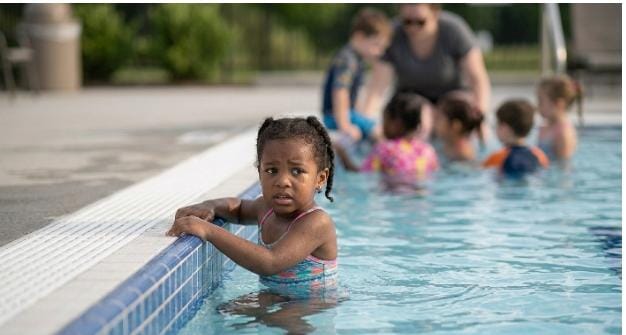
This is where enrolling in proper swim classes for kids actually changes the outcome. Structured instruction isn’t just “practice time in water.” It’s built around age-appropriate progressions, safety-first techniques, and instructors trained specifically to recognize when a child is struggling versus when they’re just getting used to something new. That distinction matters more than most parents expect, since a child flailing playfully looks a lot like a child in real distress to an untrained eye.
Programs designed specifically for young learners also tend to build confidence gradually, rather than throwing kids into deep water and hoping they figure it out. That gradual approach is part of why formal lessons tend to stick, kids aren’t just memorizing movements, they’re building genuine comfort in the water.
It’s Never Too Late, But Earlier Really Is Better
None of this is meant to guilt parents who haven’t gotten their kids into lessons yet. Life is busy, schedules are tight, and swim lessons are one of a hundred things competing for time and attention. But it’s worth being honest about the tradeoff. The longer swim lessons get pushed off, the more ground there is to make up later, both in terms of physical skill and in terms of overcoming fear that’s had time to settle in.
Water isn’t going away. Pools, lakes, oceans, even a neighbor’s backyard hot tub, kids will encounter water constantly throughout childhood, whether parents plan for it or not. Giving them the tools to handle that safely isn’t an overreaction. It’s just preparation, the same kind of preparation that goes into car seats, bike helmets, and everything else parents do without a second thought to keep their kids safe.
Swimming happens to be one of the few skills where the safety benefit and the confidence benefit arrive together. That combination is hard to find anywhere else, and it’s part of why swim lessons deserve to move up the priority list, not stay parked at the bottom of it.