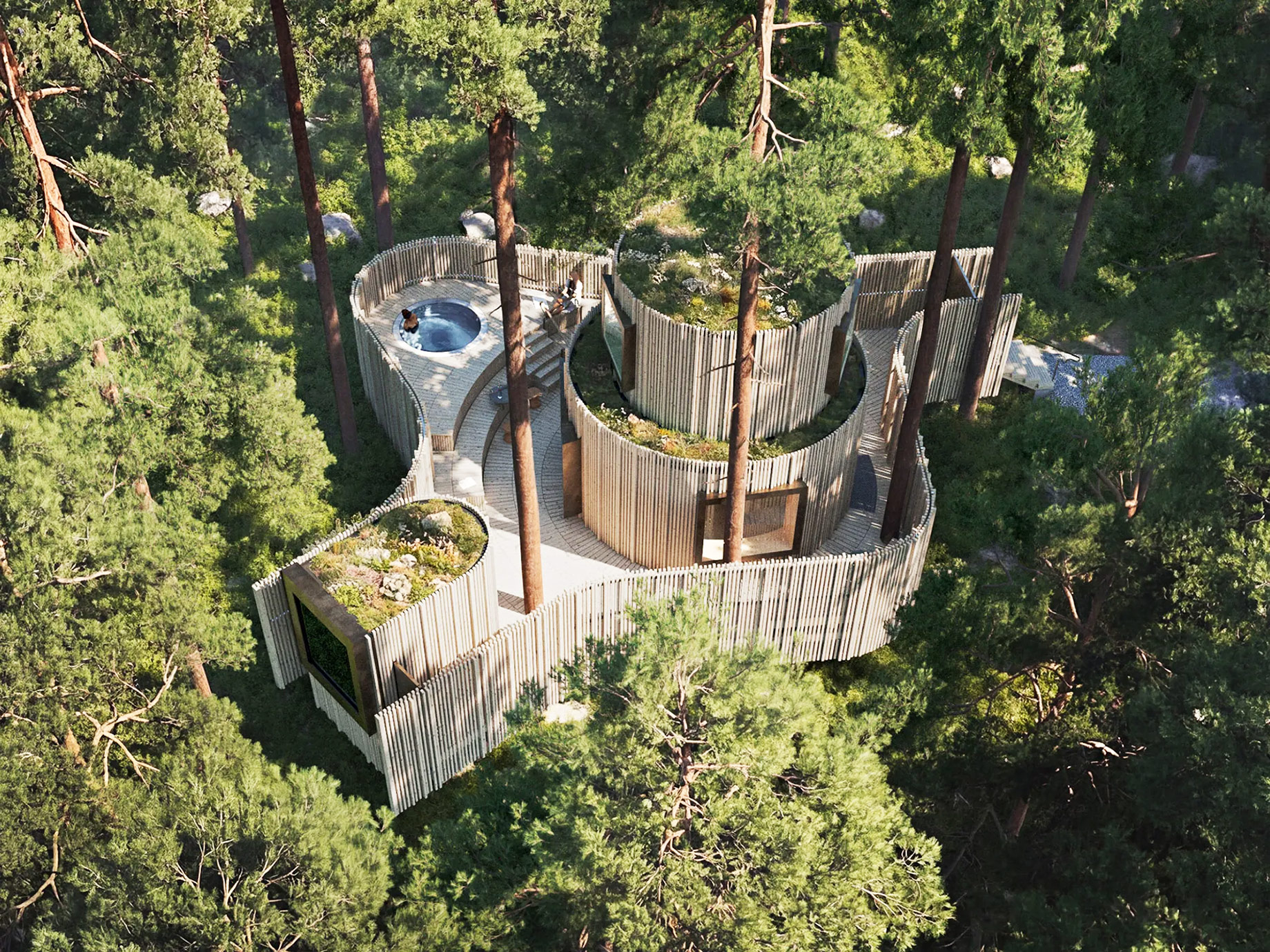
For the world’s most remarkable hotels, architecture is no longer simply the backdrop to the guest experience, it is the experience. Contemporary hotel designers are carving rooms into mountains, suspending cabins among trees and transforming former industrial sites into modern hospitality landmarks.
These properties demonstrate how modern hospitality tech solutions and imaginative architecture can connect travelers with a destination while creating an identity that extends far beyond a traditional hotel stay. From the forests of northern Sweden to the vineyards of Spain, the following hotels represent some of the most distinctive examples of modern hotel architecture in the world.
Treehotel – Harads, Sweden
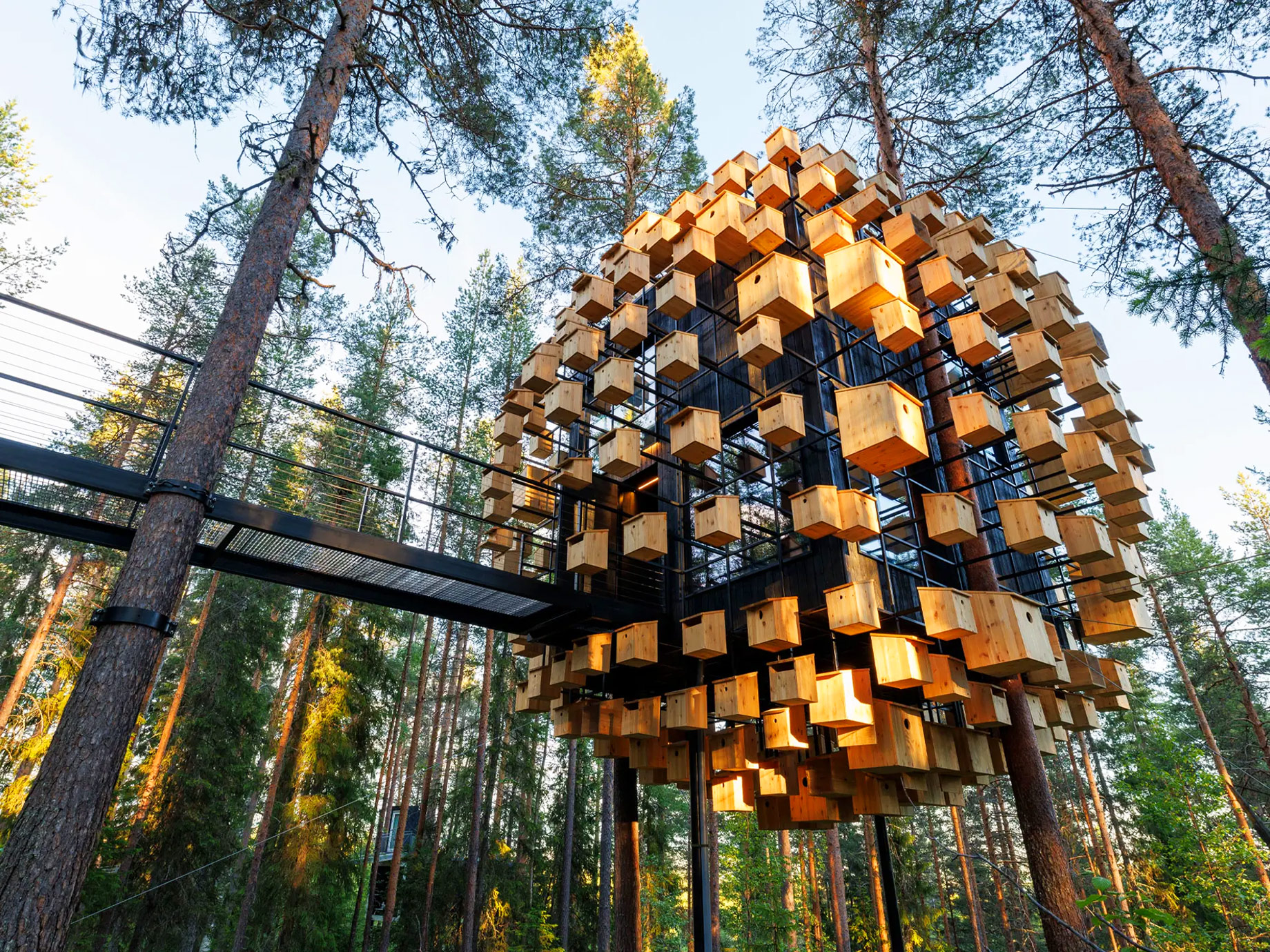
Hidden within a pine forest in Swedish Lapland, Treehotel is a collection of individually designed rooms suspended above the ground. Each structure offers a different architectural interpretation of the treehouse, including a UFO, a bird’s nest and a cabin resembling a reflective cube.
The four-meter-wide Mirrorcube is among the property’s best-known rooms. Its mirrored exterior reflects the surrounding forest, allowing the structure to appear almost invisible from certain angles. Inside, a minimalist birch interior provides a warm contrast to the futuristic façade. Rather than imposing one architectural vision on the landscape, Treehotel turns the forest into an evolving outdoor design gallery.
InterContinental Shanghai Wonderland – Shanghai, China
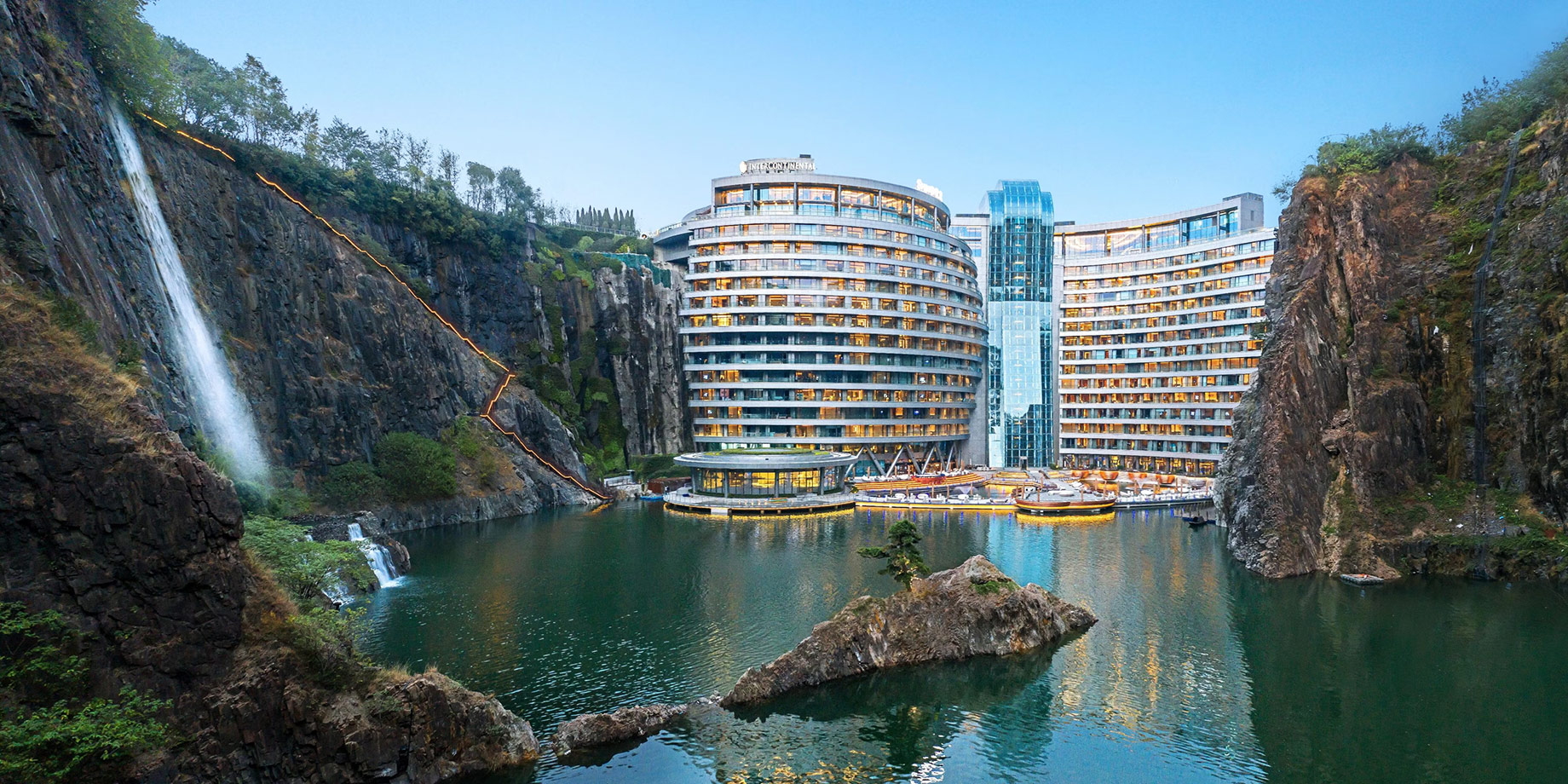
Most high-rise hotels reach toward the sky. The InterContinental Shanghai Wonderland moves in the opposite direction.
Built against the wall of an abandoned quarry, the hotel descends approximately 88 meters below ground level. Its curved glass façade follows the shape of the quarry, while the rock face, surrounding water and cascading waterfall become essential components of the hotel’s design.
Only a small part of the building rises above the surface. The remaining levels extend downward into the former industrial site, including guest accommodations positioned beside an artificial lake. The project demonstrates how complex engineering can help reclaim a disused landscape and give it an entirely new purpose.
Morpheus Hotel – Macau, China
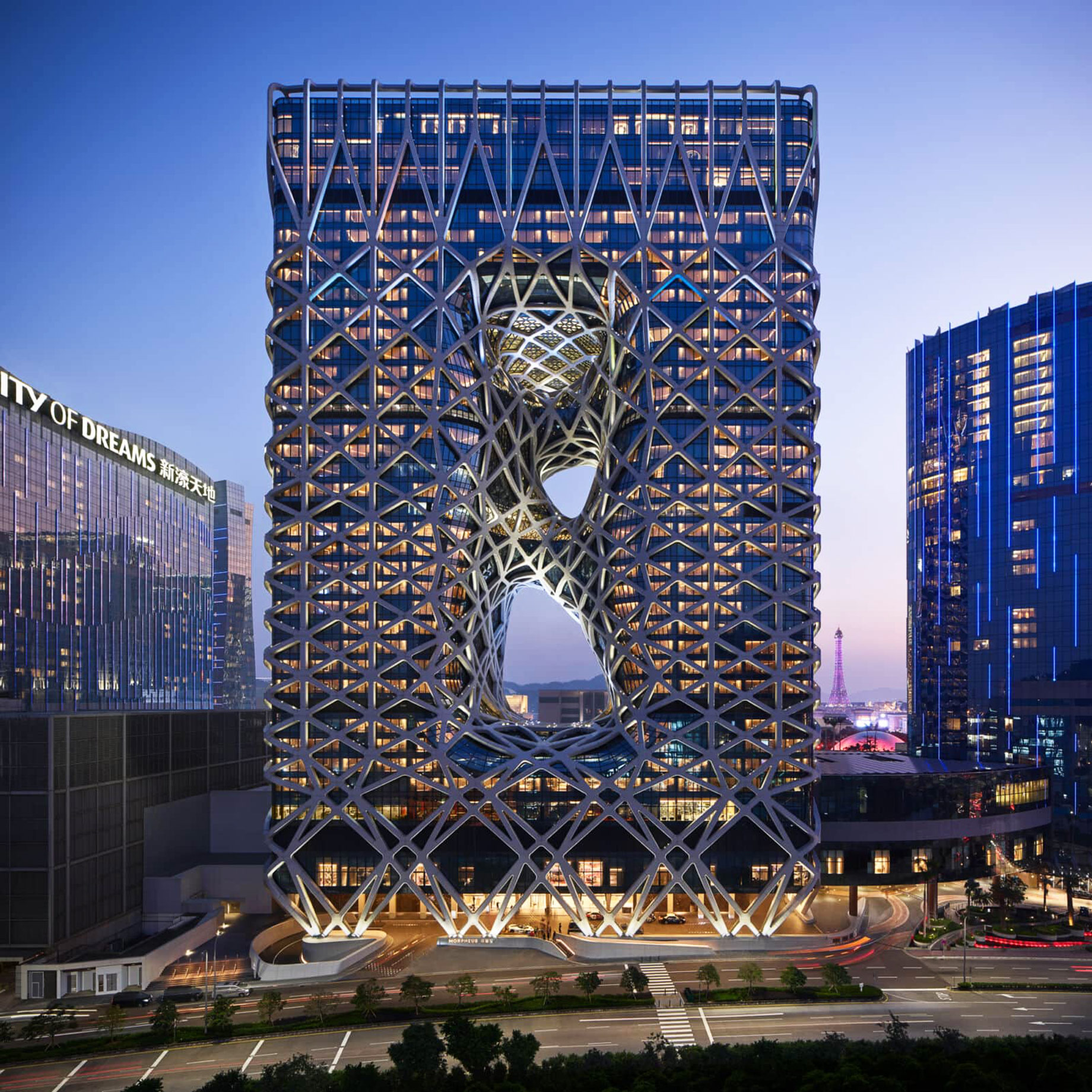
Designed by Zaha Hadid Architects, the Morpheus Hotel looks more like a futuristic sculpture than a conventional hotel tower. Its most recognizable feature is a free-form structural exoskeleton that wraps around the building’s exterior.
Three large openings pass through the tower, producing dramatic internal atriums and unexpected views between different sections of the property. By placing much of the structural support outside the building, the architects created large interior spaces with fewer supporting walls and columns.
The 770-room hotel illustrates how computational design and advanced construction methods are expanding the possibilities of hospitality architecture.
Hotel Marqués de Riscal – Elciego, Spain
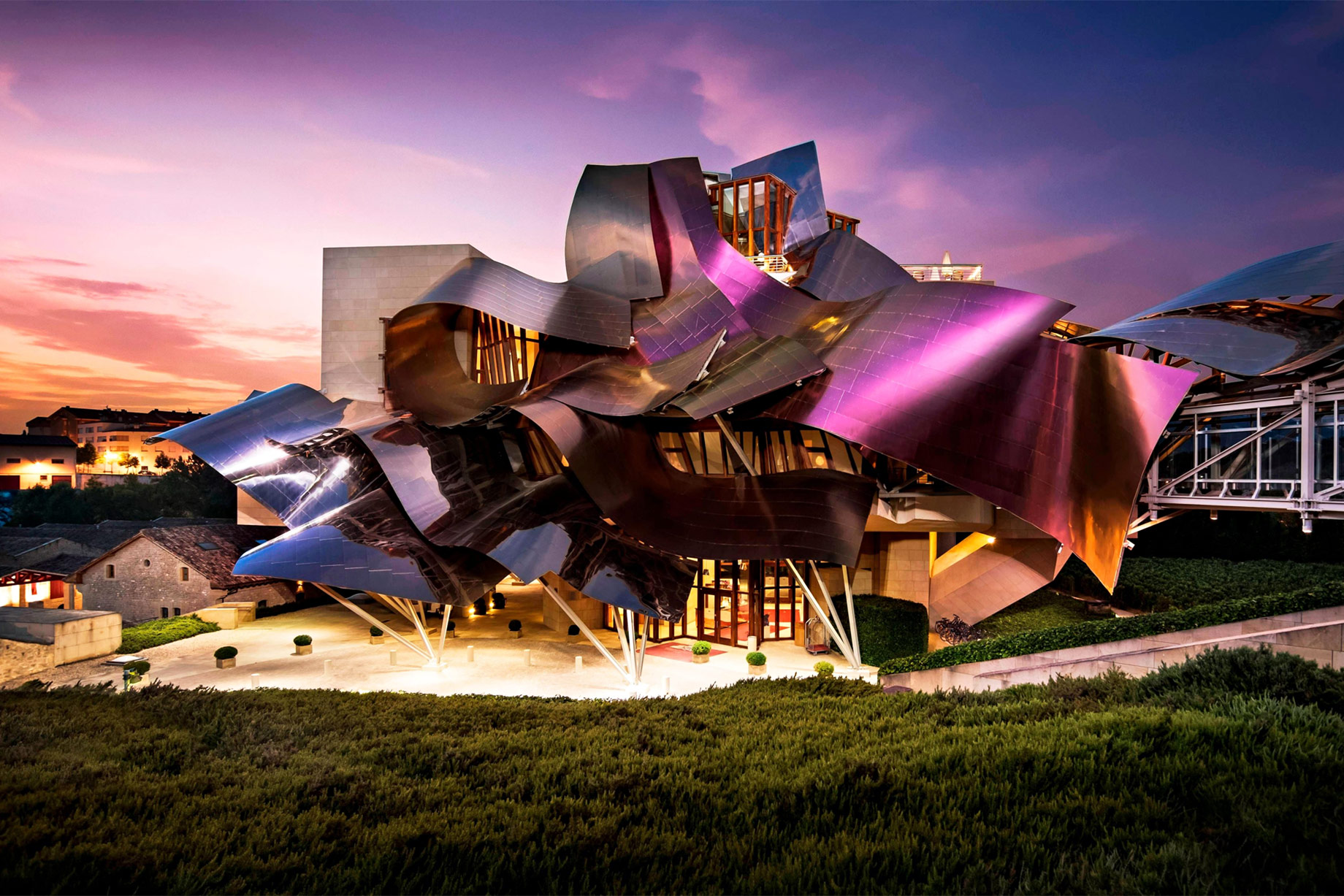
Rising above the vineyards of Rioja Alavesa, Hotel Marqués de Riscal provides a bold contemporary contrast to one of Spain’s most historic winemaking regions.
Designed by Frank Gehry, the hotel features sweeping ribbons of titanium in silver, gold and burgundy. Their colors reference the foil, wire mesh and wine traditionally associated with Marqués de Riscal bottles. The sculptural forms appear to unfold above the vineyards, giving the property a sense of movement despite its considerable scale.
The hotel proves that modern architecture does not have to reject local tradition. Instead, it can reinterpret regional history through materials, shapes and colors.
The Silo Hotel – Cape Town, South Africa
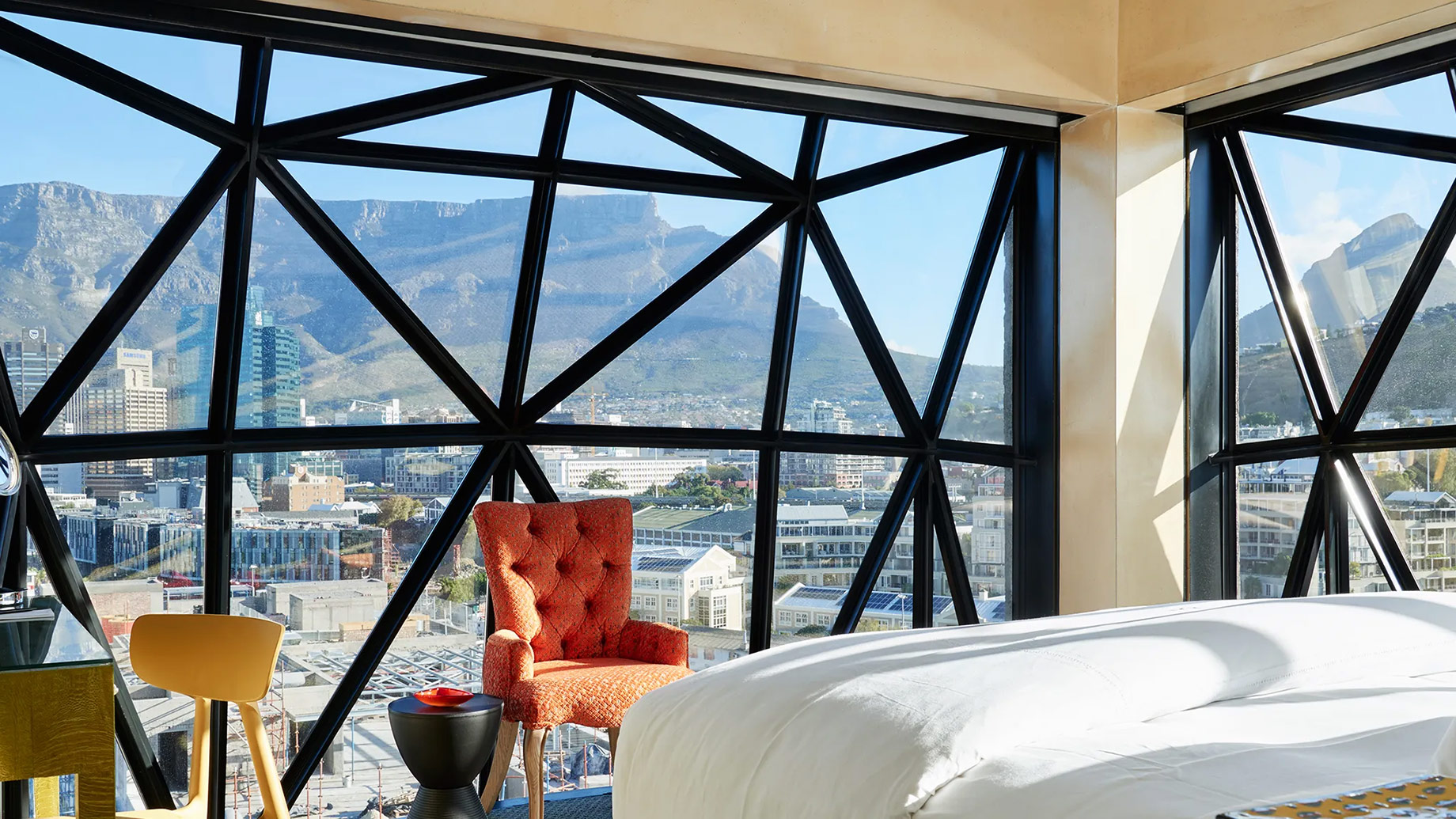
The Silo Hotel occupies the upper floors of a historic grain silo complex on Cape Town’s V&A Waterfront. Once used to store and grade maize, the industrial building has been reimagined as a hotel and the Zeitz Museum of Contemporary Art Africa.
Heatherwick Studio preserved much of the original concrete structure while introducing enormous pillowed-glass windows. These geometric windows project outward from the façade, bringing natural light into the rooms and providing expansive views of Cape Town, Table Mountain and the Atlantic Ocean.
The transformation shows how adaptive reuse can preserve a building’s industrial character while preparing it for an entirely different future.
Juvet Landscape Hotel – Valldal, Norway
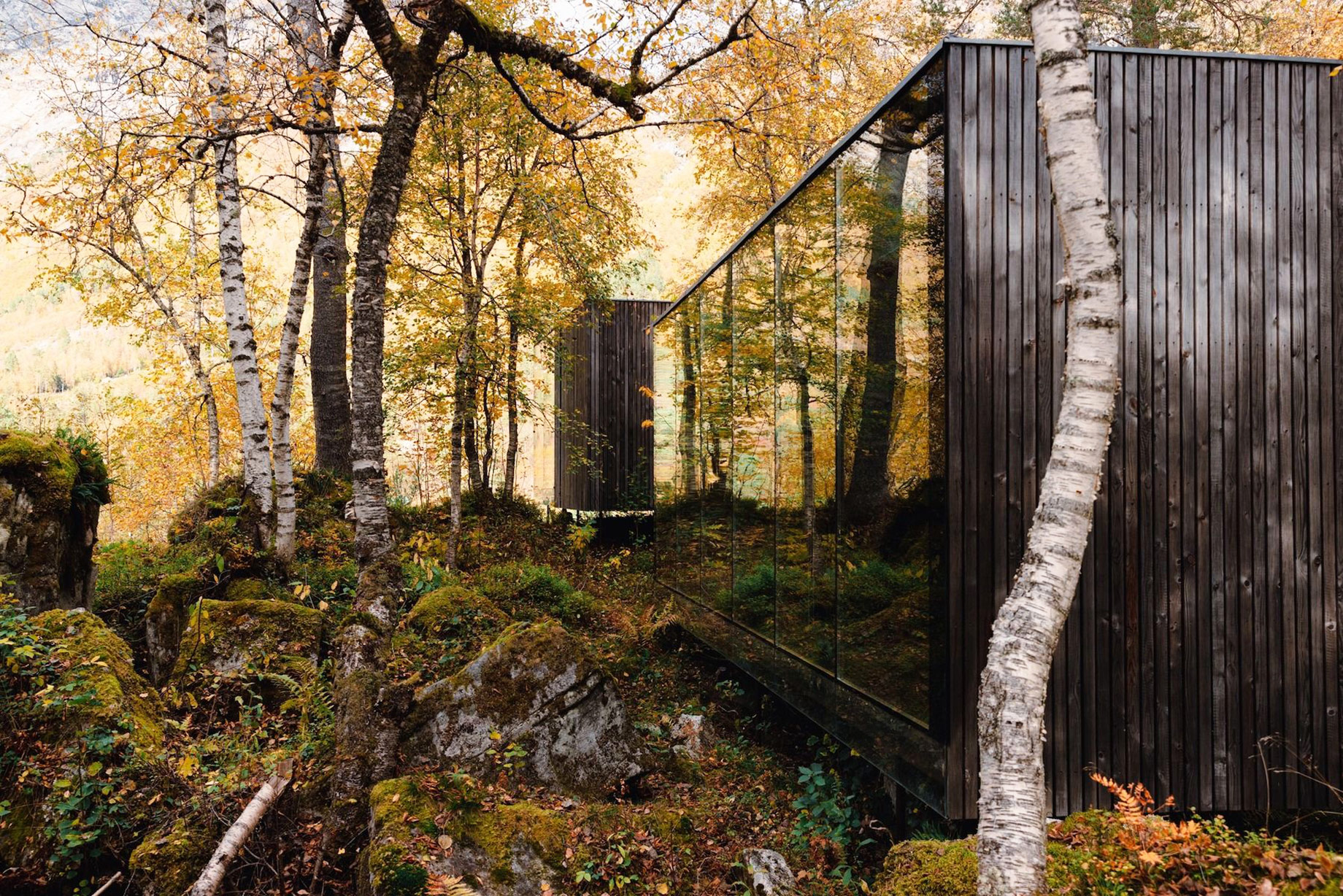
At Juvet Landscape Hotel, the surrounding wilderness receives as much attention as the buildings themselves. Designed by Jensen & Skodvin Architects, its compact timber rooms are positioned individually across a dramatic Norwegian landscape.
Each Landscape Room includes a large glass wall framing a unique view of the forest, river or mountains. The irregular placement of the structures minimizes their physical impact and avoids the regimented appearance of a conventional hotel complex.
Juvet’s architecture encourages guests to observe rather than merely occupy the landscape. The rooms feel like carefully positioned viewing instruments, with nature providing an ever-changing interior feature.
Desert Rock – The Red Sea, Saudi Arabia
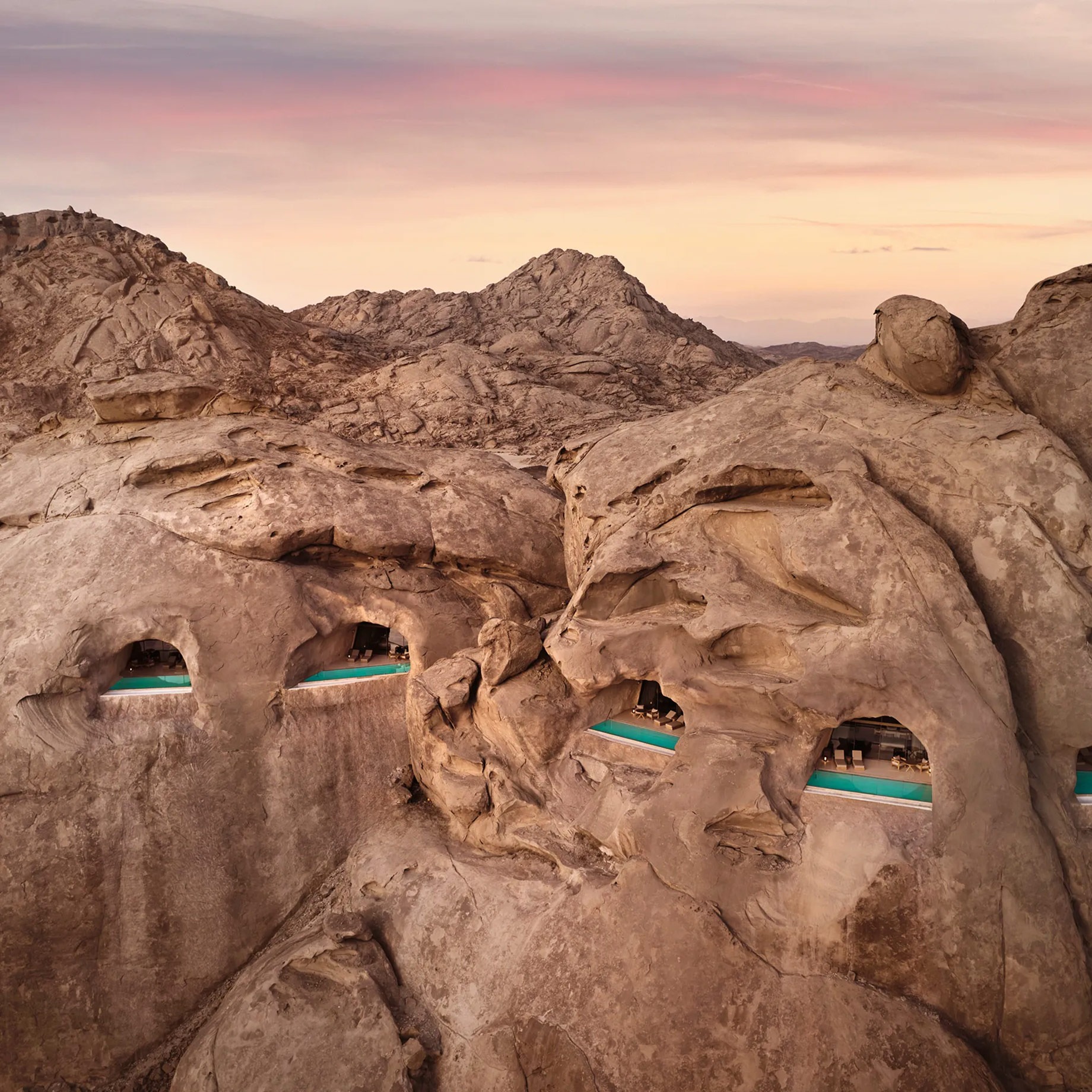
Built directly into the Hejaz Mountains, Desert Rock is one of the most ambitious recent examples of landscape-integrated hotel design. Designed by Oppenheim Architecture, the resort includes villas and suites placed within mountain crevices, along cliff edges and among ancient rock formations.
Stone excavated during construction was reused within the project, helping the buildings adopt the tones and textures of their surroundings. Instead of competing with the terrain, the architecture allows the mountain to determine the resort’s shapes, sightlines and atmosphere.
Architecture as Part of the Guest Experience
The most architecturally unique hotels do more than create visually impressive buildings. They establish a meaningful relationship between guests, the property and the surrounding destination.
Whether preserving an industrial landmark, disappearing into a forest or descending into the earth, these hotels demonstrate how thoughtful design can transform accommodation into an experience travelers remember long after checkout.
