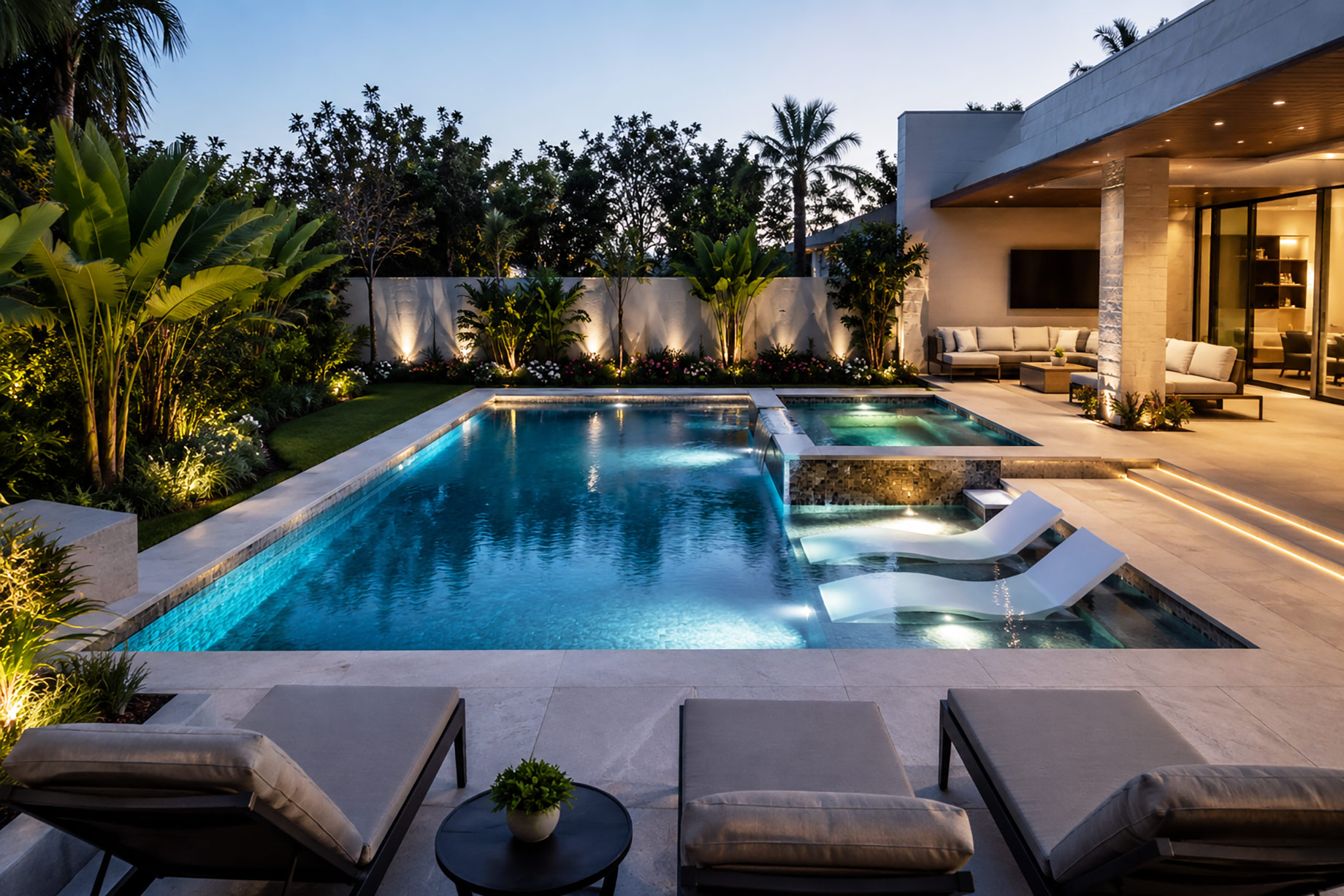
An older pool does not always need to be demolished. If the shell is stable, the layout still suits the property and the underground plumbing remains serviceable, targeted renovation can improve appearance, safety and daily operation without changing the entire structure.
The correct starting point is an inspection. Replacing tile, lighting or equipment before identifying leaks and structural defects can lead to repeated work and unnecessary cost.
Inspect the Pool Before Selecting Renovation Work
A contractor should first assess the shell, interior finish, waterline tile, coping, deck, skimmers, drains, lights and equipment area. The inspection should also check for water loss, pipe leakage, previous repairs and movement around the pool structure.
Visible damage does not always identify the source of the problem. A stained or rough finish may be cosmetic, while a recurring crack could indicate shell movement. Water loss may come from plumbing, fittings, light niches, skimmers or structural damage.
Separate Surface Wear From Structural Failure
Surface problems may include discoloration, rough plaster, missing grout or worn tile. These can often be addressed through resurfacing or localized replacement once the underlying pool has been confirmed as sound.
More serious warning signs include cracks that repeatedly reopen, settlement between the pool and deck, major shell movement or extensive underground pipe failure. These conditions require investigation before cosmetic work begins.
A rebuild may be more practical when the owner wants to relocate the pool, make major changes to its depth and dimensions or replace most of the structure and plumbing. The decision should be based on written renovation and replacement scopes rather than a general cost percentage.
Upgrade Circulation and Electrical Systems Before New Finishes
Mechanical and electrical work should be planned before resurfacing or installing new paving. Otherwise, completed areas may need to be opened again to replace pipes, cables or equipment connections.
The renovation assessment should record:
- Normal filter pressure;
- Return flow at the pool inlets;
- Pump and filter condition;
- Pipe sizes and valve layout;
- Electrical protection and bonding;
- Heater and automation performance.
An old pump does not automatically need replacement. Equipment should be changed when it has a defined problem, such as repeated failure, excessive noise, unavailable parts, poor capacity or limited control.
A new pump cannot correct every circulation issue. If debris always settles in one section, the cause may be inlet placement, restricted plumbing or a blocked filter rather than insufficient operating time.
Renew the Surface, Waterline and Coping as One System
Resurfacing can address worn texture, staining and general deterioration without changing the pool shell. The selected system must be compatible with the existing construction, preparation method and water treatment.
Plaster, aggregate finishes, fiberglass coatings and vinyl liners have different installation and repair requirements. The contractor should explain how the old surface will be prepared and how cracks or hollow areas will be treated before the new material is applied.
Waterline tile and coping can also change the appearance of an older pool. These materials should be selected together so that joints, movement and drainage are properly managed. Slip resistance, chemical exposure and local freeze conditions are more important than choosing the latest color trend.
Correct Safety and Access Problems During Renovation
Modernisation should improve practical use, not only appearance. Damaged deck sections, poor drainage, slippery surfaces and difficult entry points should be included in the renovation scope.
Possible improvements include clearer step edges, suitable handrails, better night lighting and repaired barriers. Existing light niches, transformers and wiring must be inspected before LED fixtures or automated controls are installed.
Adding a bench, wider step or shallow shelf may improve access, but these are structural changes. The contractor must confirm how the new area will circulate water and how it will be cleaned.
Modernise Cleaning Without Rebuilding the Plumbing
Some upgrades can change the maintenance process without modifying the pool structure. Independent robotic cleaning is one example because it does not require a new suction line, pressure line or booster pump.
The best rated robotic pool cleaners should be selected based on the pool surface, shape, depth transitions and the type of debris normally collected.
The owner should first confirm the condition of the finish, the pool shape, the depth transitions and the type of debris normally collected. Beatbot Sora 10 is a cordless option designed to work with common pool surfaces, including concrete, tile, vinyl and fiberglass, subject to the manufacturer’s compatibility requirements. It uses its own five-liter, 150-micron filter basket and is designed to clean the floor, walls, waterline and compatible shallow platforms. This allows the owner to update routine debris removal without connecting the cleaner to older suction plumbing. It can be introduced as one stage of a larger renovation while the main pump and filter continue handling circulation and water filtration. The pool surface must still be checked for loose material, sharp edges and serious cracks before use. The robot does not repair defects, test water chemistry, clean floating surface debris or replace maintenance of the hydraulic system.
Update the Pool Deck and Surrounding Area With Limited Demolition
An older pool may look dated even when the shell and equipment remain usable. In many cases, the main visual problem is the deck, coping, planting or storage around the water rather than the pool itself.
The first step is to identify which sections are actually defective. Stable paving with adequate drainage may be retained, cleaned or refinished. Cracked slabs, loose coping and areas that direct rainwater toward the pool or house require repair. Replacing every surface is unnecessary when only part of the deck has failed.
New paving should be selected for wet slip resistance, heat exposure and compatibility with the existing base. A material that looks suitable in a showroom may become uncomfortable in direct sun or difficult to clean around the pool. Samples should be reviewed outdoors and, where possible, tested when wet.
The renovation should also improve movement around the pool. Furniture, planters and storage units should not block access to skimmers, equipment covers or the pool edge. Narrow routes may be widened locally without rebuilding the entire deck.
Coordinate Deck Work With Underground Repairs
Plumbing, electrical and drainage work should be completed before new paving is installed. If a pressure test identifies a leaking return line, repairing it after the deck has been finished will create unnecessary demolition.
The contractor should mark and document underground pipe routes, electrical conduits and access points. This information helps with future repairs and reduces the risk of cutting into a service line during landscaping or fence installation.
Drainage must also be reviewed. Water should move away from the pool structure, equipment area and house. Low points that hold standing water may require local regrading or additional drains rather than complete deck replacement.
Simplify Landscaping Near the Water
Mature landscaping does not need to be removed only because the pool is being modernised. The priority is to control plants that create repeated maintenance problems.
Trees and shrubs that drop large amounts of leaves, flowers, fruit or pollen directly into the water may need pruning or selective replacement. Loose soil and gravel should be separated from the pool edge so they are not carried into the water by wind or foot traffic.
A defined storage area can also improve the appearance of the renovated pool. Hoses, brushes, covers, toys and testing equipment should have a location close enough for regular use but protected from direct sun and weather.
Plan the Renovation in Phases and Prevent Incompatible Upgrades
Pool renovation should follow the order in which systems depend on one another. Visible improvements should come after hidden defects and service requirements have been addressed.
A phased approach is useful when the total project cannot be completed at one time. The first phase should correct safety, leakage and equipment failures. Later phases can address finishes, lighting, landscaping and optional features.
| Existing problem | First action | Possible modernisation |
|---|---|---|
| Unexplained water loss | Leak detection and pressure testing | Repair plumbing or structural source before resurfacing |
| Rough or stained interior | Inspect shell and existing finish | Apply a compatible resurfacing system |
| Repeated pump or filter failure | Test flow and equipment condition | Replace only the affected components |
| Poor step visibility | Inspect lights and electrical system | Add suitable lighting or visual contrast |
| Cracked or slippery deck | Check movement and drainage | Repair damaged sections or replace the affected surface |
| Time-consuming manual vacuuming | Confirm finish and pool geometry | Add independent robotic cleaning |
| Dated appearance without defects | Identify the visible cause | Update tile, coping, paint or landscaping |
This order prevents cosmetic work from hiding unresolved problems. A new finish should not be used to cover active cracks. New controls should not be connected to electrical equipment that has not been inspected. New paving should not be installed above leaking pipes.
Complete Hidden Work Before Visible Work
A practical renovation sequence is:
- Condition survey, measurements and design decisions.
- Leak testing, structural review and electrical inspection.
- Plumbing repairs and equipment replacement.
- Structural additions such as steps, benches or shelves.
- Interior finish, waterline tile and coping.
- Deck repairs, lighting, landscaping and storage.
- Filling, equipment testing and owner handover.
The exact sequence may change with the construction method, but the basic principle remains the same: complete work that may require cutting, drilling or excavation before installing final finishes.
Structural additions should be reviewed carefully because they can affect several systems at once. A new tanning ledge changes water volume, circulation, lighting and cleaning access. A new spa connection may require separate heating, controls and hydraulic work. These changes can still be part of a renovation, but they should not be treated as simple decorative additions.
Avoid Mixing Equipment That Cannot Work Together
Modernisation often takes place over several years. Before replacing one component, the contractor should check whether it will operate correctly with the equipment that remains.
A new variable-speed pump must be compatible with the filter, pipe size and control system. New lighting may require a suitable transformer or controller. Automated valves and heaters need compatible communication and electrical capacity.
Using equipment from different manufacturers is not automatically a problem, but the control method, warranty terms and parts availability should be documented. The owner should not be left with several unrelated systems that require separate installers for basic operation.
Test the Renovated Pool Before Final Acceptance
A renovated pool should be tested as a complete operating system, not approved only because the new surface looks correct.
The contractor should verify water level, circulation, filter pressure, valve operation, lighting, heating and any automated controls. Areas that were repaired for leaks should be checked again after the pool is filled and operating.
The interior finish should be inspected for visible defects, sharp edges, hollow areas or inconsistent application. Coping and deck joints should be reviewed for movement and drainage. New handrails, barriers and covers should operate correctly.
The owner should receive written records of:
- Equipment models and serial numbers;
- Valve positions and labelled pipework;
- Normal filter pressure and operating settings;
- Warranties and installer contacts;
- Recommended maintenance intervals;
- Instructions for lighting, heating and automation;
- Care requirements for the new surface and deck.
Startup procedures are especially important after resurfacing. Some finishes require specific brushing, water balancing and treatment during the first days or weeks. The contractor should provide instructions that match the installed material rather than general pool-maintenance advice.
Conclusion: Retain the Sound Parts and Upgrade the Weak Systems
An older pool can often be modernised without complete reconstruction when the shell, location and basic layout remain suitable.
The work should begin with a condition assessment. Leaks, structural movement, unsafe electrical systems and failed plumbing must be addressed before finishes and decorative changes. Equipment should be replaced when it solves a documented operating problem, not only because a newer model is available.
Resurfacing, new waterline tile, repaired coping, improved lighting and selected deck work can update appearance without changing the pool footprint. Independent cleaning equipment can also reduce manual work without adding new suction or pressure lines.
The renovation should follow a controlled sequence. Hidden repairs come first, mechanical systems are tested before final finishes, and surrounding work is coordinated with underground services. At handover, the owner should receive operating settings, equipment information, warranties and maintenance instructions.
A successful modernisation is measured by better circulation, safer access, easier maintenance and fewer recurring faults. Rebuilding is unnecessary when the existing structure remains sound and the renovation corrects the systems that are actually limiting the pool.
