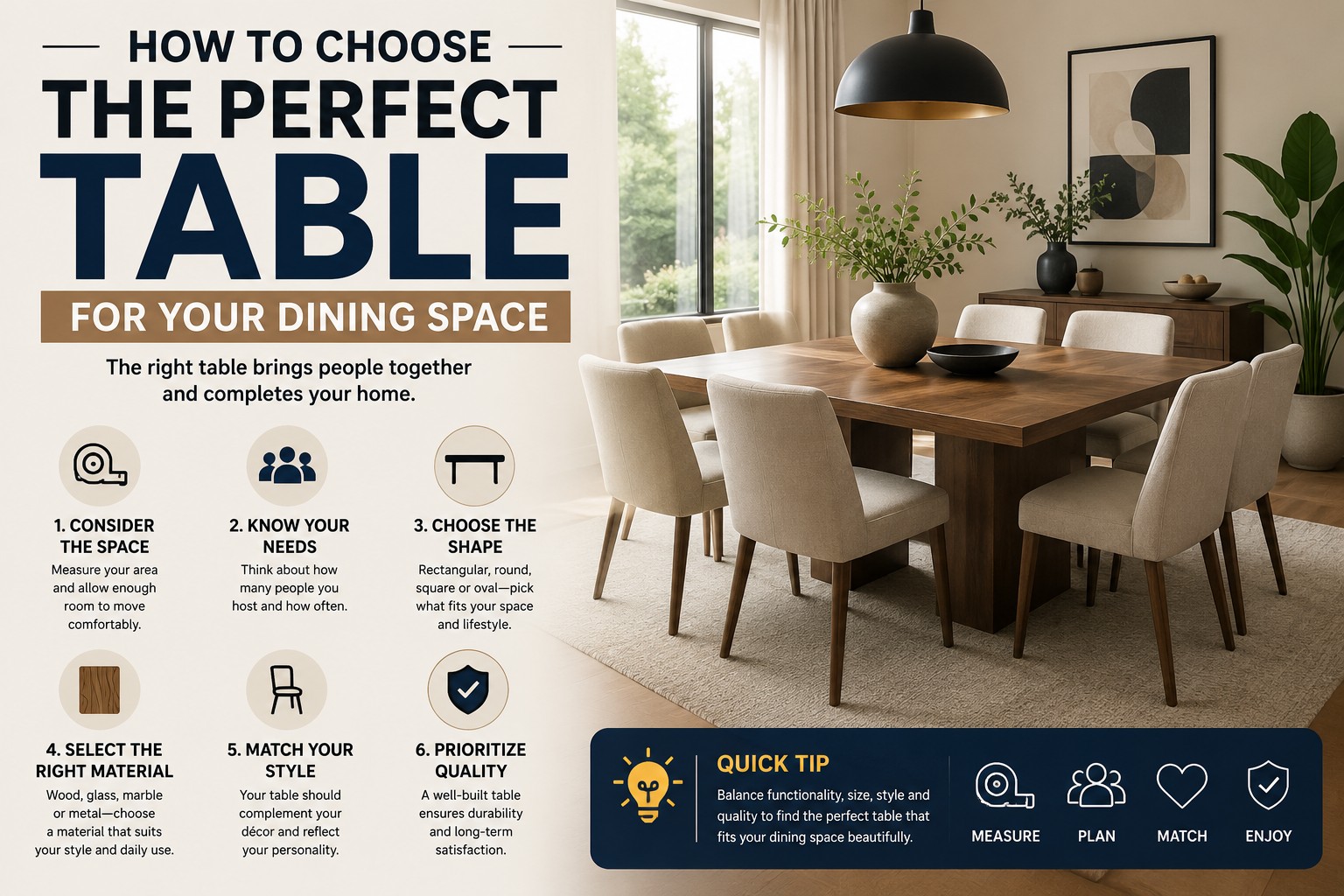
The dining table does more work than almost any other piece of furniture in a home. It holds weeknight dinners, weekend gatherings, morning coffee and everything in between. Because it serves so many purposes and stays in a room for years, choosing the right one requires more than finding a style you like. The right dining table set should fit your room comfortably, support how your household actually uses the space and hold its own visually as the room evolves around it.
Measure The Available Space Before You Look for a Dining Table
The most common mistake Canadians make when buying a dining table is falling in love with a design before checking whether it fits the room.
Start by measuring the length and width of your dining area. Then subtract at least 36 inches from each side to account for chair clearance and traffic flow. What remains is the maximum footprint your table can occupy comfortably. A table that fills a room edge to edge will feel crowded within weeks of living with it.
If your dining area opens into a kitchen or living space, clearance matters even more. People need to move through the room during meals, not around them.
How Long is a Dining Table and How Many Does It Seat
The length of a dining table depends entirely on how many people you need to seat day to day, not just on special occasions.
A table around 60 inches seats four to six people comfortably. Tables between 72 and 84 inches accommodate six to eight. Anything above 90 inches suits larger dedicated dining rooms and regular entertaining. The key measurement most buyers overlook is width. A narrow table under 32 inches will feel tight for plated meals even if the length is generous.
Plan for your everyday household first. An oversized table in a small room makes the space feel unusable, while an undersized table in a large room looks disconnected from everything around it. Browse the full dining table collection to compare dimensions against your room before committing.
Choosing the Right Dining Table Shape for Your Home
Rectangular tables are the most versatile and suit the majority of Canadian dining rooms, particularly open-plan layouts. They maximise seating capacity and work efficiently in rooms of varying proportions.
A dining room with round table layouts tends to feel more intimate. There is no head of the table, everyone sits within comfortable speaking distance and the absence of corners improves circulation in tighter rooms. Round tables suit square rooms particularly well.
Oval designs carry the seating benefits of rectangular tables with a softer visual edge, while square tables work well in compact, symmetrical rooms where the proportions are balanced on all sides.
Smart Choices for Compact and Condo Dining Spaces
Small space dining table set decisions come down to two things: proportion and flexibility.
Round pedestal tables are among the most effective choices for smaller Canadian homes because the single central base eliminates corner legs that interrupt knee room and foot traffic. Glass-topped tables help by allowing light to travel through the surface, which reduces visual weight in a compact room.
An expandable dining room table is the most practical solution for anyone who entertains occasionally but does not want a large table taking up space on an everyday basis. These designs stay compact during regular use and extend cleanly when guests arrive.
For homes where the dining area sits adjacent to a living space, nested table furniture alongside the dining zone adds surface flexibility without permanently occupying floor space. A nesting tables set placed near the dining area can handle drinks, serving dishes or extra surfaces during a gathering and tuck away completely afterward.
What Material and Finish Will Hold Up Over Time?
A contemporary dining table Canada homeowners invest in should still feel relevant five to ten years from now.
Natural wood holds up well and ages with character. Solid oak, walnut and acacia are all strong choices for Canadian households where the table sees daily use. Ceramic and stone-look surfaces are heat and scratch-resistant, which matters for a surface that handles hot dishes regularly. Veneer is a cost-effective option but quality varies. Look for thin, real wood veneer rather than thick composite versions that can peel over time.
For colour, neutral finishes in warm wood tones, matte white and dark charcoal all adapt well as a room’s decor changes over the years. Kitchen tables Canada buyers tend toward natural wood finishes because they suit the warm, layered aesthetic of most Canadian home interiors and do not date the way trend-led finishes do.
The base design matters too. A pedestal base frees up leg room and is particularly useful when maximising seating around a smaller table. Four-leg designs provide stability and suit larger tables but can feel restrictive when adding an extra chair for guests.
Find a Dining Table at Accents@Home
A dining table earns its place in a room not just when it is in use but when it is sitting empty. The right proportions, the right shape and the right material all contribute to a table that looks like it belongs rather than one that simply fits.
At Accents@Home, the dining range is built for real Canadian homes across a variety of sizes, shapes and finishes. Whether you are furnishing a compact condo dining area or a dedicated dining room that seats eight, the right table is the one you will want to gather around every day.