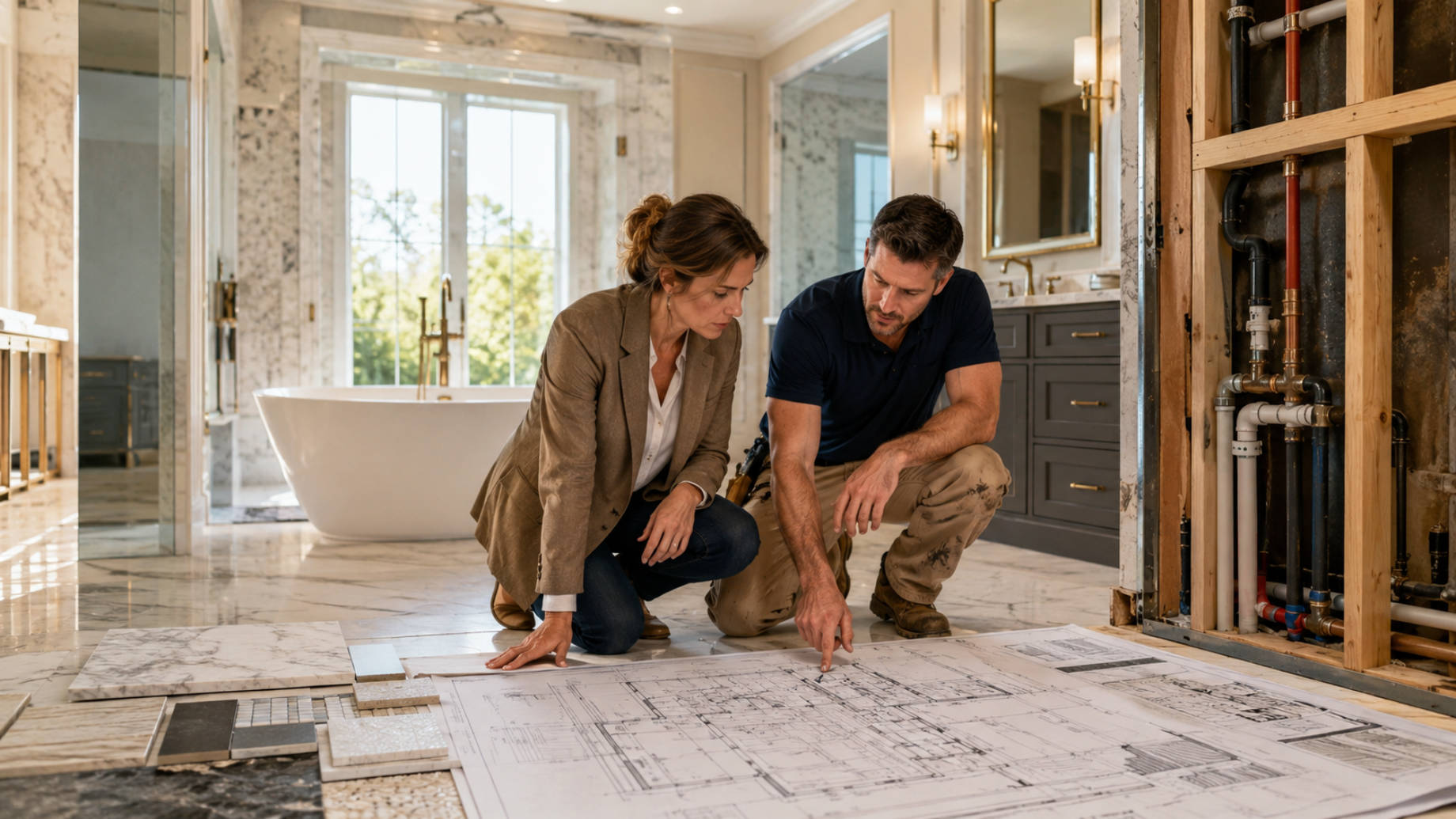
Luxury home design is often associated with marble countertops, statement lighting, custom vanities, spa-inspired bathrooms, designer kitchens, and carefully selected finishes. These details matter, of course. They are what most people notice first when they walk into a high-end home. But behind every beautiful space is a network of systems that make the home comfortable, functional, and reliable. Plumbing is one of the most important of those systems, and it should never be treated as an afterthought.
In many luxury renovations and custom builds, the cosmetic design gets most of the early attention. Homeowners may begin by choosing tiles, faucets, cabinetry, freestanding tubs, rain showers, or kitchen layouts. The visual direction becomes clear before anyone has fully considered where the water lines, drains, vents, shut-off valves, and mechanical components need to go. That can lead to expensive changes later, especially when the design calls for fixtures in locations that are difficult or impractical from a plumbing standpoint.
Plumbing planning should happen before cosmetic design is finalized. It protects the budget, supports better design decisions, reduces construction delays, and helps prevent hidden performance issues that could affect the home long after the renovation is complete.
Luxury Design Depends on What Happens Behind the Walls
The most impressive rooms in a luxury home usually depend heavily on plumbing. A kitchen with a large island sink, pot filler, built-in coffee station, prep sink, wet bar, ice maker, and hidden dishwasher drawers requires careful water supply and drainage planning. A primary bathroom with a steam shower, soaking tub, double vanity, heated floors, and multiple shower heads needs much more than attractive fixtures. Even outdoor kitchens, pool houses, guest suites, mudrooms, and laundry rooms rely on plumbing systems that must be planned properly.
The problem is that plumbing is mostly invisible once the project is finished. Pipes, drains, vents, and valves are hidden behind walls, beneath floors, inside ceilings, and within cabinetry. Because these components are not visible in the final design, it can be easy to underestimate their importance during the planning stage.
A beautiful design can quickly become frustrating if the plumbing does not support it. A shower may look stunning, but deliver weak water pressure. A kitchen island may look perfect on the floor plan, but it requires complicated drain routing. A freestanding tub may become awkward to service if access panels are not considered. These are not cosmetic problems. They are planning problems.
Fixture Placement Is Not Just a Design Choice
In high-end homes, homeowners often want rooms to feel open, symmetrical, and visually balanced. That may mean moving sinks, toilets, tubs, showers, laundry equipment, or kitchen fixtures away from their original locations. While this can create a more impressive layout, every fixture move has plumbing consequences.
Moving a toilet is often more complicated than moving a vanity because the drain line is larger and must maintain a proper slope. A shower relocated to the opposite side of a bathroom may require new supply lines, drain work, waterproofing coordination, and venting considerations. A kitchen sink moved into an island may need specific drainage solutions depending on the layout and available floor structure.
Cosmetic design may ask, “Where does this fixture look best?” Plumbing planning asks, “Can this fixture work properly there, and what needs to happen behind the scenes to support it?”
Both questions matter. The best luxury design is not created by ignoring practical limitations. It is created by understanding them early and using them to guide smarter decisions.
Early Planning Helps Control Renovation Costs
This is also why water efficiency in home design should be considered early, since thoughtful fixture placement and room planning can reduce wasted materials, improve system efficiency, and support a smoother construction process.
One of the biggest reasons to address plumbing early is cost control. Changes are usually easier and less expensive before walls are closed, floors are installed, cabinets are built, and finishes are ordered. Once a project reaches the cosmetic stage, even a small plumbing adjustment can become disruptive.
For example, moving a drain after custom tile has been installed may require demolition, waterproofing repairs, tile replacement, and schedule changes. Changing a vanity layout after cabinetry has been built may require cutting into expensive millwork. Adding a water line for a built-in coffee machine after the kitchen is nearly complete may involve opening walls or modifying cabinets.
In luxury homes, materials are often more expensive and more difficult to replace. Custom stone, imported tile, specialty flooring, and made-to-order cabinets leave less room for mistakes. A plumbing issue that might be minor in a basic renovation can become much more costly in a high-end project because of the finishes involved.
Planning the plumbing first helps reduce the risk of rework. It also gives designers, contractors, and homeowners a clearer understanding of what is possible before major design commitments are made.
Water Pressure and Performance Should Be Considered Early
Luxury fixtures often require more from a plumbing system than standard fixtures. Multiple shower heads, body sprays, large soaking tubs, steam systems, pot fillers, and high-end appliances can all affect water demand. A bathroom may look incredible on paper, but if the home’s plumbing system cannot support the chosen fixtures, the final result may disappoint.
A large rain shower with multiple outlets needs a proper water volume. A deep tub should fill in a reasonable amount of time. A luxury kitchen should support appliances without causing pressure issues elsewhere in the home. These details need to be reviewed before fixtures are purchased.
Sometimes the solution may involve upgrading supply lines, adjusting fixture selections, improving water heating capacity, or changing the layout. These decisions are much easier to make before the design is locked in. When performance is considered early, the finished home feels as good as it looks.
Drainage and Venting Can Limit Design Flexibility
Drainage is one of the least glamorous parts of home design, but it has a major impact on what can be built. Drains need a proper slope. Fixtures need venting. Wastewater needs to move efficiently and safely through the system. These requirements can affect floor heights, wall locations, ceiling spaces, and fixture placement.
This is especially important in luxury renovations where homeowners may want open-concept layouts, floating vanities, wall-mounted toilets, curbless showers, basement bars, or relocated bathrooms. These features can be done well, but they require planning.
Ignoring drainage and venting until late in the design process can force compromises. A fixture may need to be moved. A ceiling may need to be lowered. A wall may need to be thickened. A design feature may need to be changed entirely. When plumbing is reviewed early, these challenges can often be solved before they become expensive problems.
Kitchens Need More Plumbing Planning Than Many People Expect
Luxury kitchens are no longer simple cooking spaces. They often include multiple zones for food preparation, entertaining, storage, and cleanup. A high-end kitchen may include a main sink, prep sink, pot filler, bar sink, built-in filtration system, dishwasher, beverage fridge, ice maker, espresso machine, and sometimes even a secondary pantry kitchen.
Each of these features may require plumbing. Even when a fixture seems small, it still needs planning. Water supply, drainage, shut-off access, appliance specifications, cabinet clearances, and maintenance access all matter.
Kitchen islands deserve special attention. Many homeowners want a sink in the island because it improves function and creates a central workspace. But island plumbing can be more complex than wall plumbing. It may require special venting solutions and careful routing beneath the floor. If the design team waits too long to consider this, the island layout may need to change.
A luxury kitchen should be designed around both beauty and workflow. Plumbing plays a major role in both.
Bathrooms Are Where Planning Mistakes Become Most Noticeable
Bathrooms are some of the most plumbing-intensive rooms in any home. In luxury properties, they are often designed to feel like private retreats. Homeowners may want oversized showers, rainfall fixtures, freestanding tubs, floating vanities, double sinks, heated towel warmers, bidet-style toilets, steam units, and built-in niches.
These features create a polished final look, but they require coordination. Waterproofing, drainage, fixture rough-ins, water pressure, access points, and wall structure all need to work together.
For example, a wall-mounted faucet may require precise rough-in placement before the wall is finished. A freestanding tub may need floor-mounted plumbing positioned exactly right. A curbless shower needs proper slope and drainage so water does not escape into the rest of the bathroom. A steam shower needs a specific enclosure and mechanical planning.
When plumbing planning happens first, bathroom design becomes more realistic and more durable. When it happens too late, even beautiful materials cannot hide poor function.
Maintenance Access Should Be Built Into the Design
Luxury design often aims for a clean, seamless look. Homeowners may prefer hidden valves, concealed pipes, integrated panels, and uninterrupted surfaces. That approach can look beautiful, but it should not make the home difficult to maintain.
Every plumbing system needs service access. Shut-off valves, pumps, filters, water heaters, backflow devices, cleanouts, and appliance connections should be reachable. If access is ignored, a simple repair may require cutting into walls, removing cabinetry, or disturbing expensive finishes.
Good planning makes access discreet without making it impossible. Panels can be hidden inside cabinetry. Valves can be placed in practical locations. Mechanical areas can be designed neatly. The goal is not to expose plumbing unnecessarily. The goal is to make sure the home can be serviced without damaging the design.
A luxury home should not only look refined on the day it is completed. It should also remain manageable years later.
Plumbing Can Affect Resale Value
High-end buyers often care about design, but they also care about confidence. A home that looks luxurious but has poor plumbing planning can raise concerns during inspections, showings, or future renovations. Buyers may notice slow drains, weak water pressure, awkward fixture placement, signs of leaks, or poor access to mechanical systems.
On the other hand, well-planned plumbing can support long-term value. It makes the home more functional, more reliable, and easier to maintain. It also allows luxury features to perform the way buyers expect.
For homeowners renovating with resale in mind, plumbing should be part of the value conversation. Cosmetic upgrades may attract attention, but infrastructure helps protect the investment.
Designers and Trades Should Collaborate Early
The best luxury projects happen when designers, builders, and trades communicate before major decisions are finalized. Plumbing input does not limit creativity. It helps make creative ideas buildable.
A designer may have a strong vision for a bathroom layout. A plumber can help determine whether that layout will drain properly, whether water lines can be routed efficiently, and whether service access has been considered. A builder can then coordinate structure, framing, waterproofing, and finishes around those requirements.
When everyone works together early, the project is more likely to stay on schedule and produce a better final result. When plumbing is treated as something to figure out later, the design may need to be adjusted under pressure.
Before finalizing a high-end renovation, homeowners should speak with experienced professional plumbers who understand how fixture placement, water lines, drainage, venting, and long-term performance affect the finished space.
Planning Prevents Design Compromises Later
One of the most frustrating moments in a renovation is discovering that a desired design feature cannot be done easily after decisions have already been made. Maybe the tub cannot go where planned. Maybe the shower drain does not line up. Maybe the wall is too thin for the chosen fixture. Maybe the kitchen island needs to move because the plumbing route is too difficult.
These issues do not always mean the design is impossible. But they can force compromises that would have been avoidable with earlier planning.
Luxury homeowners usually invest significant time and money into achieving a specific look. Plumbing planning helps protect that vision. It gives the design team time to solve problems thoughtfully instead of reacting to them late in the project.
The Finished Space Should Feel Effortless
True luxury is not just visual. It is also about comfort, convenience, and reliability. A luxury bathroom should not only photograph well; it should deliver strong water pressure, drain properly, stay dry where it should, and be easy to maintain. A luxury kitchen should not only look impressive; it should support cooking, cleaning, entertaining, and daily routines without frustration.
When plumbing is planned properly, the finished space feels effortless. Fixtures work as expected. Appliances have the connections they need. Drains perform properly. Maintenance access is available but discreet. The design feels intentional because the hidden systems support the visible details.
That is the difference between a home that simply looks high-end and a home that truly functions like one.
Final Thoughts
Cosmetic design may be the most visible part of a luxury home project, but plumbing is one of the systems that determines whether the design will work in real life. The location of fixtures, the capacity of water lines, the slope of drains, the placement of vents, and the accessibility of shut-off valves can all shape the success of a renovation or custom build.
Planning plumbing before cosmetic design begins does not take away from creativity. It supports it. It helps homeowners make informed decisions, avoid unnecessary costs, protect expensive finishes, and create rooms that are both beautiful and functional.
Luxury homes deserve more than surface-level upgrades. They need thoughtful systems behind the scenes. When plumbing is considered early, every design decision has a stronger foundation, and the finished home is better prepared to deliver comfort, performance, and long-term value.
