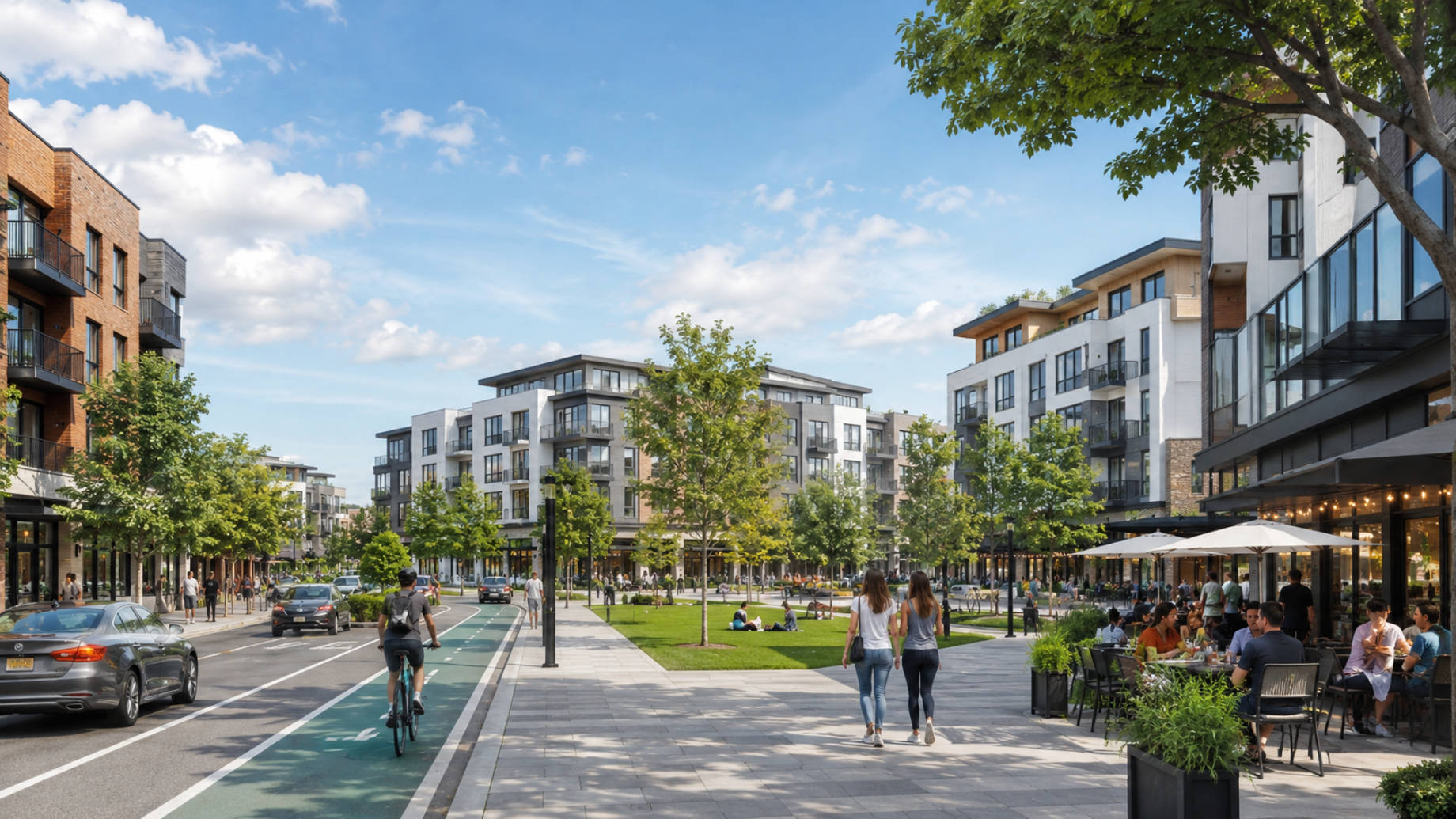
The most successful communities rarely develop by accident. While a new neighborhood may appear complete once homes are built and residents move in, much of what makes a community thrive is the result of years of planning. Decisions about infrastructure, housing, transportation, schools, parks, and commercial development often take place long before the first residents arrive.
As cities and suburbs continue to grow, developers, planners, and local leaders face an increasingly complex challenge: creating communities that meet today’s needs while remaining adaptable to future changes. Industry professionals who have worked across residential development and related business sectors have long recognized that successful communities require planning that extends well beyond the initial phase of construction. The most effective projects typically begin with a long-term vision that considers not only housing demand, but also infrastructure, amenities, economic activity, and future population growth.
Population growth, shifting demographics, evolving work patterns, and changing consumer preferences all influence how communities develop over time. A neighborhood that functions well today may face entirely different demands ten or twenty years from now, making long-term planning a critical part of successful development.
Communities that remain attractive and functional for decades typically share one characteristic: they were designed with future growth in mind. Rather than focusing solely on the next phase of development or the next group of homebuyers, successful planning considers how residents will live, work, travel, and interact as the community evolves.
Looking Beyond Immediate Demand
New development projects often begin with current market conditions. Builders and developers study housing demand, employment trends, school districts, and population growth when evaluating where and how to build. These factors help determine whether a project is viable, but they represent only part of the planning process.
Long-term success requires a broader perspective. Communities designed solely around today’s demand can struggle when demographics shift or economic conditions change. Families grow, transportation needs evolve, and consumer preferences rarely remain static for long. As a result, many successful developments are planned with flexibility in mind, allowing neighborhoods to adapt as circumstances change.
This forward-looking approach can be seen in many master-planned communities throughout the United States. Rather than concentrating exclusively on residential construction, developers often incorporate future retail space, recreation, schools, and infrastructure improvements into their plans from the beginning. The goal is not simply to build homes, but to create an environment capable of supporting growth over many years.
Infrastructure Creates the Foundation
Infrastructure is often overlooked because much of it operates behind the scenes. Residents rarely think about water systems, drainage networks, broadband connectivity, utility capacity, or transportation planning until something stops working. Yet these systems form the foundation that allows communities to grow successfully.
When development outpaces infrastructure investment, problems often emerge in the form of traffic congestion, strained public services, overcrowded schools, or rising maintenance costs. Communities may continue to grow in population, but growth becomes more difficult to manage and less appealing to residents.
The importance of long-term infrastructure planning becomes even clearer when viewed at a national level. The American Society of Civil Engineers estimates that the United States still faces a $3.7 trillion infrastructure investment gap despite recent funding improvements. While national figures operate on a much larger scale than individual communities, they illustrate a broader reality: growth is far easier to manage when infrastructure is planned proactively rather than added in response to problems after they appear.
Successful communities recognize that infrastructure is not merely a supporting element of development. It is often the difference between growth that strengthens a community and growth that creates new challenges.
Creating Places Where People Want to Live
Growth alone does not guarantee success. Communities must also offer an environment where people genuinely want to spend their time and build their lives.
Modern community planning increasingly recognizes that residents evaluate more than the homes themselves. People consider how easily they can access recreation, shopping, schools, healthcare, restaurants, and social opportunities. As a result, planners often think carefully about how neighborhoods connect to the broader community and how residents will experience those spaces on a daily basis.
Consumer preferences support this approach. A 2023 National Association of Realtors survey found that 79% of Americans consider walkability important and 78% said they would pay more to live in a walkable community. Those findings suggest that quality-of-life features are no longer viewed as optional amenities. For many buyers, they are a central part of a community’s value.
Parks, trails, gathering spaces, and convenient access to services may seem like relatively small details when viewed individually. Collectively, however, they can shape how residents feel about a neighborhood and influence whether they choose to remain there over the long term.
Planning for Different Stages of Life
Strong communities often attract a diverse mix of residents. Young professionals, growing families, empty nesters, and retirees may all have different priorities, yet successful communities find ways to accommodate a variety of needs.
Housing diversity plays an important role in this process. A mix of home sizes, price points, and housing types can help communities remain relevant as demographics evolve. Access to schools, healthcare services, transportation options, and recreational opportunities can further strengthen a community’s ability to serve residents throughout different stages of life.
Planning for a broad range of needs also contributes to long-term stability. Communities that appeal to multiple demographic groups are often better positioned to adapt as economic and social conditions change. Rather than relying on a single type of resident or buyer, they create an environment capable of supporting a wider range of lifestyles and life stages.
Balancing Growth and Character
One of the most difficult aspects of community planning is managing growth while preserving the qualities that make a place appealing in the first place.
Rapid growth can create opportunities for economic development and investment, but it can also place pressure on infrastructure, public services, and community identity. Residents often want access to new opportunities while maintaining the character and sense of place that originally attracted them to the area.
Communities that navigate this challenge successfully typically establish a clear vision early in the development process. That vision helps guide decisions about land use, transportation, public spaces, and future expansion. While plans may evolve over time, a strong framework provides consistency as the community grows.
Building for the Long Term
Some of the most successful communities illustrate what long-range planning can achieve. The Woodlands in Texas, for example, was designed around a comprehensive vision that combined residential development with employment centers, parks, trails, schools, and commercial districts. Decades after its initial development, it remains one of the country’s most recognized master-planned communities because planners looked beyond immediate housing demand and considered how the area could evolve as population and economic activity grew.
The most successful communities are rarely defined by a single development project or short-term trend. Their success is often the result of thoughtful planning, strategic investment, and a commitment to creating places that can evolve alongside the people who live there.
Future growth is not simply about adding more homes, roads, or businesses. It is about building an environment that remains functional, attractive, and resilient for years to come. When communities are planned with that long-term perspective, they are better positioned to adapt to changing conditions while continuing to provide opportunities for residents, businesses, and future generations.
