Independent music careers are built on a series of small decisions that compound over time. A new single, a short video, a mailing list update, and a carefully timed playlist pitch may look modest on their own, but together they create the rhythm of a professional release cycle. The challenge for many artists is not a lack of creativity. It is the difficulty of turning that creativity into a repeatable system that helps listeners discover the work, understand the story behind it, and return when the next song arrives.
A strong release plan begins before the track is public. Artists need a clear description of the song, a short visual identity, a few social snippets, and a destination where fans can hear more. That destination should be easy to share and consistent across every channel. When listeners move from a short clip to a full track, or from an article to an artist page, the experience should feel direct rather than scattered. This is where tools such as Seed Music can support a cleaner path between discovery and engagement.
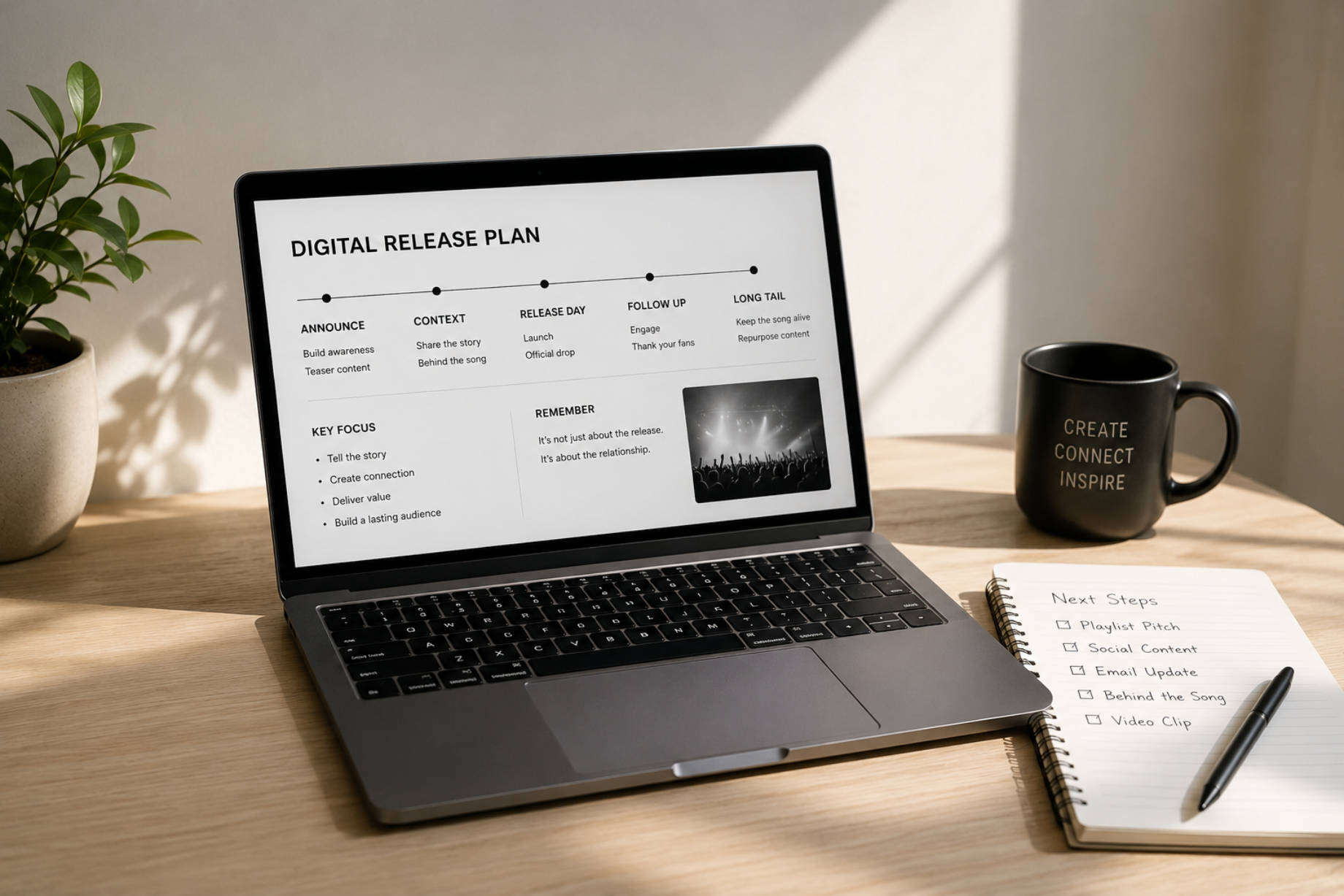
Planning also helps creators avoid the pressure to post constantly without purpose. A useful calendar separates the campaign into stages: announcement, context, release day, follow-up, and long-tail promotion. During the announcement stage, the goal is simple awareness. In the context stage, the artist can explain what inspired the track, who contributed, and what kind of listener might connect with it. Release day then becomes a checkpoint rather than the entire campaign. Afterward, acoustic clips, lyric notes, behind-the-scenes details, and audience reactions can keep the song alive without repeating the same message.
Data should guide the plan, but it should not flatten the personality of the work. Saves, shares, completion rates, and referral sources can reveal which pieces of content are earning attention. Still, artists should treat those signals as clues, not commands. If a short live performance performs better than a polished graphic, that may show that listeners want more human context. If a written story drives more clicks than a generic teaser, it may be worth investing in deeper editorial material around future releases.
Collaboration is another practical growth lever. Producers, visual artists, writers, venues, and fan communities can each give a release more surface area. The best collaborations feel specific. Instead of asking everyone to share the same link on the same day, artists can give partners material that fits their audience: a quote for a local publication, a short mix note for a producer community, or a rehearsal clip for social media. This creates more natural entry points into the music.
Finally, every campaign should leave behind assets that can be reused. A well-written artist bio, clean images, short descriptions, and organized links reduce the workload for the next release. Over time, the artist is not starting from zero; they are improving a system. A thoughtful digital plan will not replace the craft of writing and recording music, but it can make the work easier to find, easier to understand, and easier for listeners to remember.
