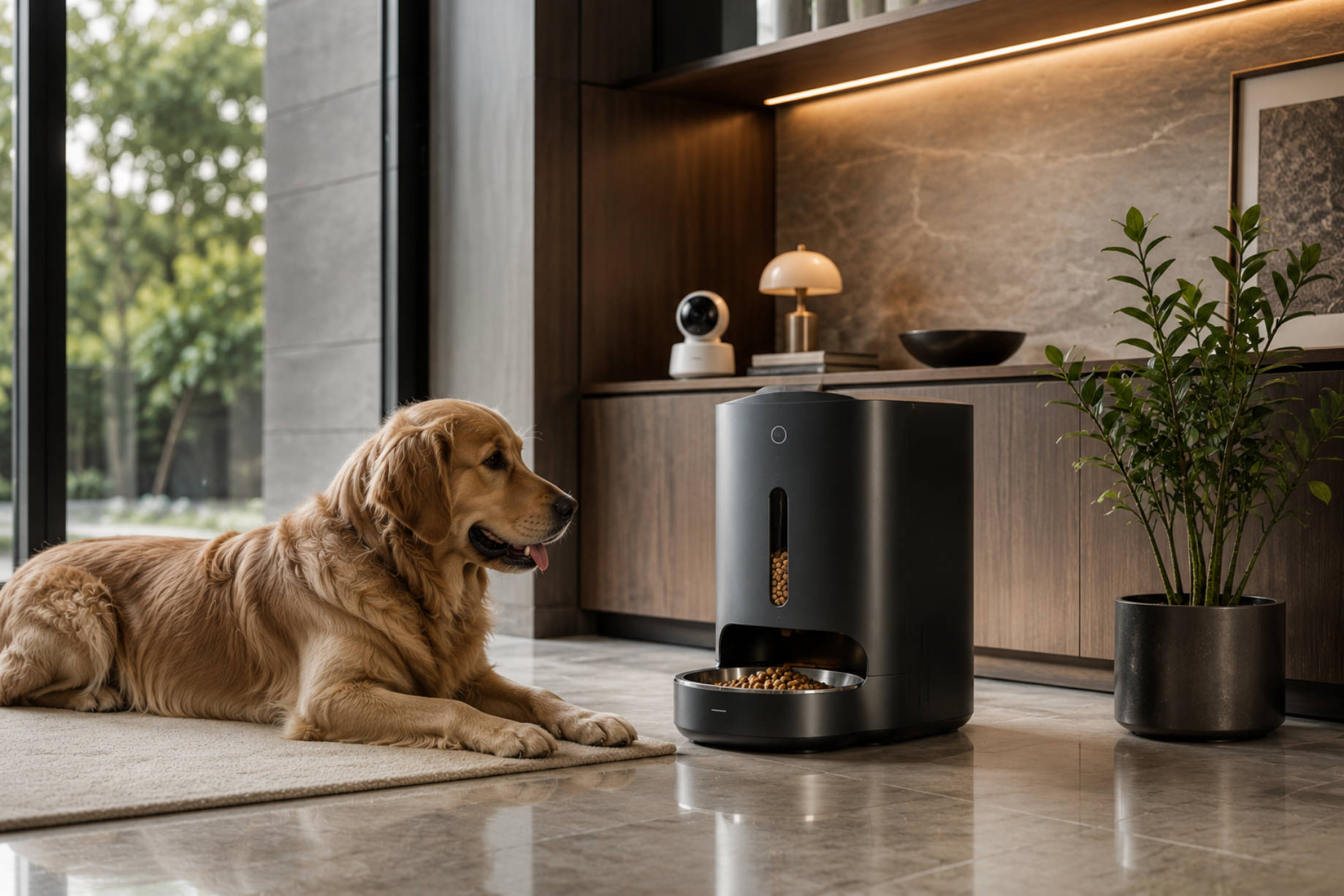
Smart pet products sit at the intersection of consumer electronics, mechanical engineering, and pet care. Getting one to market means coordinating industrial design, firmware, connectivity, injection-molded parts, and regulatory compliance, often at the same time. If you are sourcing or developing a smart pet product, knowing what happens inside the factory and before the factory is what separates a successful launch from an expensive mistake.
Product Development And Engineering Foundations
Before any plastic gets molded, the engineering groundwork determines whether your smart pet product will perform reliably or generate returns. Smart pet product development covers mechanical design, electronics, firmware, and connectivity, and each layer has to work together from the start.
Defining The Product And Its Requirements
Smart pet products like automatic pet feeders, smart litter boxes, and pet water fountains all share a common challenge: they run unsupervised in a home environment. That means your product requirements need to account for failure scenarios, not just ideal use.
At this stage, you define:
- Core functions (portion control, self-cleaning, flow rate)
- Power requirements and backup battery specs
- Connectivity type (Wi-Fi, BLE, or both)
- Material safety standards for food or water contact surfaces
Getting these requirements locked in early prevents costly redesigns later.
Mechanical And Electronic Design
Industrial design and engineering should happen in parallel, not in sequence. The physical housing needs to accommodate the PCB, motor, sensors, and any wireless modules without creating RF shielding conflicts or heat buildup.
For connected pet devices, the PCB layout is especially important. Poor RF shielding around Wi-Fi or BLE modules causes signal drops, which directly damages app integration performance. Premium designs use shielded enclosures and validated antenna placement before prototyping begins.
Material selection also happens here. Food and water contact surfaces require BPA-free plastics or stainless steel 304. These choices affect tooling design, part cost, and compliance documentation.
Firmware Development And IoT Integration
Firmware development is where smart pet product development gets technically demanding. Your firmware needs to handle motor control, sensor polling, connectivity management, and power states, all without crashing or requiring frequent manual resets.
Firmware stability is non-negotiable for products like smart feeders or smart litter boxes, where a failure has an immediate impact on the animal. Key firmware requirements include:
- OTA updates so you can push fixes after launch without a recall
- App integration with a reliable cloud backend
- IoT integration with platforms such as Tuya, which also enables compatibility with Alexa and Google Home
Testing firmware across power-cycle events, connectivity drops, and full load conditions should happen before tooling is cut. Finding a firmware bug after you have steel molds costs significantly more to fix.
From Tooling To Scalable Factory Production
Once engineering is validated, the manufacturing process begins in earnest. Pet product manufacturing involves tooling fabrication, pilot runs, and mass production, each with specific quality gates that protect your brand before units reach customers.
Tooling And Injection Molding
Injection molding is the primary process for producing the plastic enclosures and structural parts in pet tech manufacturing. Tooling quality directly affects part consistency, and part consistency affects how reliably sensors, motors, and electronics seat into their housings.
High-quality molds use P20 or H13 steel and hold tolerances around 0.01mm. This matters for components like motor housings in water fountains or feeder chutes, where even minor warping causes leaks or jams. Aluminum molds cost less upfront but wear faster and produce less consistent parts at volume.
Your tooling agreement should specify:
- Steel grade and expected mold cycle life
- Tolerance requirements for critical dimensions
- Who owns the tooling asset
Pilot Runs And Quality Control
Before mass production, a pilot run validates that tooled parts assemble correctly, firmware behaves as expected in the physical product, and any product-specific tests can be passed at scale.
Quality control at this stage uses inspection methods matched to the product type. For smart feeders and litter boxes, motor life testing should simulate thousands of cycles under realistic load. For pet water fountains, waterproof ratings such as IPX7 require pressure testing, not just basic splash tests.
Factories using Manufacturing Execution Systems, or MES, can track defect rates by batch and identify root causes before they scale into a mass production problem. Automation on the line reduces human error in repetitive assembly steps.
Mass Production And Ongoing QC
Once the pilot run is approved, mass production begins. Maintaining quality at volume requires ongoing inspection, not just end-of-line testing. Automated Optical Inspection, or AOI, and X-ray testing on PCB assemblies catch solder defects that visual checks miss.
Key checkpoints during mass production include:
- Incoming component inspection for sensors and wireless modules
- In-line assembly checks at critical stations
- Final functional testing for connectivity, motor operation, and firmware behavior
Consistent quality at this stage is what keeps your return rates low and your ratings stable.
