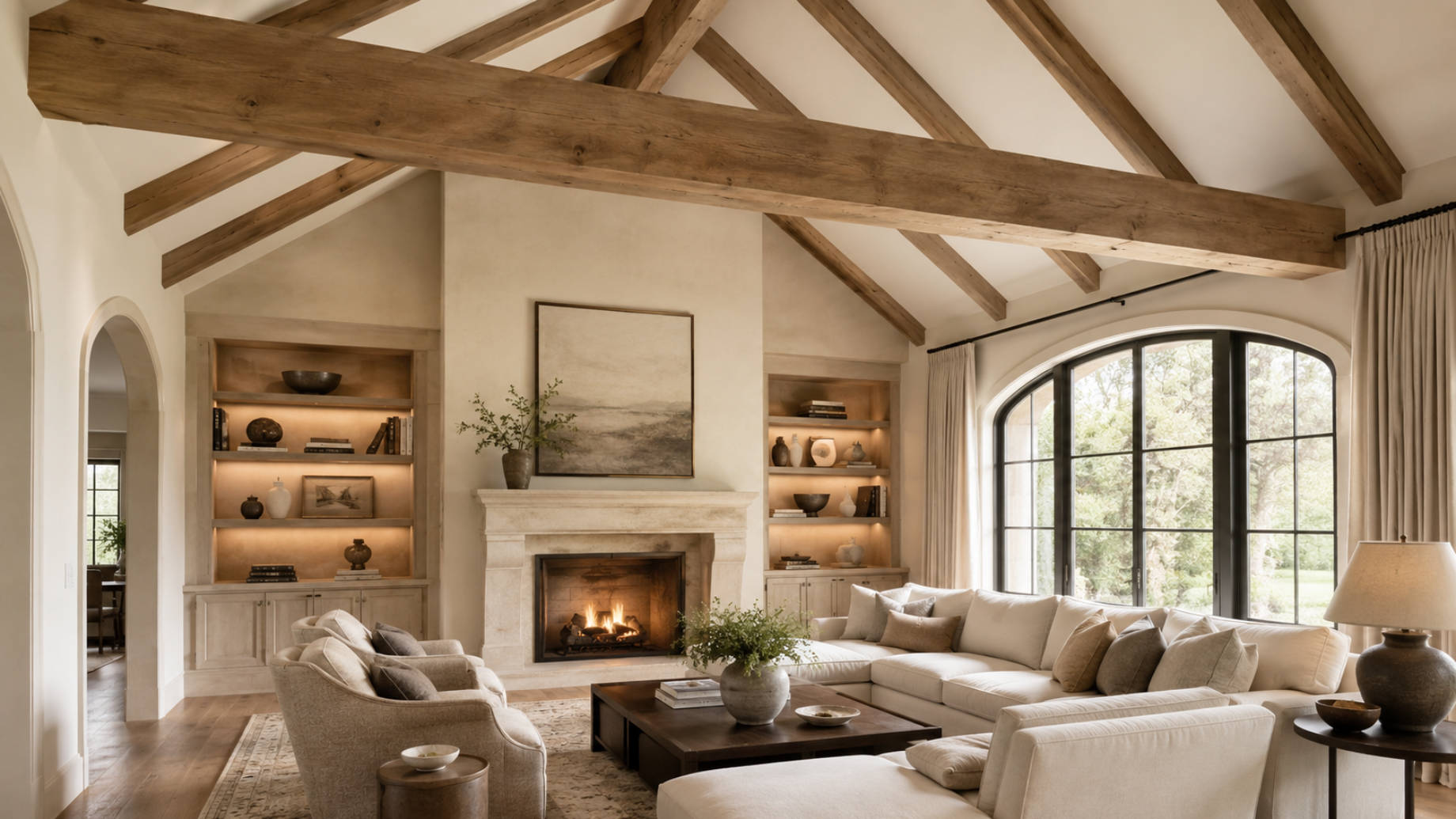
Look up in almost any beautiful home, and you may notice one feature that instantly adds warmth and character: ceiling beams. These strong lines across a ceiling can make a room feel cozy, elegant, rustic, or grand. They draw the eye upward and often become one of the most memorable parts of a space.
Yet not all ceiling beams serve the same purpose. Some are essential parts of a building’s structure, while others are added purely for appearance. Knowing the difference can help homeowners make better design choices and avoid costly mistakes during renovations.
If you are planning a new build, remodeling a room, or simply exploring design ideas, understanding the role of ceiling beams is an important first step. Read on to learn how structural and decorative beams differ and which option may be right for your home.
What Are Structural Ceiling Beams?
Structural ceiling beams are load-bearing elements that help support the weight of a building. They are designed to carry loads from the roof, upper floors, or other parts of the structure and transfer that weight safely to walls, columns, or foundations.
These beams are not installed for decoration. They serve a critical engineering purpose and help keep the building stable and secure. Without proper structural support, a building could experience sagging, shifting, or even serious structural failure.
Because of their role, structural beams are carefully planned during the design and construction process. Engineers calculate the size, material, and placement of each beam to ensure it can handle the required load.
What Are Decorative Ceiling Beams?
Decorative ceiling beams are installed to create visual appeal rather than provide structural support. These beams are often much lighter than structural beams and are attached to existing ceilings after construction is complete.
Homeowners often choose decorative beams to add texture, depth, and architectural interest to a room. They can create the look of traditional craftsmanship without requiring major structural changes.
Decorative beams come in a wide range of materials, styles, and finishes. Some are made from real wood, while others are created from lightweight materials designed to mimic natural wood.
Why Structural Beams Are Important
Structural beams play a vital role in maintaining a building’s strength. They help distribute weight evenly across the structure and prevent excessive stress on walls and foundations.
In open-concept homes, structural beams are often used to support large spans without the need for additional walls. This allows homeowners to enjoy spacious layouts while maintaining structural safety.
Because these beams are responsible for supporting weight, any modification or removal should only be performed with professional guidance. Altering a structural beam without proper planning can create significant safety risks.
Why Decorative Beams Are Popular
Decorative beams offer many design benefits without the complexity of structural modifications. They allow homeowners to achieve the appearance of exposed beams even when no structural beams are visible.
This flexibility makes decorative beams a popular choice for renovations and interior updates. They can transform plain ceilings into striking design features without major construction work.
How to Identify Structural and Decorative Beams
At first glance, structural and decorative beams may look very similar. In many homes, it can be difficult to tell the difference without further inspection.
Structural beams are typically integrated into the building’s framework. They may connect directly to load-bearing walls, columns, or support systems. Decorative beams, on the other hand, are generally attached to the surface of an existing ceiling.
Material Differences Between the Two
Structural beams are often made from solid wood, engineered wood, steel, or other materials capable of carrying substantial loads. The choice depends on the building’s design and engineering requirements.
Decorative beams have more flexibility when it comes to materials. Many are made from lightweight wood products, polyurethane, or hollow beam systems that are easier to install.
Design Possibilities with Decorative Beams
Decorative beams provide countless design opportunities. They can be arranged in simple parallel layouts or more complex grid patterns. Some homeowners choose distressed finishes to create an aged appearance, while others prefer smooth and modern designs.
Wood Ceiling Beams can also be used to define different areas within open-concept spaces. By adding visual structure to the ceiling, they help create a sense of organization without adding physical barriers. Because decorative beams are available in many sizes and finishes, they can be customized to suit almost any room.
Cost Considerations
Structural beams usually cost more. They are part of the main support of a building. They need plans, skilled workers, and careful building work.
Decorative beams cost less in most cases. They are lighter and easier to install. The work is also faster and causes less damage to the home.
The final cost depends on room size, materials, and design. Still, decorative beams can give a strong visual effect without a high price.
Maintenance Requirements
All beams need care from time to time. Checking them often helps keep them in good shape.
Wood beams should be watched for water damage, bugs, or cracks. These small problems can grow if not fixed early.
Structural beams need extra care. They help hold the house up, so damage can be risky. Regular checks help keep the home safe.
Decorative beams are easier to care for. Most of the time, simple cleaning is enough. Sometimes they may need a light refinish to stay looking nice.
Choosing the Right Option for Your Home
The right beam depends on what you need for your project. If the beam must help hold up the house, it needs to be strong and built for support. In this case, safety comes first.
If you want to improve the look of a room, decorative beams may be a good choice. They can add style without changing the main structure of the home. When you know what the beam is meant to do, it becomes easier to choose the right option for your space.
Looking Up with Confidence
Ceiling beams can make a home look warm and beautiful. Some beams help hold up the house. Other beams are added to make a room look better.
Knowing the difference can help you choose the right type for your project. No matter your goal, it helps to know what each beam does.
With good planning, you can create a room that is safe, stylish, and full of character. Ceiling beams can become one of the most eye-catching parts of your home.
For more on this content, visit the rest of our blog!
