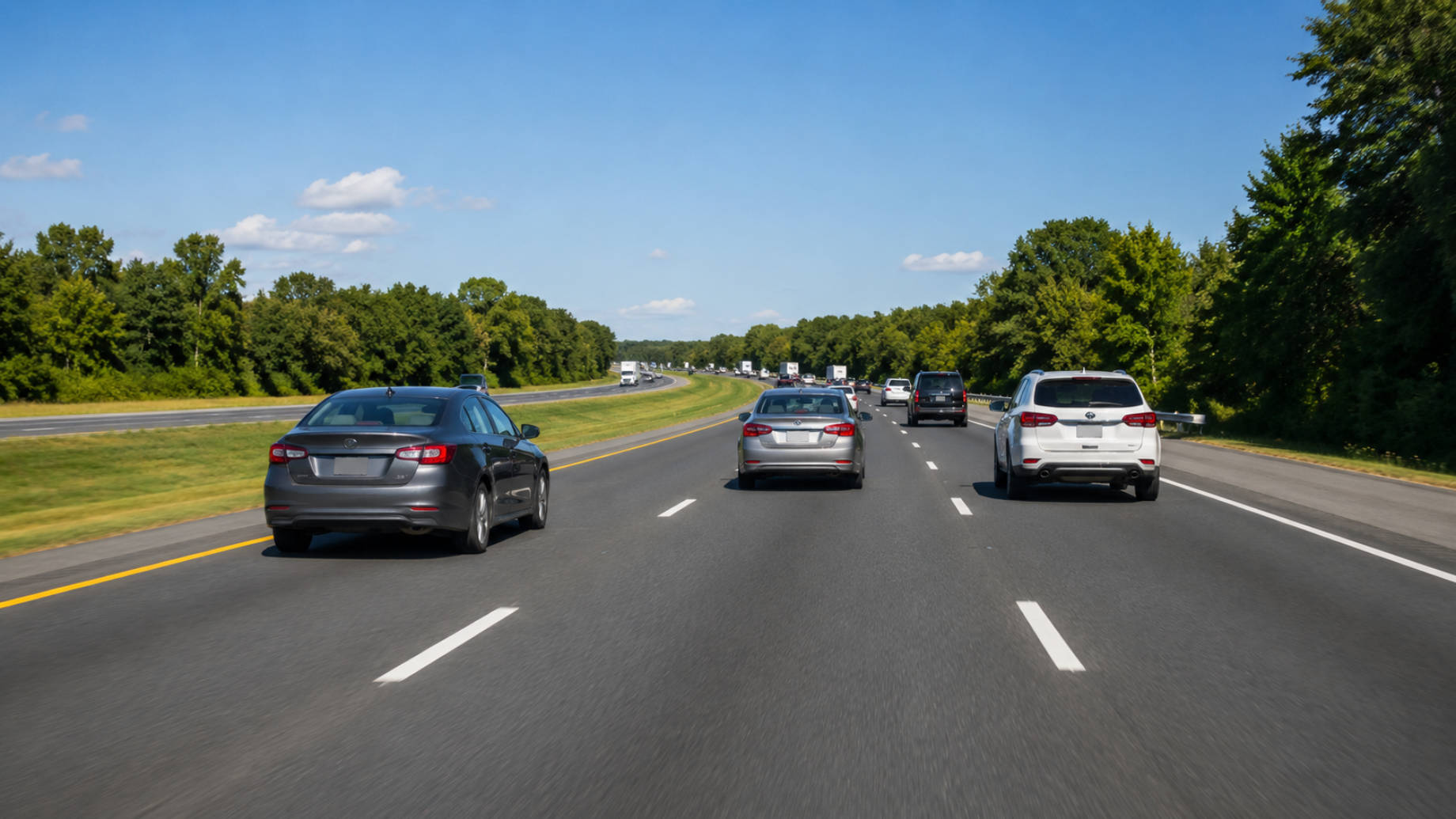
For many drivers, the left lane feels like the fast lane. In reality, the rules are more nuanced. Across the United States, what counts as a passing lane depends heavily on the type of road, the state you are driving in and the traffic conditions around you.
While the far left lane is often associated with passing on freeways and highways, it is not always that simple. Some roads have dedicated passing lanes. Others have carpool lanes designed for continuous travel. On city streets, the concept of a passing lane usually does not apply at all.
Understanding the difference can help drivers avoid tickets, reduce road rage and prevent dangerous collisions.
What is a Passing Lane?
The definition of a passing lane depends on where you are driving.
On major multi lane freeways and highways, most states follow some version of a “slower traffic keep right” rule. The general principle is simple: slower vehicles should stay to the right so faster moving traffic can safely pass on the left.
In California, drivers are allowed to use the left lane, but they are expected to keep up with the flow of traffic. Many California freeways also include carpool lanes on the far left, which are designed for continuous travel by qualifying vehicles rather than passing alone.
Collector roads are another category drivers often misunderstand. These roads allow local traffic to access freeways and highways. They may have higher speed limits and several lanes, but they can also narrow quickly as drivers approach freeway entrances or highway connections. A driver may travel faster in the left lane on a collector road, but should be prepared for lanes to merge or funnel into one lane.
On surface streets, there is generally no dedicated passing lane. Instead, drivers encounter left turn lanes, through lanes, bike lanes, bus lanes, crosswalks, pedestrians and cyclists. With so many variables, the focus should be on choosing the lane that safely gets the driver where they need to go.
Two lane roads may include intermittent passing lanes, often marked by broken yellow lines. These allow drivers to overtake slower vehicles when visibility and road conditions make it safe. Drivers traveling at reduced speeds should not move into these temporary passing lanes and block others from passing.
The most important takeaway is that lane laws are not universal. A driver crossing state lines should not assume the rules from their home state apply everywhere.
Why Passing Lanes Exist
Passing lanes are designed to improve safety and traffic flow.
When slower vehicles stay right and faster moving traffic can pass on the left, roads operate more predictably. There is less weaving between lanes, fewer sudden lane changes and less aggressive driving. The system works best when drivers understand that lane discipline is not about ego. It is about reducing conflict.
Many states have strengthened left lane laws to discourage what is often called “left lane camping.” That happens when a driver remains in the left lane even when they are not passing or when faster traffic is building behind them.
The problem is not only frustration. When a slower vehicle occupies the left lane for too long, other drivers may attempt to pass on the right, which can increase the risk of side swipe crashes, abrupt braking and multi vehicle collisions.
Can Drivers Be Ticketed While Driving the Speed Limit?
Yes, and this surprises many drivers.
A common misconception is that driving the posted speed limit gives someone the right to occupy any lane they choose. In many places, that is not how the law works.
In California, if five or more vehicles are lined up behind a slower moving vehicle, the driver is required to pull over or move right at the first safe opportunity. That rule can apply even when the slower driver is traveling at the speed limit. If traffic is stacking up behind a vehicle, the law expects that driver to allow others to pass when it is safe.
In states with stricter left lane laws, a driver can be ticketed simply for remaining in the left lane while not actively passing, regardless of speed.
A driver’s role is not to enforce the speed limit on others. If another motorist wants to travel faster, the safer and often legally appropriate response is to move over when possible. Letting faster traffic pass is not surrendering the road. It is a practical way to reduce tension and prevent unsafe maneuvers.
When Passing Is Unsafe or Illegal
There are clear situations where passing is illegal or too dangerous to attempt.
No passing zones are usually marked by solid yellow lines or posted signs. These zones are common near curves, hills and other areas where visibility is limited. Crossing a solid yellow line to pass can put drivers directly in the path of oncoming traffic.
“At The Dominguez Firm, we’ve had to handle tragic head-on car accident claims because someone attempted to pass on a blind curve. I’ve seen firsthand how devastating the consequences can be,” shared Attorney JJ Dominguez of the Dominguez Firm.
Weather can also make passing significantly more dangerous. Rain reduces visibility and increases stopping distance. Fog can make it difficult to judge how far away another vehicle really is. Snow and ice can affect steering, braking and overall vehicle control. Passing in bad weather may not always be illegal, but it is often a poor decision.
Bridges and tunnels can also present serious risks. Passing may be prohibited because lanes are narrower, shoulders are limited or nonexistent and there is little room to recover from a mistake. In some situations, a crash in these areas can quickly affect opposing traffic or create a larger chain reaction.
The Safer Rule Behind the Law
Passing laws exist for a reason, but safe driving requires judgment beyond the letter of the law.
Just because a driver can legally pass does not always mean they should. Road conditions, visibility, traffic volume, weather and the behavior of surrounding drivers all matter.
Before passing, a driver should ask a simple question: Are the few seconds saved worth the risk?
In many cases, patience is the safest decision on the road. Keeping right when appropriate, allowing faster traffic to pass and avoiding risky maneuvers can help prevent serious consequences for everyone sharing the road.
For additional information about roadway safety, traffic laws and legal resources related to motor vehicle accidents, visit www.DominguezFirm.com.
