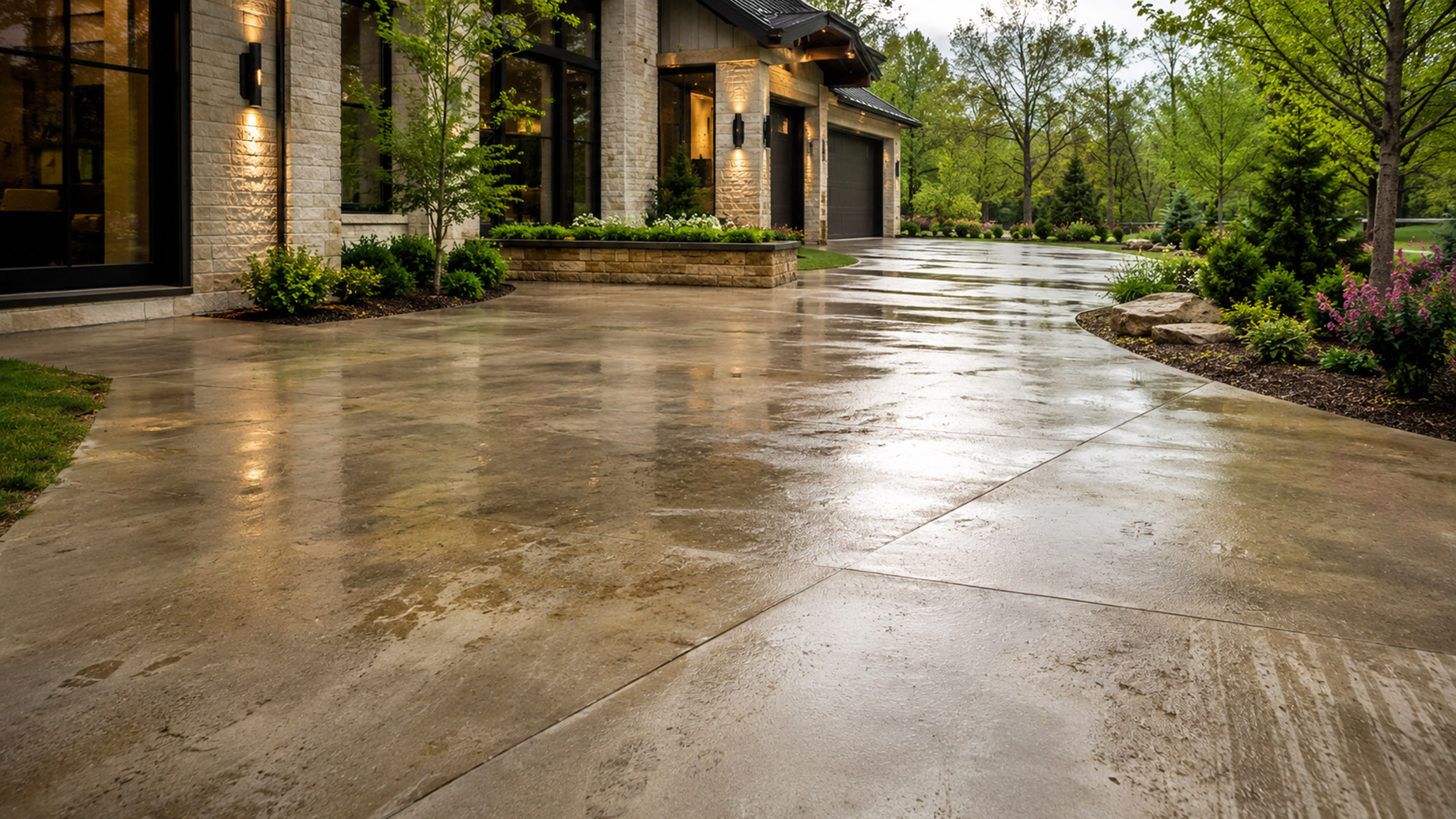
Spring rain can make outdoor spaces feel fresh again, but it can also make concrete driveways, sidewalks, patios, and pool decks look worse than they did before. Many homeowners notice that once the wet season settles in, surfaces that looked acceptable in winter suddenly appear darker, blotchier, and more neglected.
This is especially common during May, when weeks of rain, pollen, mud, and damp conditions combine. Concrete is strong, but it is also porous. That means water, dirt, organic debris, and surface stains can settle into small openings and texture variations. After repeated rainstorms, those marks become more visible.
Rain Runoff Carries Dirt Across Concrete
One of the main reasons concrete looks worse after spring storms is runoff. Rainwater does not simply fall and disappear. It moves across roofs, lawns, garden beds, mulch, driveways, and walkways, carrying loose soil, leaves, grit, and other debris with it.
When that dirty runoff reaches concrete, it can leave behind brown or gray streaks. Driveways often show this near the street, garage entrance, or low spots where water gathers. Patios and pool decks may show similar discoloration around drainage paths, planters, furniture legs, or edges where landscaping meets hardscaping.
Over time, repeated runoff can make concrete look older than it really is.
Muddy Foot Traffic Makes Stains Worse
Spring is also when people spend more time moving between the yard and the home. Shoes, pet paws, garden tools, and outdoor furniture can all track mud across concrete surfaces.
A single muddy footprint may not seem like a major problem, but repeated traffic can press dirt into the surface. This is common on front walkways, backyard patios, and pool decks that see regular use. Once the mud dries, it can leave dull, uneven patches that are hard to rinse away with a garden hose alone.
Pollen Creates a Sticky Surface Layer
Pollen is another major cause of spring discoloration. During heavy pollen weeks, yellow or green dust can settle over nearly everything outside. When rain mixes with pollen, it can create a sticky film that clings to concrete.
That film can trap dirt and organic matter, making the surface look cloudy or stained. On lighter concrete, the effect can be especially noticeable. Around trees, shrubs, and flowering plants, pollen buildup may collect in corners, expansion joints, steps, and shaded areas.
Damp Conditions Encourage Organic Growth
Concrete that stays damp for long periods can also develop dark patches from mildew, algae, or other organic buildup. This is most common in shaded areas, under trees, near pool decks, beside retaining walls, or anywhere sunlight does not dry the surface quickly.
These marks often appear green, black, or dark gray. They may start subtly, then become more obvious after several weeks of rain. Even well-maintained homes can look neglected when damp concrete begins to darken.
How Homeowners Can Refresh Exterior Concrete
The best approach is to keep outdoor concrete clean before buildup becomes severe. Sweeping away leaves, rinsing muddy areas, trimming back overgrown landscaping, and improving drainage can all help reduce staining.
For heavier buildup, homeowners may consider professional pressure washing near Eugene OR as one way to refresh heavily used exterior areas. Professional cleaning can help lift dirt, pollen film, mildew, and surface grime from driveways, sidewalks, patios, and pool decks.
Spring rain may reveal every stain, but it also shows where your outdoor spaces need attention. With the right maintenance, concrete can look cleaner, brighter, and better cared for throughout the season.
