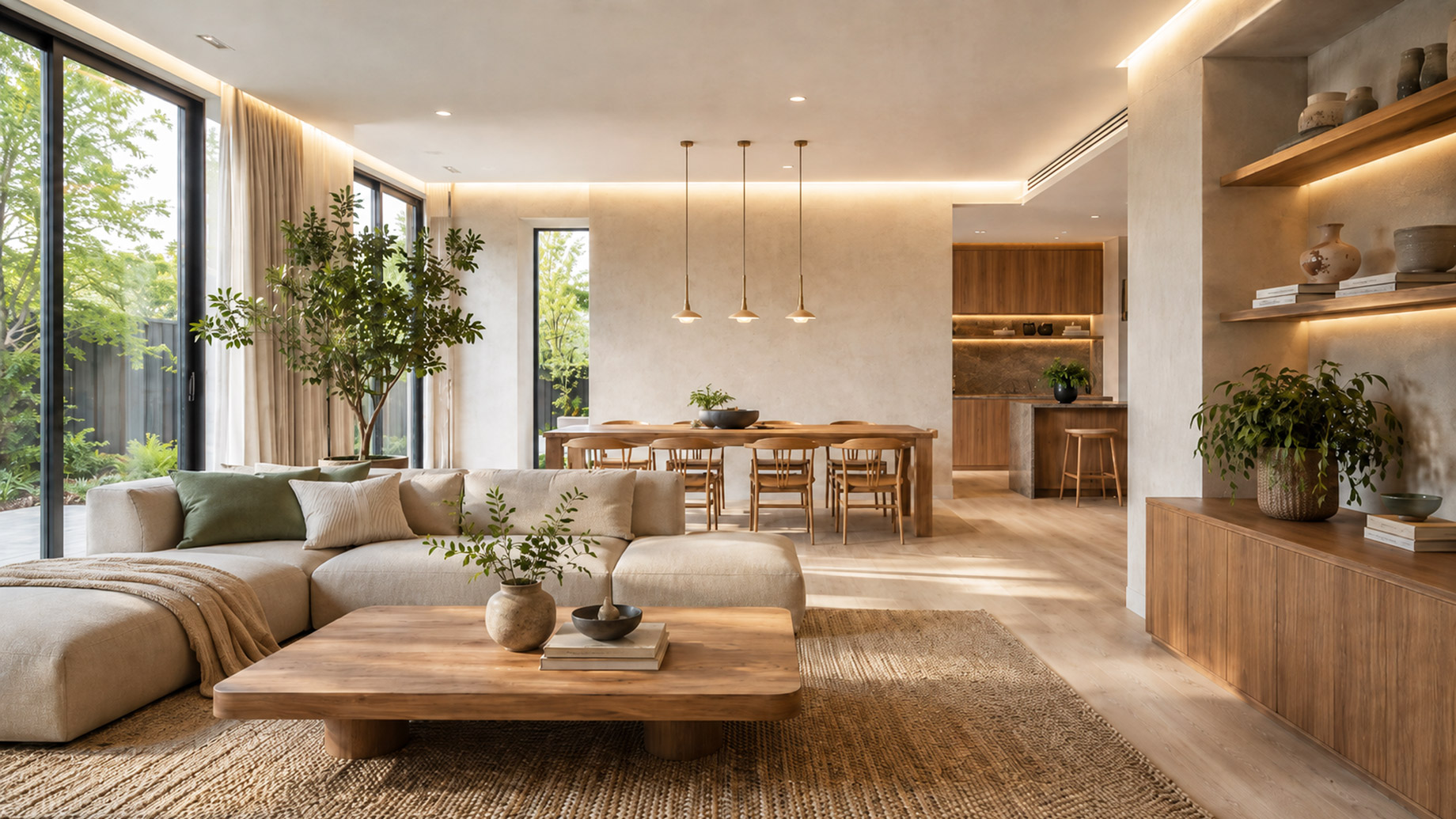
Sustainability has become a major topic in recent years, with more and more people finding ways to bring sustainable habits into their everyday lives.
It’s no longer just a buzzword. In fact, according to PwC, people are willing to pay over 9% more for products that are sustainably produced or sourced.
While it may not be realistic to make every part of your life fully sustainable all at once, your living space is one of the easiest and most practical places to start. And the good news is that it won’t involve sacrificing style, a wrecking ball, or a second mortgage.
Read on as we look at five simple but effective ways to refresh your home in 2026, with both your budget and the planet in mind.
Upgrade to LED Lights
LED lighting can change the vibe of a space in a blink. It’s also one of the simplest steps toward a more sustainable home.
There are many reasons why you should swap your old incandescent or compact fluorescent bulbs to LEDs, but the most important is energy savings. LEDs use up to 75% less energy than your regular incandescent bulbs, according to the U.S. Department of Energy. They also last 25 times longer. This means that you don’t replace your bulbs as often, and your energy bill drops.
Quick tip: when you head to the store for new LED lights, look for the ones with a high color rendering index. These ones make your home look and feel better while saving energy.
Choose Eco-Friendly or Sustainable Furniture
Furniture is another area where you can refresh your home sustainably. Does this mean you should throw away all you already own? No. Instead, when one piece needs replacing, intentionally choose something eco-friendly or responsibly sourced.
Real-life example. A homeowner in Kansas City recently upgraded his dining area with a live edge table made from locally sourced wood. He then paired it with vintage secondhand chairs he found at an estate sale. The result? A dining room that looks straight out of an interior design magazine.
And it makes real sense, too. As KC Custom Hardwoods puts it, “When it comes to enhancing the aesthetic appeal and functionality of your living space, the choice of furniture is pivotal.”
But sustainable furniture doesn’t just change how your home looks. It gives your space character, texture, and a bit of history.
Rethink Your Paint & Finishes
A fresh coat of paint is one of the easiest ways to refresh your space on a budget. But not just any paint. The eco-conscious now prefer low-VOC or zero-VOC paint.
Why? Normal paints release what is known as VOCs, or volatile organic compounds, into the air. In fact, the EPA notes that indoor air can sometimes be 5 times more polluted than outdoor air as a result of these compounds.
That’s probably why people in freshly painted homes sometimes complain about headaches, respiratory irritation, or generally poor indoor air quality.
But paint isn’t your only option. You can also explore natural finishes like clay plasters, lime wash, or mineral-based coatings. These alternatives add texture and depth to your walls. They, too, are naturally breathable and non-toxic.
Upgrade or Seal Your Doors and Windows
You might not see upgrading your windows and doors as refreshing your living space, but it is.
New or upgraded doors and windows will definitely give your home a new look and feel. Even if you’re simply sealing to prevent loss of air, you can do it in such a way that it adds aesthetic relevance to your home.
But more importantly, it makes your home more sustainable. Windows and doors account for the biggest energy loss in the home. Poor windows alone can cost up to 25% of your home’s energy, according to the U.S. Department of Energy. That’s a big part of your monthly utility bill escaping through the glass.
Replacing, or at least sealing and weatherstripping, can make a noticeable difference in your energy bill and how comfortable your home is.
And if you’re upgrading, be sure to buy ENERGY STAR certified products.
Embrace Biophilic Design
The word “biophilic” sounds fancy, and it’s understandable if you mistake it for some kind of medical condition. But it’s actually pretty simple. It just means “love of living things.”
Humans have a natural need to connect with nature, and doing so inside your home does wonders for both your mood and your sustainability goals. In terms of health and mood, people in environments with natural elements report greater happiness and well-being.
Then there’s the environmental benefit. Bringing nature into your home can help lower your home’s environmental impact while creating a healthier, calmer place to live.
You don’t have to convert your home into a jungle to achieve this.
And industry experts agree.
“Ultimately, the goal isn’t to recreate the outdoors, but to capture something of its atmosphere; a sense of calm, balance, and connection.” — Tabitha Isobel on Living ETC.
That’s exactly what a biophilic-influenced home should look like.
So, start with one plant in a corner of your home. Open the blinds to let in natural light. Choose wood tones over grey plastic where you can. Little changes like these can get you started in the right direction.
FAQs
What’s the most budget-friendly sustainable upgrade I can make right now?
Switching to LED bulbs is the easiest and has the least expensive upfront cost. But even though it’s budget-friendly, the energy savings are immediate. Most households see 75% less energy usage with LED bulbs vs. incandescent bulbs.
How do I know if my paint is low-VOC?
Knowing if the paint you just bought is low-VOC is really simple. Look for “Zero VOC” or “Green Seal” certified on the label. If there’s no such information on the label, chances are it’s not low-VOC. You can also check to see if the paint smells like strong chemicals when you open the tester. If it does, put it back.
Can I make my windows energy-efficient without replacing them?
Absolutely. While replacing with Energy Star-certified windows is the best option, you don’t have to if you don’t have the budget for it. You can seal leaks with new weatherstripping, use caulk around the frames, or hang heavy thermal curtains to block drafts.
Key Stats at a Glance
| Detail | Source |
|---|---|
| Consumers are willing to pay 9%+ more for sustainably sourced products | PWC 2024 |
| LED lights use up to 75% less energy | Energy GOV |
| LED lights last 25 times longer than regular bulbs | Energy GOV |
| Windows account for at least 25% of a home’s energy use | Energy GOV |
| Indoor air can be 5x more polluted than the outdoors (partly due to VOCs) | EPA GOV |
Make Your Home Greener in 2026
Refreshing your living space sustainably doesn’t mean sacrificing style or breaking the bank. Making small, intentional choices about what your home looks like can start you on the right path.
Don’t do everything all at once, though. Focus on one room. See the changes, and then hit the next. Every small change helps you build a more comfortable and more sustainable home for the future.
