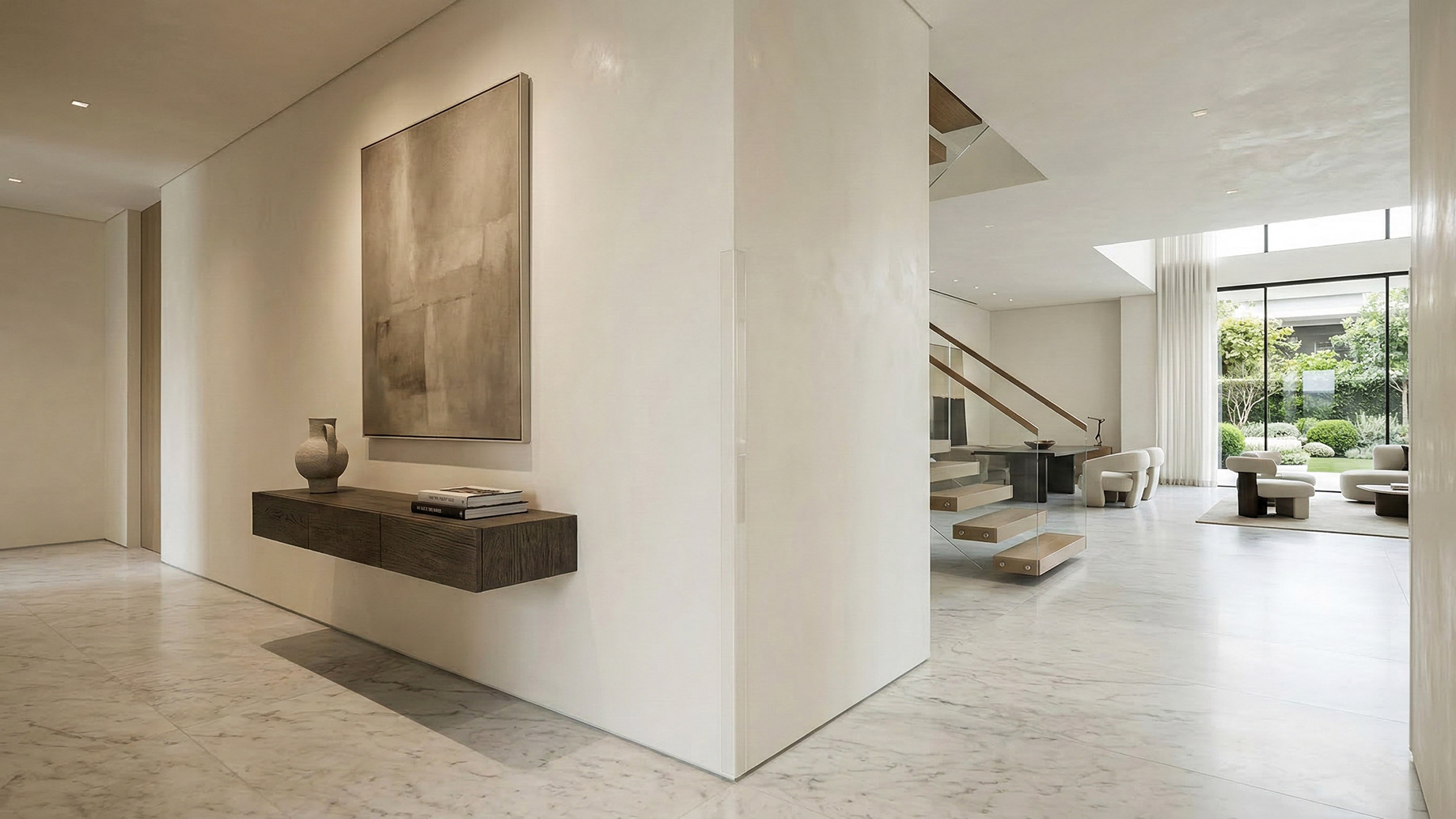
Luxury interiors are often judged by the elements that immediately capture attention, such as statement lighting, sculptural furniture, custom millwork, and gallery-worthy art. Yet the most enduring homes are defined just as much by the details that quietly preserve these visual statements. Subtle design decisions that protect surfaces, maintain structural integrity, and extend the life of premium materials are becoming increasingly important in high-end residential design.
As luxury residences embrace open layouts, expansive glazing, and carefully curated finishes, designers are paying closer attention to architectural touchpoints that come into daily contact. Corners, edges, and transitions between materials may appear insignificant at first glance, but they often endure the most wear. In residences where marble, hardwood, glass, and custom plaster are common, even a minor impact can leave visible damage.
The modern approach to luxury design now considers protection as part of aesthetics rather than an afterthought.
Where Architecture Meets Everyday Movement
In upscale homes, circulation patterns are carefully choreographed. Grand hallways guide guests through curated spaces, floating staircases anchor dramatic foyers, and open plan kitchens blend seamlessly with living areas. These elegant transitions also create areas where corners and edges sit directly within pathways of daily activity.
Children moving through the house, guests carrying luggage, rolling service carts, or even robotic vacuums can unintentionally bump vulnerable corners. In homes filled with bespoke finishes, a single chipped edge on a custom wall detail or millwork panel can compromise the pristine look designers worked hard to achieve.
This reality has encouraged architects and interior designers to rethink how structural edges are handled. Instead of relying solely on material durability, subtle protective strategies are increasingly being incorporated into the architecture itself.
The Design Shift Toward Invisible Protection
Historically, protective hardware often appeared industrial or utilitarian, which made it incompatible with refined residential spaces. Today, however, the philosophy has shifted toward solutions that blend seamlessly with architectural elements.
Minimal profiles, transparent materials, and integrated installation techniques allow protective components to remain virtually invisible. These subtle additions ensure that walls, cabinetry, and structural corners maintain their clean lines and sculptural geometry over time.
In luxury homes where every millimeter of detailing is considered, invisible protection helps preserve design intent. A sharp corner on a plaster wall or a stone column can retain its crisp profile without becoming vulnerable to accidental impact.
The result is architecture that looks pristine not only on the day it is completed, but years later.
Why Corners Matter More Than Most Realize
Corners serve as structural punctuation points in interior design. They define spatial boundaries, emphasize vertical lines, and guide the visual rhythm of a room. Because they protrude into space, they also become the first surfaces to encounter movement.
A well-placed corner edge protector can safeguard these architectural features without altering their appearance. When designed with minimal visibility, these solutions help maintain the visual integrity of premium surfaces such as Venetian plaster, custom paneling, or natural stone cladding.
This becomes particularly valuable in high-traffic luxury environments such as expansive kitchens, home galleries, wine rooms, and entertainment spaces where guests frequently move between areas.
Protecting these corners is less about durability alone and more about preserving the craftsmanship embedded in the home.
Luxury Living Requires Longevity
High-end residences are not simply designed for immediate visual impact. They are built to retain value, performance, and aesthetic consistency over decades. Every material choice, from hand-finished cabinetry to imported limestone flooring, represents a long-term investment.
Minor architectural damage can accumulate quickly in active households. Over time, repeated touchpoints in vulnerable areas may lead to chipped paint, cracked plaster, or worn edges that require costly repairs.
Designers increasingly recognize that small preventative elements can reduce maintenance while preserving the home’s original finish quality. Rather than scheduling repeated patchwork repairs, homeowners benefit from surfaces that remain protected from the start.
This preventive mindset aligns with the broader philosophy of sustainable luxury, where durability and longevity are integral to thoughtful design.
A Detail That Supports Architectural Purity
Minimalism remains a dominant influence in contemporary luxury design. Clean lines, uninterrupted surfaces, and precise geometry define many modern residences.
Maintaining that purity requires careful consideration of how spaces function in everyday life.
When corners remain crisp and intact, the architectural narrative stays coherent. Walls maintain their sculptural clarity, cabinetry edges remain sharp, and the home’s visual remainse stays undisturbed.
Protective solutions that integrate seamlessly into these environments allow designers to maintain minimalist aesthetics while acknowledging real-world use. Instead of compromising form for durability, the two work together.
Designing Homes That Age Gracefully
The most admired luxury homes share a common quality. They age gracefully. Materials develop character without losing structural integrity, and architectural lines remain intentional long after construction is complete.
This longevity often depends on details that few people notice at first glance. Protective design strategies quietly guard the surfaces that define a space, ensuring the home continues to look curated rather than worn.
For architects, interior designers, and discerning homeowners, the lesson is simple. True luxury is not only about beauty at first sight. It is about preserving that beauty over time, through movement, and in everyday life.
Sometimes the most sophisticated design decision is the one that remains almost invisible.
