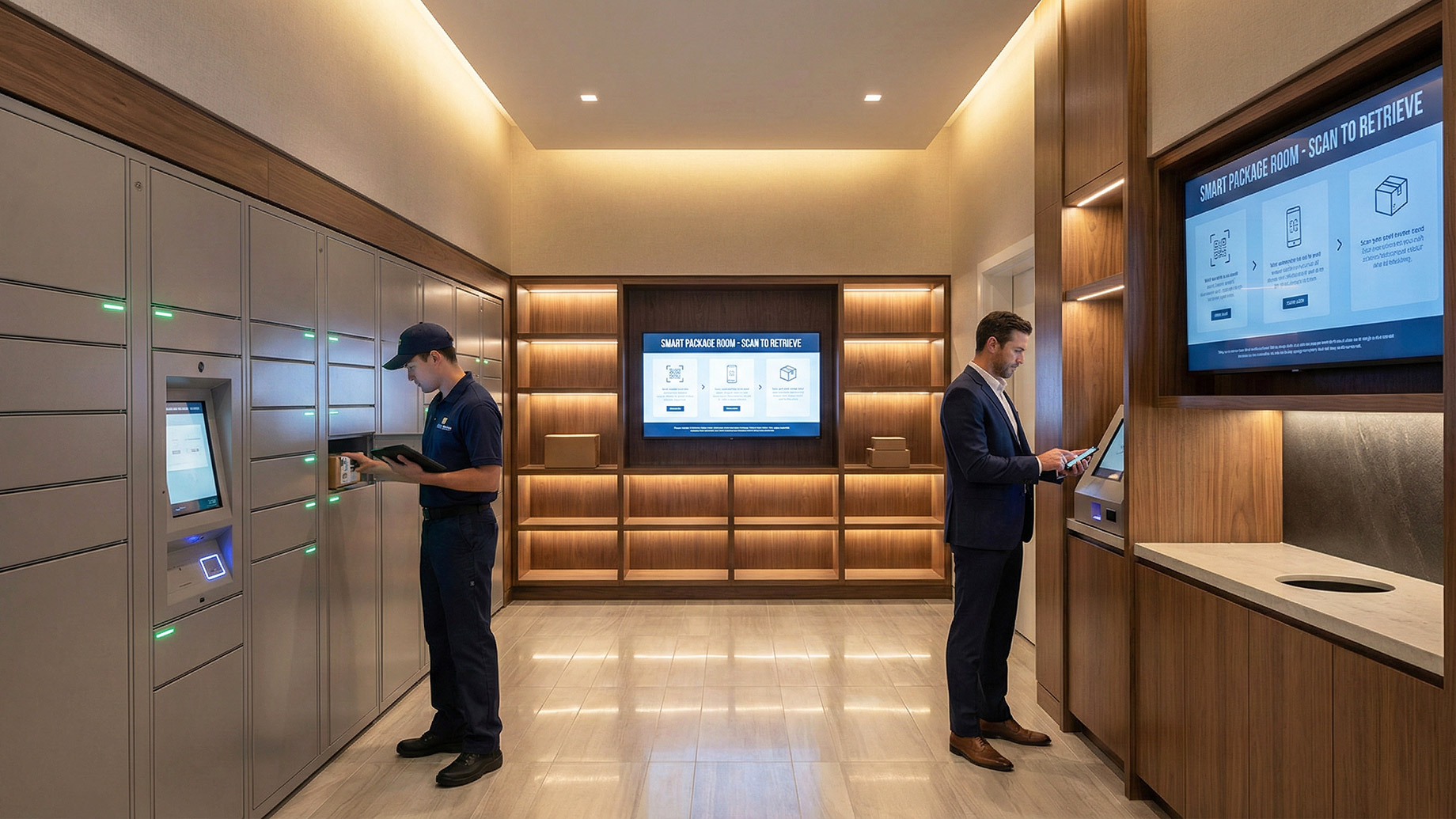
Online shopping made deliveries a daily reality for multifamily communities, and the packages add up quickly. Property managers juggle a wave of last-mile drop-offs that can overwhelm mailrooms and front desks.
Many communities now rely on AI-powered package rooms to keep deliveries organized and accessible for residents and staff. More multifamily buildings are redesigning how deliveries flow through the property, so packages stay secure and residents can collect them conveniently. Here are the key trends showing how properties are modernizing delivery from the ground up.
Package Deluge in Multifamily Housing
Online shopping’s explosive growth has led to an unprecedented volume of deliveries at apartment communities. The growing number of packages is stretching old mailrooms beyond capacity and burdening staff with increasing daily package volume.
UPS reported that package shipping volume reached 7.3 billion in 2024, underscoring the scale of delivery growth facing residential properties. Such volumes are prompting multifamily stakeholders to rethink how buildings handle the flow of parcels from carriers to residents.
Transforming Back-Room Mailrooms Into Central Hubs
Communities tucked package rooms away in back offices not long ago. Today, properties redesign package areas as central, well-lit spaces that improve traffic flow and make package access more intuitive for residents. Many report double-digit annual increases in package deliveries, with industry projections through 2025 estimating growth of approximately 15% per year.
The surge has turned package management into a critical operational focus. Without modern systems in place, couriers often leave parcels in lobbies or unsecured areas, which can create clutter and increase the risk of theft.
Escalating Security Concerns
Multifamily communities are working hard to curb package theft and give residents more confidence that their deliveries will be there when they get home. As package volume climbs, theft becomes a common frustration in many American neighborhoods, and some cities report frequent package theft incidents each day.
Property owners often respond by expanding monitoring coverage, tightening access controls, and improving how the building receives and stores deliveries. These upgrades reduce the number of times staff have to leave the front desk to handle drop-offs, helping service remain consistent.
When a concierge stays at the front desk, residents receive reliable support, and the building remains more secure. As a result, more properties are investing in smarter delivery infrastructure that protects packages while simplifying pick up for residents.
Smart Infrastructure Solutions for Last-Mile Deliveries
For multifamily properties, the goal of modern delivery infrastructure is to make receiving a package as seamless as ordering it, for residents, staff, and carriers. Multifamily properties are addressing delivery complexity by turning to smart infrastructure solutions that bring technology into the final leg of logistics. IoT-enabled package rooms, automated solutions, and AI-driven tracking systems are changing how buildings manage deliveries.
These solutions offer round-the-clock access, real-time monitoring, and minimal staff involvement. They also help communities integrate smart logistics tools without adding operational complexity.
Contactless Lockers and 24/7 Package Rooms
One sweeping change is the evolution of the traditional mailroom into a 24/7 package center. Advanced package rooms are replacing traditional mailrooms, giving residents all-day access to parcels, groceries, and dry cleaning items. These smart package centers are accessible at any time via PIN codes, mobile apps, or key fobs, allowing residents to retrieve deliveries on their own schedule.
Residents value constant access to their deliveries, and smart infrastructure enables it. Properties that invest in these systems gain a competitive edge by catering to modern lifestyles that demand on-demand service.
Smarter Navigation for Delivery Personnel
Smart building upgrades improve how packages are managed on-site and reduce friction for drivers during delivery. Even major carriers rely on AI to shorten the trip from the curb to the right door. For example, Amazon uses AI-powered mapping to guide drivers through detailed building layouts and flag obstacles at drop-off points.
That kind of “smart mapping” helps drivers find the right unit or package room more quickly, especially in large high-rises or sprawling communities with multiple wings. Residents receive their deliveries sooner and experience fewer mix-ups when drivers spend less time getting lost or stuck at locked doors.
Automation and Computer Vision for Streamlined Logistics
Next-generation technologies are further streamlining last-mile logistics inside buildings. Computer vision and AI tracking reduce manual handling across the package management process. The Smart Package Room system uses an open-shelf design equipped with computer vision technology and light and laser guidance to automatically register deliveries and direct residents to their parcels.
Many multifamily operators are now exploring open-shelving package systems for their ability to handle high volumes efficiently. An AI-monitored open room is designed to handle significantly higher package volume than fixed locker banks, especially during peak delivery periods. The result is faster deliveries, happier residents, and freed-up staff, creating clear operational and resident experience benefits.
Explore Modern Delivery Solutions
When you adopt today’s property-level delivery trends, you position your team to operate more smoothly while improving the resident experience. Multifamily property managers, developers, and owners can raise the bar by building smart infrastructure that keeps pace with modern delivery volume and expectations.
Investing in intelligent delivery systems helps properties manage today’s package volume while supporting long-term value. When smart infrastructure and logistics work together, properties become more convenient, more organized, and easier to manage for both residents and staff.
