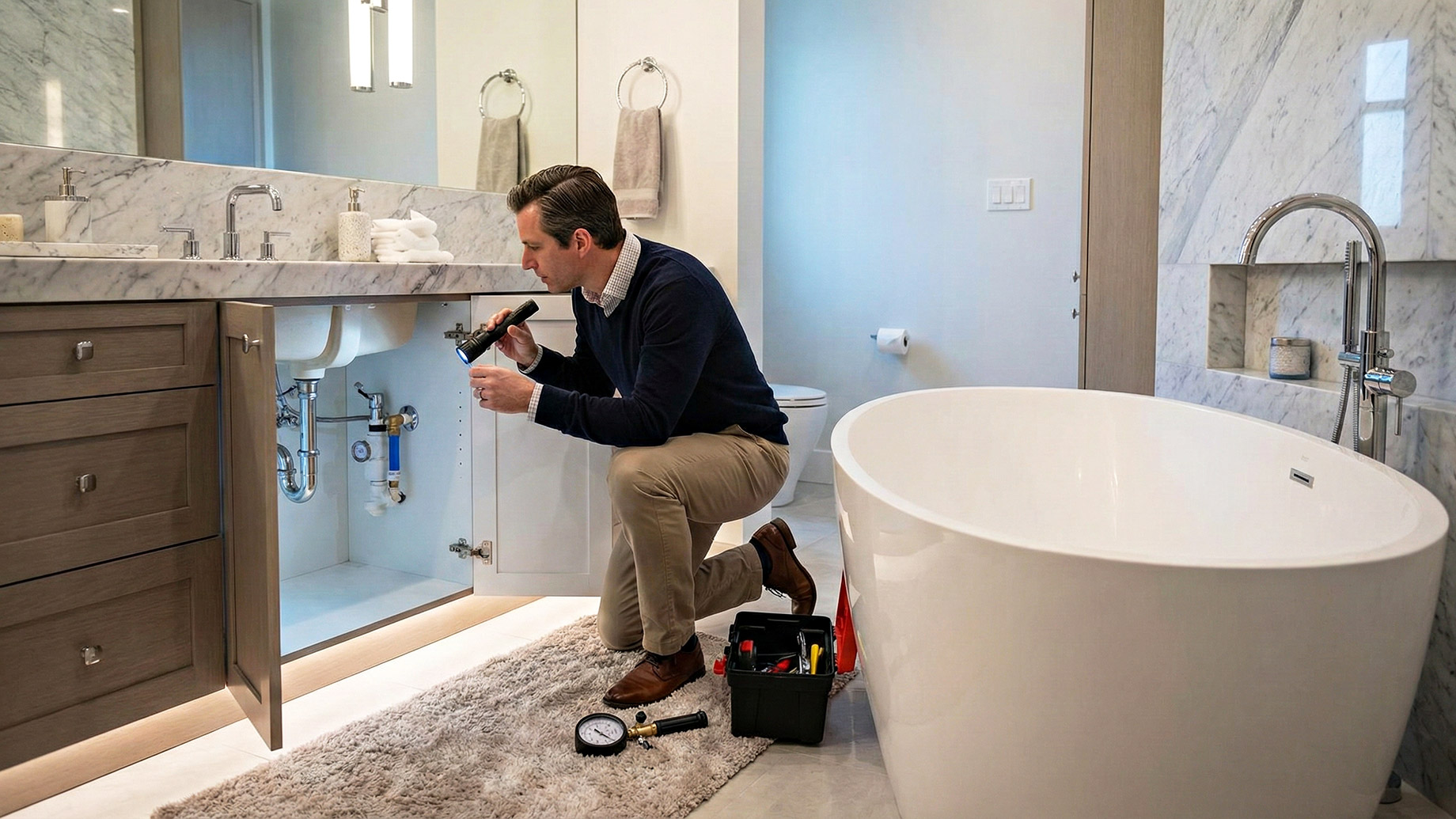
Your home basically tells you when things are going wrong with the occasional drip or the wrong kind of sigh from the pipes; smart homeowners pay attention to the little signs and get into a routine of checking on things before it becomes a flood. And often the first step is a simple web search for, say, residential plumbing services in Toronto, ON, Canada, just to find a team that knows their stuff, can diagnose problems in no time, and explain what they’ll do to fix it in plain English. This little guide will give you a clear and easy-to-follow plan, some practical things to check.
1. Pressure Signals: Read pressure before it fails
Flow that slumps or surges reveals more than annoyance; it signals wear, buildup, or leakage. Low output often points to mineral scaling inside pipes or partial blockages that steal flow. Sudden spikes in stress fittings can cause them to blow joints after repeated cycles.
A homeowner can install a pressure gauge at an outdoor bib or at a main line to track numbers and spot trends. Valves, regulators, and hidden pinhole leaks are typical culprits. Acting on those readings prevents sudden bursts and saves water and repair costs. Prioritize any steady decline or repeated swings and bring in a trained technician for targeted repairs.
2. Noisy Pipes: Translate the late-night percussion
Strange bangs, clanks, and whines often mean trapped air, loose supports, or valves snapping shut. Pinpoint whether noise follows fixture use or happens during temperature shifts. Simple fixes include tightening straps, adding padding where metal rubs against framing, or installing arrestors to absorb sudden pressure shocks.
Sometimes re-routing a short segment or adjusting water velocity solves the issue without a costly overhaul. Don’t ignore persistent sounds; they indicate stress that will shorten component life. A quick inspection saves nights of frustration and reduces the risk that a small defect turns into an urgent leak.
3. Kitchen Sink Habits: Stop feeding blockages
Kitchen drains see daily warfare: fats, starches, coffee grounds, and stringy fibers combine to form stubborn plugs. Avoid pouring oil or grease down drains; they cool and harden inside pipes. Use sink strainers, scrape plates before washing, and run hot water after each greasy load to help keep passages clear.
Kitchen drains handle constant abuse from grease, food scraps, and residue that slowly narrow the pipes. Simple habits like using strainers and avoiding oil can help, but when drains stay slow, considering drain services in Toronto, ON, allows professionals to inspect the line and locate the problem without unnecessary damage.
4. Bathroom Basics: Small moves that avoid disasters
Bathrooms pack multiple fixtures into tight spaces, so a small leak or worn seal can cascade. Toilets can run faintly and waste large volumes without obvious signs; put a dye tablet in the tank to reveal hidden leaks. Inspect shower and tub seals annually and replace worn gaskets before water migrates into framing.
Hair combines with soap residue to slow drains; a simple screen keeps most of it out. Avoid frequent chemical plunges that can damage pipes and instead use enzyme products or mechanical clearing. Regularly check visible supply lines for corrosion, and replace old braided hoses before they fail.
5. Winterproofing: Stop freezing before it starts
Cold turns pipes into brittle, unforgiving enemies. Throwing insulation at exposed runs in the attic, crawl space, and along the exterior walls is the best way to cut down the risk of them freezing. When the weather really takes a turn for the worse, leave those kitchen cabinet doors open so the warm air can get to those under-sink pipes. Before the frost sets in, drain and put those outside hoses away and switch off the exterior water valves so there’s no water sitting there waiting to get trapped.
Consistent attention, simple checks, and timely repairs stop small faults from becoming floods. Watch pressure readings, listen for unusual sounds, keep kitchen and bathroom drains clear, and winterize exposed piping. Small daily habits and annual inspections catch wear before serious failure, saving costs and stress.
Call professionals when patterns repeat, or tasks exceed basic tools; targeted work prevents collateral damage and prolongs fixture life. Treat plumbing as vital infrastructure, and you keep your home dry, efficient, and trouble-free right now.
Call Everest Drain & Plumbing at 416-383-7378 for fast assessments, clear options, and repairs that fit your schedule.
FAQs
1. How often should I have an inspection?
Annual checks suit most homes; older plumbing or hard water may need semiannual visits.
2. Can I clear minor clogs myself?
Use a plunger or enzyme product; call pros when water still drains slowly.
