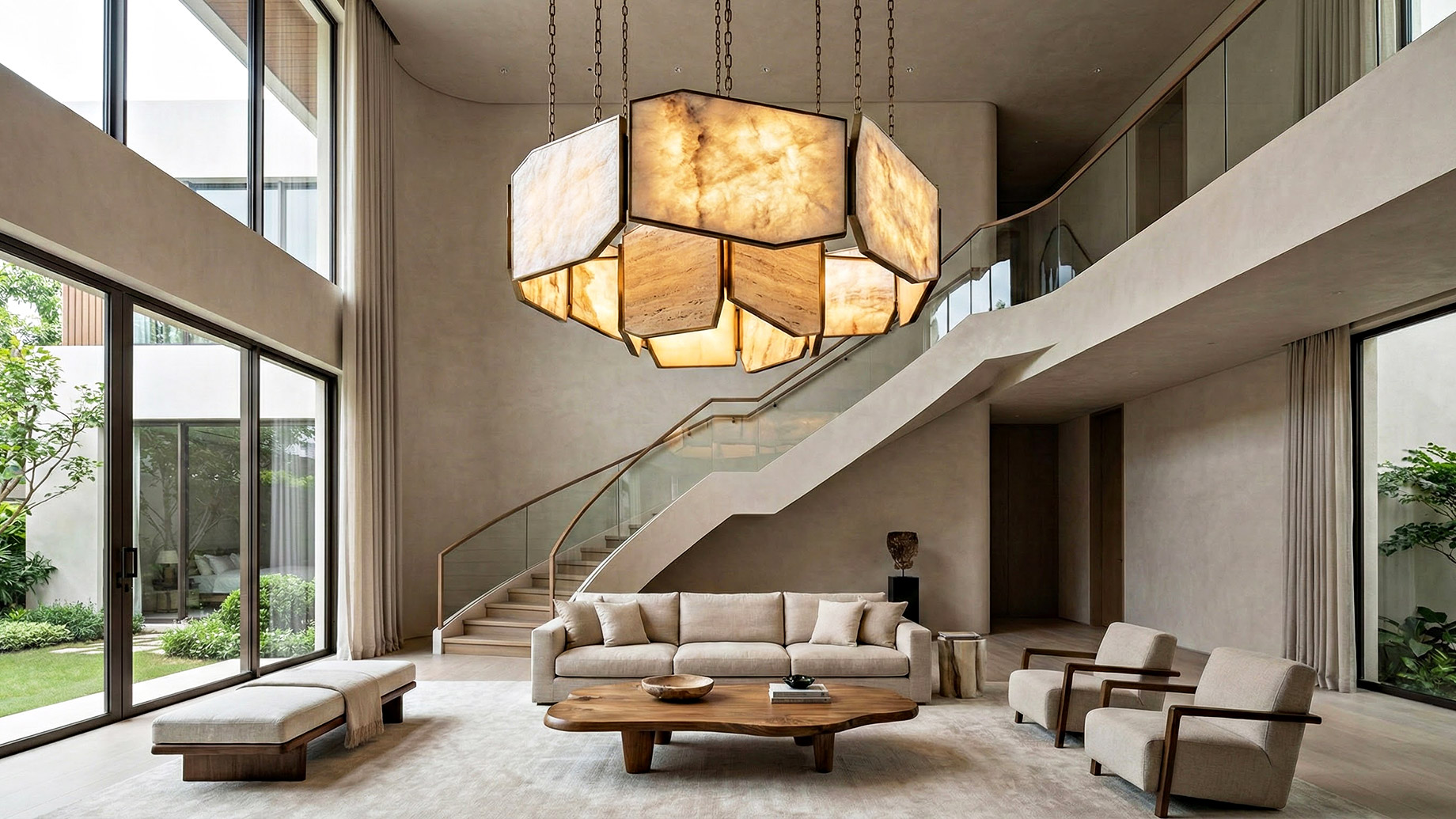
Lighting has changed significantly over the past decade. Chandeliers are no longer limited to traditional crystal forms or purely decorative roles. In modern interiors, they are increasingly treated as architectural elements that influence how a space feels, moves, and functions.
Among these newer approaches, stone chandeliers have emerged as a preferred choice for homeowners and designers who want lighting that feels grounded, sculptural, and timeless. While visually striking, these fixtures require a level of planning and execution that many people underestimate.
This article explains what makes stone chandeliers different, where they work best, and why installation expertise matters more than most homeowners expect.
What Defines a Stone Chandelier
A stone chandelier is defined less by ornamentation and more by material presence. Unlike glass or crystal, stone introduces weight, texture, and a natural irregularity that cannot be replicated synthetically.
Most modern stone chandeliers use a combination of natural stone, engineered stone, or stone-like composites paired with metal frameworks and integrated lighting. The result is a fixture that feels sculptural even when unlit.
Homeowners exploring a stone chandelier are often drawn to a few key characteristics:
- Organic shapes rather than strict symmetry
- Subtle light diffusion instead of high sparkle
- A sense of permanence and material honesty
- Compatibility with both contemporary and minimal interiors
These chandeliers are not designed to blend into a space. They are meant to anchor it visually.
Where Stone Chandeliers Work Best
Because of their scale and material weight, stone chandeliers perform best in spaces that allow them to breathe.
Common placements include:
- Double-height living rooms
- Stairwells and atriums
- Large dining areas
- Hotel lobbies and reception spaces
- Statement foyers in villas
In smaller rooms, stone chandeliers can still work, but only when carefully customized. Scale matters more than style. A piece that looks refined in a showroom can overwhelm a space if proportions are ignored.
One of the most common mistakes is choosing a chandelier based on appearance alone, without considering ceiling height, sightlines, or surrounding architecture.
Design Considerations Before Choosing a Statement Chandelier
After working on chandeliers for many years, one pattern is consistent: the best results come from planning before purchase, not after delivery.
Key considerations include:
Ceiling height and drop length
A chandelier must be positioned so it feels intentional, not intrusive. Too high and it loses impact. Too low and it disrupts movement and balance.
Visual weight
Stone already carries visual density. The surrounding finishes, furniture, and wall treatments should complement it rather than compete.
Light output
Stone chandeliers often provide ambient light rather than task lighting. Additional layers of lighting are usually required.
Customization
Off-the-shelf pieces rarely suit complex spaces. Adjustments in size, density, and composition often make the difference between acceptable and exceptional.
Treating a chandelier as a design decision rather than a décor item avoids most long-term regrets.
The Technical Reality Behind Installing Heavy Chandeliers
The moment a chandelier leaves the showroom, design gives way to engineering.
Stone chandeliers are heavier than most homeowners expect. Weight distribution, fixing methods, and electrical routing all need careful assessment. This is not a cosmetic process.
Common technical factors include:
- Structural load capacity of the ceiling
- Type of ceiling construction
- Anchor points and mounting hardware
- Electrical access and heat management
- Alignment and balance once suspended
Skipping these checks can result in safety risks, visual misalignment, or damage to ceilings and finishes. These issues often only appear after installation, when corrections become more complex and costly.
Why Professional Chandelier Installation Matters
There is a clear difference between installing a standard light fixture and handling a statement chandelier. The tools, access methods, and experience required are not the same.
Professional chandelier installation focuses on more than just hanging a fixture. It includes:
- Site inspection before installation
- Load testing and fixing verification
- Safe access planning for high ceilings
- Precise leveling and orientation
- Electrical safety compliance
In high-value interiors, installation errors are rarely minor. A poorly aligned chandelier is immediately noticeable, and a poorly secured one is a serious liability.
This is why experienced specialists are typically involved in complex or bespoke lighting projects, especially where stone or mixed materials are used.
Working With Specialists for Bespoke and Stone Chandeliers
Bespoke chandeliers introduce another layer of complexity. Each piece is designed for a specific space, which means installation conditions cannot be standardized.
Specialist firms that focus exclusively on chandeliers understand how to coordinate between designers, suppliers, and on-site teams. In the UAE, companies such as Sparkle and Shine are often involved in projects where stone chandeliers require careful handling, customization, and precise installation due to their scale and material composition.
This type of specialization is not about branding. It is about reducing risk and ensuring the final result matches the original design intent.
Maintenance and Long-Term Care Considerations
Stone chandeliers are durable, but they are not maintenance-free. Their longevity depends heavily on how they are installed and accessed.
Important factors include:
- Safe access for cleaning
- Protection of stone finishes
- Stability of fixings over time
- Electrical component inspection
When installation is done correctly, maintenance becomes predictable and manageable. When shortcuts are taken, even simple cleaning can turn into a logistical challenge.
Planning for long-term care at the installation stage saves both time and cost later.
Treating Chandeliers as Architectural Elements
Stone chandeliers are not trend pieces. When chosen and installed correctly, they become part of the architecture itself.
The most successful projects approach chandeliers with the same discipline applied to staircases, flooring, or structural features. Design, engineering, and execution are treated as one continuous process.
For homeowners and designers alike, the key takeaway is simple: statement lighting rewards planning and expertise. When handled properly, a stone chandelier does not just light a space. It defines it.
