Winter is superb with warm window-dressing and the hectic shopping of the holidays, but it is also at this time that the walkway is prone to accidents. A spot of rain or a frosty night, and before your eyes, the road to your store is an ice-rink. Winter moisture and dirt can form an oily surface in front of customers, even when you do not get a lot of snow.
The positive aspect is that there is no need to completely start over with slip prevention. A majority of storefronts are able to mitigate risk fast by becoming smarter with maintenance, making several specific improvements, and adhering to a detailed routine. We are going to go through what causes slippery walkways in winter and what you can do about it.
Begin with drainage and slope (the boring fix that works)
When there is no place to put the water, you are always going to be fighting an uphill battle. Spend five minutes on a rainy day and observe what your entrance course does. Does the water run off, or does it stand in depressions? Does it lead to the main entrance where everyone walks?
Minor drainage enhancements can be the most significant in terms of safety benefits. Depending on your location, that may involve clearing out a blocked drain, regrading a small area, altering downpipe discharge, or providing a small channel drain along the edge of a footpath. Even redirecting a sprinkler head that strikes the walkway can make a difference.
In case you have several storefronts, you may want to include water behavior in your winter inspections. It is far better to repair the drainage at an early stage than to react after someone has slipped.
Select safer winter foot traffic surfaces and finishes
Traction is lost rapidly when a surface is smooth, worn, or covered with grime. When renovating or replacing an outside path, the materials and finishes used should be capable of handling pedestrian traffic, not just selected for their appearance. Find textured pavers, broom-finished concrete, or slip-rated coatings that provide friction when wet.
In the case of raised walkways, entrances, or outdoor exhibition areas, a few retailers are choosing wood composite decking as it can offer the same underfoot experience and does not need seasonal sealing like other timber surfaces. That being said, there is no magic solution in the winter. The trick is to match an appropriate surface with proper drainage and a cleaning regimen so that the texture you spent money on is not filled in with dirt, film, or biological growth.
In case you already have a surface, it is better to upgrade it with anti-slip measures instead of changing it entirely. Steps may involve adding anti-slip strips, spraying smooth concrete with grit-containing clear coats that do not affect the overall appearance, or modifying transition nosings to add texture.
Develop a winter routine (daily and weekly)
The majority of slip accidents occur when normal mess is combined with moisture. An efficient habit helps avoid the transformation of that mess into a greasy coat. Make it easy so that employees can replicate it on a regular basis.
The following is a common rhythm used in a storefront:
- Open: Rapid brush to take off dust, leaves, and grit before it can be ground in.
- Noon: Spot-clean stains and inspect familiar problem areas (stained corners, areas adjacent to bins, and under awnings).
- Close: Another mop, followed by a quick rinse or wiping of high-traffic areas as necessary.
- Weekly: Do a deep clean of the entire entry approach, including corners and surfaces where dirt accumulates.
Special attention should be paid to mats. Place outdoor scraper mats at the entrance and indoor absorbent mats directly inside so that water and dirt will not spread. Ensure that mats do not curl along the edges and are flat, as a trip hazard is just as dangerous as a slip hazard.
Keep your walkway de-iced without harm
In the event that there is frost or freezing mornings in your area, de-icing must be included in the procedure. The key is that one should use the appropriate product and apply it properly, as not all de-icers are residue-free or safe for all surfaces.
A few practical tips:
- Timely application: De-icers are most effective prior to the bonding of ice. When a layer forms, you have to wait until it is thick before using the product, and you still have slick spots.
- Apply the least possible amount: Excessive application leaves a residue which attracts dirt and becomes greasy in wet conditions.
- Match the product to the surface: Rock salt may be brutal on certain concrete finishes and metal fittings. Substitutes such as calcium chloride or magnesium chloride may operate at lower temperatures, whereas substitutes with acetates might behave better with certain materials.
- Rinse when possible: When the freeze threat has subsided, a light rinse gets rid of any residue and lessens tracked-in dirt.
Also, keep in mind that de-icing is but one of the solutions. When a walkway remains wet because of drainage problems, you will be doing the same treatment over and over.
Enhance illumination and orientation to avoid unexpected falls
Slips usually occur when individuals fail to notice hazards despite the fact that the surface is decent. Winter days are briefer, shadows are deeper, and puddles can be obscured by the glare of damp ground. Ensure there is good lighting to enable customers to adjust their footing before trouble spots are encountered.
Pay attention to the pathway, curb edges, steps, and material-to-material transitions. When your storefront lighting is mostly ornamental, it is a good idea to include some practical lighting where people walk. Even in the morning and evening, the use of motion-activated lighting may be effective without increasing energy expenses.
Signage is also important, though apply it sparingly. In the rainy seasons, a little signage by the entrance warning of a wet floor can be handy, although this should not be your only help. Once customers realize the floor is slippery, they will see the signs; therefore, you should view signs as a complement, not a solution.
Understand when it is necessary to hire experts
When you observe recurrent slick spots, dark stains, and algae returning fast, you might require a deeper clean than the staff can provide with simple equipment. Deep cleaning is particularly handy when winter is about to start and also in the middle of the season when the entryway is gathering dirt.
An experienced service can cleanse embedded dirt, biological growth, and oily residue more efficiently, and they can sometimes suggest surface-safe means contingent on what your walkway is constructed of. Hiring commercial cleaning Cremorne could also assist in regular scheduling to ensure that your entry is safe during peak retail times, rather than reacting only after a problem appears.
Certain suppliers are also able to apply anti-slip treatments or assist you in establishing an authentic cleaning rhythm that suits your foot traffic, weather exposure, and surface type.
Rapid winter slip-prevention storefront checklist
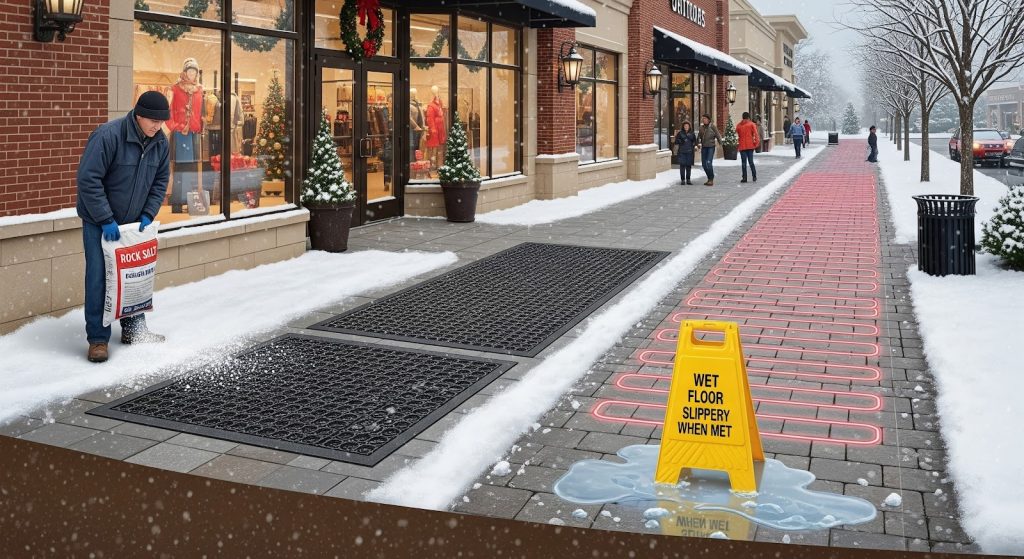
You can use the following as a starting point if you want to print something and distribute it to your team:
- Ensure water drains properly and does not puddle (drains off after rain).
- Clean every day in winter (more frequently during high rush times).
- Install and keep good mats (flat, clean, and appropriate size).
- Attack algae or mildew early (do not wait until it spreads).
- Use the right de-icer product, in the right amount, at the right time.
- Enhance approach routes and crossroads with better lighting.
- Arrange regular deep cleaning of areas that are hard to clean or are havens for slippery floors.
Conclusion: Safer walkways imply better business
It is not only about the prevention of accidents by making sure that winter walkways are not slippery. It also keeps your reputation safe, promotes accessibility, and ensures customers feel safe walking into your store. Once the entryway appears clean, well-lit, and well-kept, individuals naturally reduce their pace, are less hesitant, and will buy more easily.