New York City’s architectural landscape tells a story of constant transformation. The real estate market is defined by two immutable forces: scarcity and history.
Former industrial warehouses become luxury lofts, historic schoolhouses are reimagined as modern residences, and century-old brownstones gain new life while preserving their iconic facades. Examples like the Domino Sugar Factory redevelopment in Williamsburg or the High line adjacent located on the famed High Line in Hell’s Kitchen show how adaptive reuse can completely redefine neighborhoods.
This practice of adaptive reuse has become central to the city’s evolution, and it’s visible in projects such as the downtown Tribeca Loft and the FiDi Penthouse, where historic layouts were updated with contemporary amenities while maintaining architectural character.
For property owners embarking on renovation projects, working with a builder experienced in this specialized approach can make the difference between a successful transformation and a costly struggle.
This is not simple retrofitting — it is an expert undertaking that blends preservation, design integrity, and modern engineering.
Choosing a construction partner with proven adaptive reuse expertise is the single most critical decision that will determine the project’s financial integrity, regulatory compliance, and ultimate market value on prestigious lists like this one.
What makes adaptive reuse different
Adaptive reuse involves repurposing existing structures for new functions while retaining their historic character and architectural integrity.
Unlike ground-up construction or straightforward renovations, these projects demand a unique skill set that combines technical expertise with creative problem-solving.
The challenges begin the moment you peer behind the walls. Buildings constructed decades or even centuries ago often reveal unexpected conditions: load-bearing walls where none were anticipated, outdated mechanical systems that need complete overhauls, or structural elements that don’t align with modern building codes.
Projects like the transformation of the Old Bronx Post Office into a mixed-use commercial hub illustrate just how complex and rewarding this process can be handled by experienced teams.
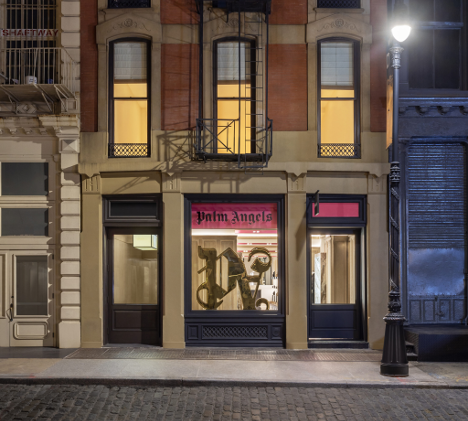
CC: courtesy of Palm Angels
In another example of the Palm Angels SoHo Flagship build-out and Rizzoli retail renovation by Blueberry Builders in New York navigated intricate interior updates while preserving stylistic cues; a hallmark of effective adaptive reuse.
Common challenges in NYC adaptive reuse projects include:
- Unexpected load-bearing walls discovered during demolition
- Outdated mechanical systems requiring complete overhauls
- Structural elements not meeting modern building codes
- Hidden conditions behind walls and above ceilings
- Original materials requiring specialized restoration techniques
- Integration of contemporary systems in historic structures
Experienced adaptive reuse contractors have encountered these complications repeatedly and know how to address them efficiently without derailing budgets or timelines. The expert’s ability to predict and mitigate these hidden liabilities ensures the financial integrity of the project from day one.
Navigating NYC building regulations and requirements
New York City’s regulatory environment presents significant challenges for renovation projects. The Landmarks Preservation Commission (LPC) oversees thousands of designated properties, the Department of Buildings (DOB) enforces strict codes, and community boards review neighborhood impacts.
Key regulatory considerations for adaptive reuse:
- Landmarks Preservation Commission approvals for designated historic buildings
- DOB permits and inspections for code compliance updates
- Certificate of Occupancy modifications for change of use applications
- Zoning regulations and variance requirements for dimensional changes
- Environmental reviews for properties with potential contamination
- Fire safety upgrades meeting current code standards
- Accessibility compliance under ADA and NYC building codes
Builders specializing in adaptive reuse maintain established relationships with these agencies and understand their specific requirements. They know which alterations face scrutiny, how to present proposals satisfying preservation concerns, and how to expedite approvals that might otherwise take months.
Preserving character while embracing modernity
One of the most delicate aspects of adaptive reuse is honoring a building’s historic character while integrating contemporary amenities and systems. This requires an eye for design continuity and a deep understanding of both historical construction methods and modern building science.
Elements experienced builders know how to preserve and integrate:
- Original brick walls and masonry features
- Exposed timber beams and wood ceiling structures
- Cast-iron columns and architectural metalwork
- Historic windows and door assemblies
- Original hardwood flooring and millwork
- Decorative plasterwork and moldings
- Vintage fixtures and hardware
In renovations like L’Artusi Supper Club and Maison Kayser, Blueberry Builders successfully blended historic details with modern utility, retaining the charm of the original structure while elevating interior performance.
Kostow Greenwood Architects, a New York City firm combining historic preservation with renovation and reuse of cultural landmarks including historic theaters and community spaces.
They understand which original elements can be salvaged and restored versus which require replacement, and they have the craftsmanship to ensure new interventions modern systems requiring seamless integration:
- Central HVAC with discrete ductwork routing
- Advanced insulation without compromising breathability
- Updated electrical systems meeting current load requirements
- Smart home technology and integrated controls
- Modern plumbing with efficient fixtures
- High-speed internet and communications infrastructure
Structural engineering solutions for historic NYC Buildings
Older buildings often demand innovative structural approaches.
Creating open-plan layouts in spaces divided by load-bearing masonry walls, adding floors to buildings with limited foundation capacity, or reinforcing structures for modern loads all require specialized expertise.
Adaptive reuse specialists collaborate with structural engineers experienced in historic buildings, employing techniques like:
- Strategic steel reinforcement for load redistribution
- Foundation underpinning for additional floors
- Masonry stabilization and strengthening
- Seismic retrofitting for older structures
- Integration of modern systems without compromising structural integrity
Understanding how older building materials interact with modern systems prevents costly mistakes and ensures long-term structural stability.
Sustainable renovation and energy efficiency
Modern adaptive reuse increasingly emphasizes sustainability, recognizing that the greenest building is often the one already standing. However, improving energy performance in older structures requires specialized knowledge.
Historic buildings breathe differently than modern construction, and applying contemporary insulation or air-sealing techniques without proper understanding can create moisture problems, material degradation, or indoor air quality issues.
Experienced builders understand building science as applied to older structures. They improve thermal performance while maintaining breathability, upgrade windows without compromising historic character, and integrate energy-efficient mechanical systems into buildings never designed for them.
Energy efficiency strategies:
- Strategic insulation compatible with historic materials
- High-performance window restoration or replication
- Modern HVAC systems with historic-appropriate integration
- LED lighting preserving period fixtures
- Smart home technology integration
- Water conservation upgrades
Cost management and budget control
Adaptive reuse projects carry inherent uncertainties that can significantly impact budgets.
Hidden conditions, code compliance requirements, and preservation mandates often trigger change orders.
However, experienced builders develop intuition for anticipating these issues based on extensive project history.
Professional adaptive reuse contractors build appropriate contingencies into estimates, provide realistic timelines accounting for regulatory processes, and maintain relationships with specialized subcontractors familiar with historic materials. This experience-based approach helps prevent the budget overruns common in renovations handled by builders unfamiliar with adaptive reuse complexities.
Budget planning best practices:
- Comprehensive pre-construction investigations
- Detailed existing conditions assessments
- Contingency planning for unforeseen conditions
- Phased approach to minimize disruption
- Value engineering without compromising quality
Evaluating adaptive reuse builders
Selecting the right builder requires careful vetting and due diligence. Questions to ask potential builders:
- How many adaptive reuse projects have you completed in NYC?
- What’s your experience with LPC approvals in our neighborhood?
- Can you provide three references for similar project types?
- How do you handle unforeseen conditions and change orders?
- Which specialized subcontractors do you regularly work with?
- What’s your approach to sustainable historic renovation?
- How do you manage occupied building coordination?
- What project management tools do you use for communication?
Portfolio evaluation criteria:
- Diversity in building types and eras
- Successful landmark designation projects
- Quality of historic material preservation
- Modern system integration elegance
- Client satisfaction and repeat business
- Awards or recognition for restoration work
Gran Kriegel, headquartered in NYC, a design and planning firm with adaptive reuse experience, including projects like the Brooklyn Family Courthouse conversion into schools.
Other diverse portfolio projects such as Versace showroom, Suteishi, and Immersive Gamebox, from Blueberry Builders highlights a broad range of adaptive approaches across residential, commercial, retail, and hospitality sectors.
The ROI of experienced adaptive reuse builders
While experienced adaptive reuse builders may command higher rates than general contractors, their expertise typically delivers superior return on investment through:
- Fewer change orders and cost overruns
- Faster regulatory approvals
- Higher quality craftsmanship
- Better preservation of historic value
- Enhanced property appreciation
- Reduced risk of costly mistakes
Risk Mitigation capabilities
Every construction project carries risks, but adaptive reuse amplifies certain challenges. Unforeseen conditions, regulatory hurdles, and working within existing structures all increase potential for delays and complications.
Builders with extensive adaptive reuse experience develop systems specifically designed to mitigate these risks.
They conduct thorough pre-construction investigations, anticipate regulatory requirements before they become obstacles, maintain scheduling flexibility to accommodate discoveries, and communicate proactively about challenges.
Making the right choice for your NYC renovation
Whether you’re converting an industrial loft in Tribeca, restoring a Brooklyn brownstone, or reimagining a historic townhouse on the Upper West Side, partnering with experienced adaptive reuse builders transforms challenges into opportunities.
Their expertise with NYC’s unique building stock, regulatory environment, and preservation requirements provides the foundation for successful transformation that enhances both your property’s value and the city’s architectural heritage.
A builder with demonstrated adaptive reuse experience means investing in specialized knowledge that honors the past while embracing the future, creating exceptional spaces that stand the test of time.