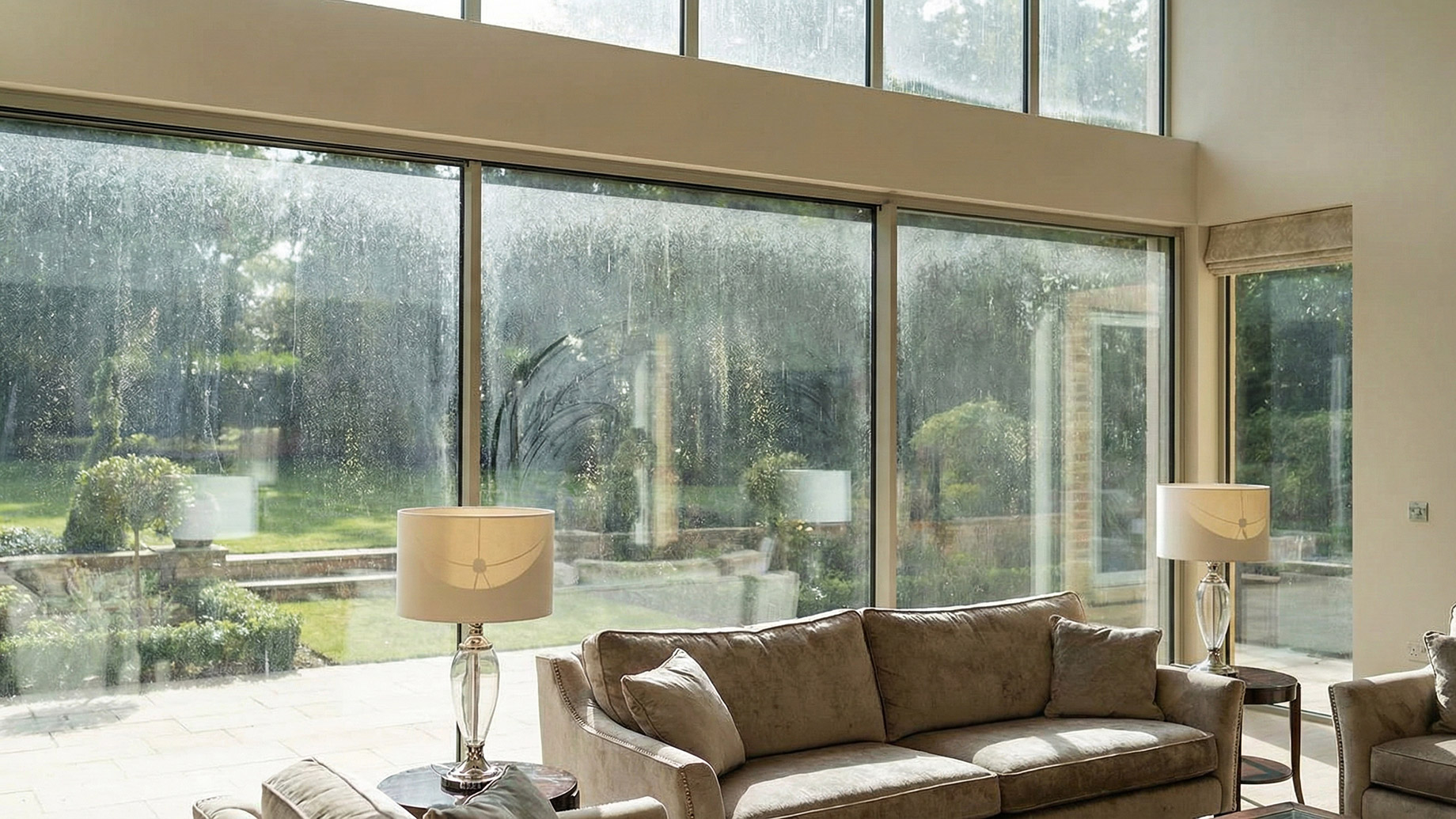
Look at your windows right now. Go ahead, we’ll wait.
See those streaks? That haze? That weird film you can’t quite identify but definitely exists? Yeah. Your windows are hosting a party, and you’re not invited. The guests include pollen, pollution particles, bird contributions (let’s keep it polite), and something science calls “atmospheric deposition” but normal people call “city crud.”
Here’s the thing nobody wants to admit: most of us are walking around with windows so dirty we’ve actually adjusted to seeing the world through a permanent filter. It’s like wearing sunglasses indoors and forgetting they’re there. Except sunglasses are intentional. Dirty windows? Pure negligence dressed up as “I’ll get to it eventually.”
What’s Actually Living On Your Glass
The Invisible Invasion
Your windows collect more than just dust. They’re basically a crime scene of environmental assault. Every day, microscopic particles land on the glass and set up camp like tiny squatters who brought their own furniture.
Research from environmental scientists shows that urban windows accumulate an average of 2-5 grams of particulate matter per square meter annually. That might sound abstract until you realize you’re literally looking through a layer of compressed pollution every single day.
What’s in that grime sandwich?
- Diesel exhaust particles
- Industrial emissions
- Pollen (so much pollen)
- Dead insect residue
- Salt spray (if you’re near water)
- Oxidized minerals from hard water
- Organic compounds that sound like rejected Pokémon names
And that’s just the exterior. The inside? Oh, the inside is its own ecosystem.
Your Indoor Contribution
Let’s talk about the elephant in the room. Or rather, the cooking grease, pet dander, skin cells, and mysterious sticky residue from that one time you ate takeout too close to the window.
Indoor window grime comes from living. Breathing. Existing as a carbon-based life form in an enclosed space. Every shower you take releases moisture. Every meal you cook releases particles. Your windows are silently documenting your entire lifestyle like a glass diary nobody asked for.
According to indoor air quality studies, cooking alone can deposit a film of aerosolized oil on windows within weeks. Add in fingerprints from kids, nose prints from dogs, and that weird smudge you’re 80% sure is from when you walked into the glass because it was too clean (irony alert), and you’ve got yourself a situation. For expert insights on how professional cleaning addresses both interior and exterior contamination, there’s actually science behind the squeegee.
As architect Frank Lloyd Wright once observed, “The reality is more excellent than the report.” But in this case? The report is pretty damning, and the reality is somehow worse.
The Health Stuff You’re Ignoring
Allergens Are Throwing a Block Party
Think about dust for a second. Actually, don’t. It’s gross. Dust is mostly dead skin cells, and it loves hanging out on horizontal surfaces. Window sills? Prime real estate.
But it’s not just dust. Window tracks become these tiny valleys of allergen accumulation. Mold spores find moisture there. Pollen settles in for the season. If you have allergies and you’re constantly sneezing at home, your windows might be the villain origin story nobody suspected.
Medical research indicates that reducing indoor allergen exposure can decrease allergy symptoms by up to 60%. Yet how many people deep-clean their windows and tracks as part of allergen management? Statistically speaking, almost nobody.
The Bacteria You Can’t See
Here’s a fun dinner party fact that’ll make you deeply unpopular: windows in bathrooms and kitchens can harbor fecal coliform bacteria. Yes, really. Aerosolization is a beautiful process that makes everything terrible.
Every toilet flush creates a plume. Every sink splash spreads microscopic droplets. And those droplets land somewhere. Often on nearby glass surfaces where they dry, concentrate, and wait for you to touch them later.
The solution isn’t panic. It’s acknowledgment. And maybe some bleach-based cleaner for bathroom windows. Regularly.
Why You Don’t Notice How Bad It’s Gotten
The Gradual Decline Phenomenon
Dirty windows happen slowly. Like gaining weight or losing your car keys, it’s a process you don’t notice until someone points it out or you see photographic evidence.
Psychologists call this “gradual change blindness.” Your brain adapts to slowly degrading conditions because it’s busy dealing with immediate threats like traffic, deadlines, and trying to remember if you turned off the stove.
One day your windows are pristine. Six months later, they’re opaque. But you didn’t wake up one morning shocked by filth because the transformation was incremental. Sneaky. Like ninja dirt.
The Light Loss Nobody Measures
Dirty windows block light. Not in an obvious “it’s dark in here” way, but in a subtle “why is this room always gloomy” way.
Studies on window transmission rates show that accumulated grime can reduce natural light penetration by 20-40%. That’s nearly half your sunlight held hostage by a film of urban existence. You’re paying for heating and lighting to compensate for dirty glass without even realizing it.
Clean windows = more natural light = lower energy bills + better mood. The math is simple. The execution? Apparently not.
The “I’ll Do It Myself” Delusion
Why Your DIY Attempt Failed
You tried. We respect that. You bought the blue spray, grabbed some paper towels, and went to town on those windows like a champion of domesticity.
And they looked worse afterward, didn’t they?
Here’s why:
- Paper towels leave lint (so much lint)
- Store-bought cleaners create residue
- You cleaned in direct sunlight (rookie move)
- Your water is hard, and minerals don’t evaporate
- You used circular motions instead of proper squeegee technique
As inventor Thomas Edison noted, “Genius is one percent inspiration and ninety-nine percent perspiration.” Window cleaning is zero percent inspiration and one hundred percent technique you don’t have.
The Equipment Gap
Professional window cleaners don’t use Windex and paper towels for the same reason surgeons don’t use kitchen knives. Tools matter. A lot.
The professional toolkit includes:
- Medical-grade microfiber cloths (not the ones from the car wash)
- pH-balanced solutions designed for glass
- Professional squeegees with replaceable rubber
- Extension poles for unreachable spots
- Pure water systems for spot-free drying
Your arsenal probably includes spite, determination, and a roll of Bounty. Noble? Yes. Effective? Not even a little.
What Happens If You Keep Ignoring This
Glass Degradation Is Real
Windows aren’t invincible. Prolonged exposure to acidic pollutants, hard water minerals, and environmental contaminants causes something called glass corrosion. It’s permanent. It’s expensive. And it’s totally preventable.
Industry data shows that neglected windows can develop etching and pitting that requires professional restoration or complete replacement. We’re talking thousands of dollars to fix what regular cleaning would have prevented.
Think of it like dental care. Skip the cleanings, pay for the root canal. Skip the window maintenance, pay for the replacement. The universe has a payment plan either way.
Your Home Value Takes a Hit
Real estate agents know something you might not: dirty windows are a red flag for potential buyers. They signal neglect. If the windows are grimy, what else is being ignored? The roof? The HVAC system? The foundation?
According to real estate market analysis, homes with professionally maintained windows photograph better, show better, and sell faster. Clean windows can literally add thousands to your home’s perceived value. Dirty ones subtract it.
The Wake-Up Call
So what now? You could continue living behind your protective film of denial and particulate matter. Or you could acknowledge that windows, like everything else in life, require maintenance.
Professional cleaning isn’t about luxury. It’s about preservation, health, and being able to see the world without squinting through layers of accumulated existence.
Your windows are dirtier than you think. But now you know. And knowing is the first step toward actually doing something about it.
The second step? Probably involves a phone call, a scheduled appointment, and finally seeing your neighborhood in high definition instead of permanent soft focus.
Your view deserves better. You deserve better. Those windows have been trying to tell you something for months.
Maybe it’s time to listen.
