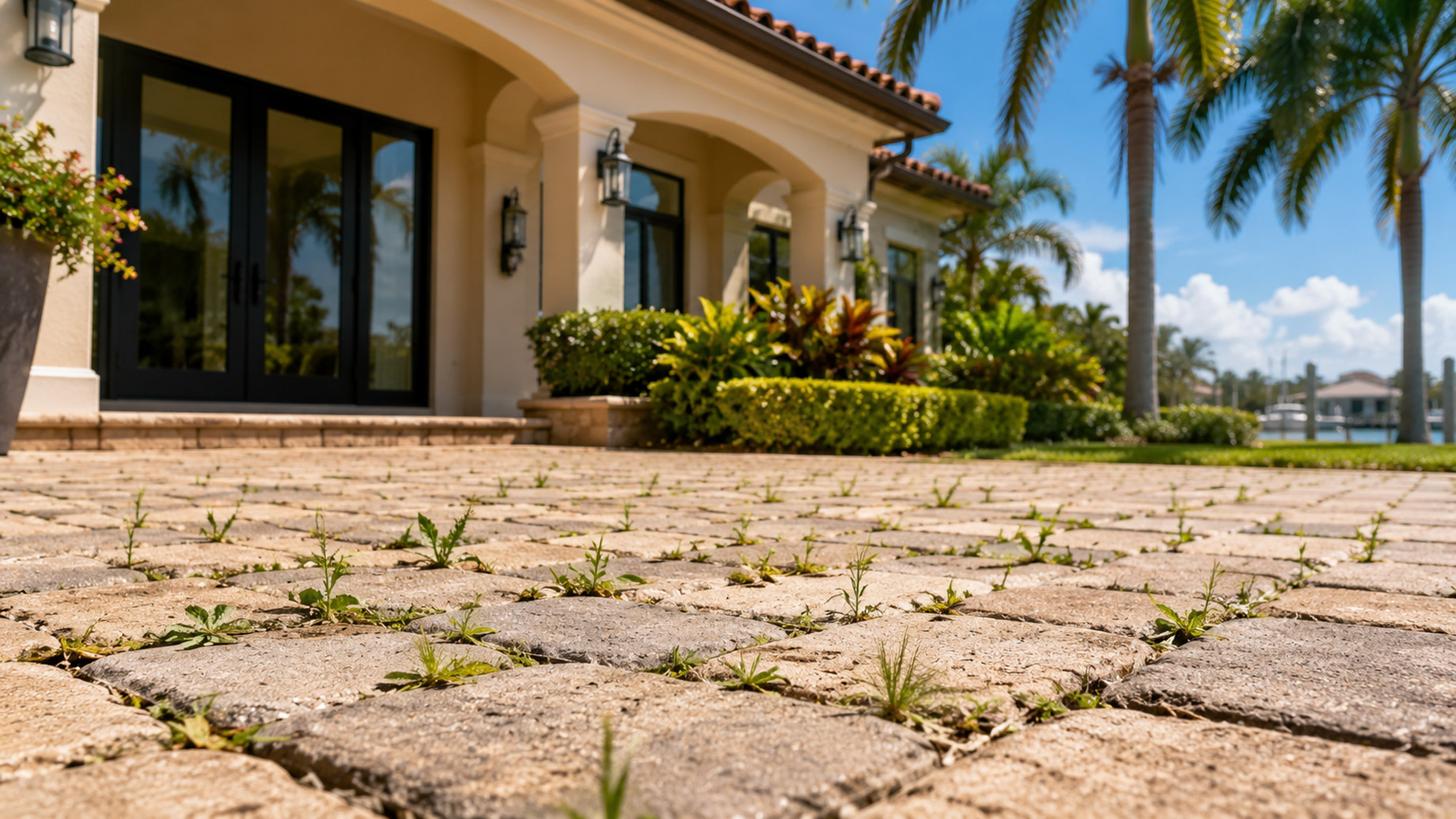
Spring brings warmer weather and blooming flowers, but it also brings a highly frustrating problem for homeowners: weeds taking over the patio. If you constantly wonder why weeds keep coming back between patio pavers every spring, you are certainly not alone. These tiny green invaders find their way into the smallest cracks, making your carefully planned outdoor spaces look messy and neglected.
You might spend an entire weekend pulling them out by the roots, only to see a fresh batch return just a few days later. This endless cycle happens because spring conditions create a perfect environment for dormant seeds to thrive. Let us explore exactly what causes this aggressive weed growth, how your patio’s environment contributes to the problem, and what steps you can take to stop it.
Why Weeds Grow Faster During Late Spring
Late spring provides the exact combination of light and warmth that dormant seeds need to wake up. Throughout the cold winter months, wind carries thousands of tiny weed spores across your yard. These invisible spores eventually settle into the tiny crevices of your hardscaping and wait for the right conditions.
When soil temperatures hit a specific sweet spot—usually between 55 and 70 degrees Fahrenheit—those sleeping seeds activate. The days also get much longer in the spring, giving the new sprouts plenty of sunlight to fuel their rapid development. You suddenly see aggressive weed growth because the environment has shifted from harsh and frozen to incredibly nurturing. Weeds like dandelions and crabgrass are highly opportunistic, meaning they will seize this perfect window of warmth and sunlight to establish their roots before summer heat arrives.
How Rain Affects Patio Paver Joints
Spring rain showers do more than just water your lawn and garden; they heavily impact your patio pavers. When heavy rainwater hits your patio, it needs somewhere to go. Often, the water seeps directly into the spaces between the stones. If these joints hold onto the water for too long, they create a highly humid microclimate right at the surface level.
This moisture retention acts just like an incubator for stubborn weeds. The combination of rising air temperatures and constant dampness gives seeds the exact hydration they need to establish deep roots quickly. Furthermore, continuous rain softens the dirt inside the joints, making it incredibly easy for young sprouts to push their way through to the surface. Without a chance to dry out completely, the spaces between your pavers become the perfect nursery for invasive plants.
What Causes Joint Sand Erosion
Over time, the material holding your pavers together naturally breaks down. Many modern patios use polymeric sand, a specialized jointing material that hardens when wet to lock pavers firmly in place. However, repeated spring rains, aggressive power washing, and heavy foot traffic gradually wash this sand away.
When joint sand erosion occurs, it leaves deep, empty gaps between the stones. These empty spaces act like physical traps for blowing dirt and seeds. If you live in a region with intense weather patterns, you will likely notice this erosion happening much faster. Reaching out to top rated paver sealing companies in Tampa can help you assess how much sand you have lost. Professionals can easily determine whether your joints need complete stabilization before the spring weeds take over your entire patio.
Why Drainage Problems Lead to Recurring Weeds
Water must always flow away from your house and your patio surface. When a patio lacks a proper slope or has severely compromised drainage systems, water pools on the surface and settles deep inside the joints. Standing water degrades the jointing sand much faster and softens the ground underneath the paver installation.
Weeds absolutely love this soft, muddy environment. Poor drainage also encourages the growth of moss and algae. These organisms break down the jointing sand even further and create a spongy, wet base where weeds easily take root. Fixing these drainage issues is critical for long-term landscaping maintenance. Sometimes, simply correcting the slope or clearing nearby gutters makes a massive difference. Property owners frequently consult with top rated paver sealing companies in Tampa to learn how commercial sealants perform significantly better once the underlying patio drainage issues are fully resolved.
The Role of Dirt and Organic Debris Buildup
Have you ever noticed dead leaves, grass clippings, and blowing dust settling on your patio surface? When wind and rain push this organic debris into the eroded joints of your pavers, it quickly begins to decompose. As the debris breaks down, it transforms into nutrient-rich soil right between your stones.
You are essentially creating miniature planter boxes in the gaps of your patio. This rich soil provides the absolute perfect bed for weeds to establish strong, deep root systems. When you mow the lawn and blow clippings onto the patio, you feed this cycle. Sweeping or blowing off this organic debris regularly prevents that soil from forming in the first place. By keeping the joints clean, you remove the basic nutritional foundation that weeds desperately need to survive and multiply.
Can Paver Sealing Help Prevent Weeds?
Applying a high-quality sealant serves as an excellent defense mechanism for your hardscaping. Paver sealing directly binds the joint sand together, hardening it so that it resists washing away during a heavy spring rainstorm. When the sand stays entirely intact, seeds cannot penetrate the joints, and dirt cannot settle deeply into the gaps.
A good sealant also blocks damaging UV rays and strongly repels water, reducing the overall moisture retention in the joints. For the absolute best results, many homeowners rely on top rated paver sealing companies in Tampa to properly clean the surface first. These professionals remove the old debris, replace the missing polymeric sand, and apply a commercial-grade sealant that truly locks out invasive weed growth for years to come.
Seasonal Maintenance Tips for Patio Pavers
Maintaining your patio requires a few simple, proactive steps rather than waiting for weeds to appear and ruin the view. Implementing a routine saves you hours of back-breaking weeding later in the year.
- Sweep frequently: Make it a strict habit to sweep your patio every single week. Removing dirt, pollen, and leaves before they decompose starves the weeds of soil.
- Inspect the joints: Check the gaps between your pavers every spring. If you see wide cracks or missing sand, refill those specific areas with fresh polymeric sand immediately.
- Fix pooling water: Address any low spots where water constantly pools after a rainstorm. Adjust the sunken pavers to keep the surface level and dry.
- Hire professionals: Consider a professional deep cleaning and sealing schedule every few years. Bringing in top rated paver sealing companies in Tampa ensures that your maintenance efforts use professional-grade products, keeping your patio looking brand new.
Conclusion
Understanding exactly why weeds keep coming back between patio pavers every spring helps you tackle the true root of the problem. Instead of endlessly pulling weeds by hand every weekend, focus your energy on eliminating their ideal growing conditions. By addressing joint sand erosion, fixing poor drainage, and keeping organic debris consistently swept away, you stop weeds long before they ever sprout.
Investing time in proper landscaping maintenance, including refilling eroded joints and applying high-quality sealants, will effectively protect your outdoor living space. Take proactive action this spring, and you can enjoy a clean, beautiful patio all season long without the constant hassle of fighting unwanted weeds.
