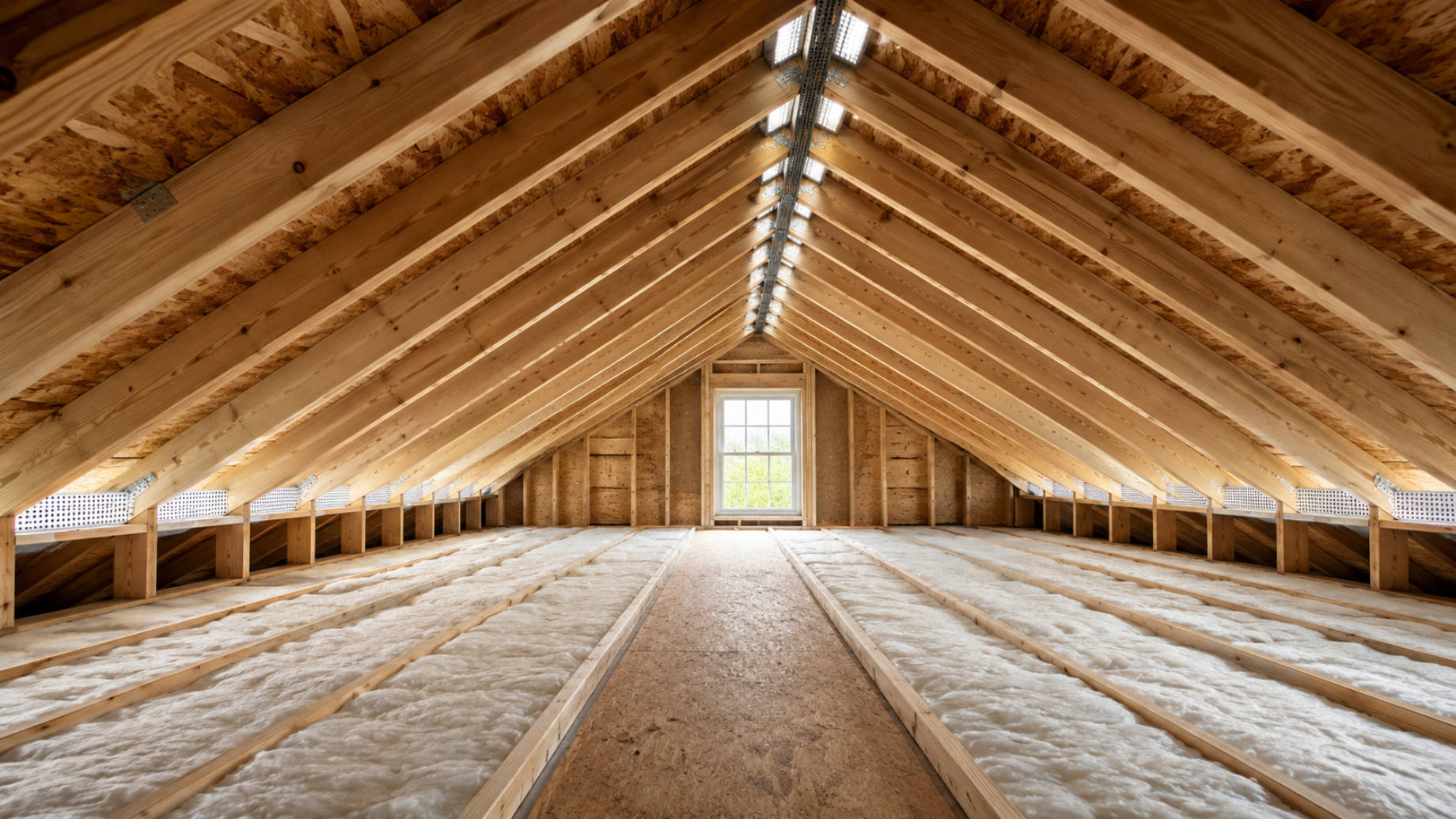
When people talk about roof performance, the conversation usually starts with materials. Clay or concrete? Slate or metal? Breathable membrane or traditional felt? Those choices do matter, of course. They affect durability, appearance, weight, cost, and maintenance.
But a roof is not just a weatherproof skin. It is a working system. And if that system cannot manage air and moisture properly, even high-quality materials can end up underperforming.
That is why roof ventilation deserves the same level of attention as the covering itself. Get it right, and you improve energy efficiency, reduce condensation risk, and help the whole roof assembly last longer. Get it wrong, and problems can build quietly for months or years before anyone notices.
Roofing Materials Can Only Do So Much
Good materials protect the structure from rain, wind, and UV exposure. What they cannot do on their own is regulate the movement of moisture-laden air from inside the building or the heat that accumulates beneath the roof covering.
That distinction matters more than many property owners realise.
A Roof Is a Building-Physics Problem, Not Just a Product Choice
Warm air rises. Moisture moves. Temperature changes create pressure differences. Everyday activities such as cooking, showering, drying clothes, or simply occupying a space add water vapour to the indoor environment. Some of that vapour will always try to move upward into the loft or roof build-up.
If it reaches a cold surface and condenses, the results can be subtle at first: damp insulation, timber with a raised moisture content, musty smells, or mould growth in corners. Over time, the damage becomes more serious. Timber decay, reduced thermal performance, corrosion of fixings, and shortened roof lifespan are all common consequences of poor ventilation.
This is why ventilation should never be treated as a finishing detail or a box-ticking exercise. It is part of the roof’s core performance.
Even Premium Roof Coverings Can Be Undone by Moisture
You can specify a beautiful slate roof or a robust modern membrane, but trapped moisture underneath still causes trouble. Insulation loses effectiveness when damp. Timber battens can deteriorate. Underlays may age faster if exposed to persistent condensation. In some cases, the first visible sign is not on the roof at all, but inside the building: staining, peeling paint, or black mould near ceiling junctions.
For anyone trying to understand the practical side of specifying ventilation, reviewing different types of airflow control products for roofing systems can be a useful way to see how ridge vents, eaves ventilation, tile vents, and other components support the roof as a whole rather than acting as isolated add-ons.
The Real Cost of Poor Ventilation
Ventilation problems are often underestimated because they are rarely dramatic at the start. A slipped tile is visible. A blocked airflow path inside the roof is not.
That hidden nature is exactly what makes the issue expensive.
Moisture Damage Builds Slowly, Then All at Once
A loft space may appear fine during dry months, only for condensation to become obvious in winter when warm indoor air meets colder roof surfaces. By then, insulation may already be holding moisture, and timber elements may have been cycling through damp conditions long enough to begin degrading.
This slow progression creates two challenges. First, the problem is easy to miss during routine inspections. Second, by the time it becomes visible, remedial work can extend beyond ventilation alone.
Energy Efficiency Suffers Too
There is also a performance penalty. Damp insulation simply does not insulate as effectively as dry insulation. That means more heat loss in winter and, in some roof configurations, more heat build-up in warmer months. So while ventilation is often discussed in terms of moisture management, it plays a role in comfort and running costs as well.
In a time when building owners are under pressure to improve energy performance, overlooking roof ventilation is a strange blind spot. You can spend heavily on insulation upgrades, then lose some of that gain because the roof assembly cannot stay dry and balanced.
Ventilation Strategy Should Reflect the Roof, the Building, and the Climate
There is no universal formula that suits every roof. A small domestic loft conversion does not behave the same way as a large pitched roof over a busy commercial property. Roof pitch, insulation position, occupancy levels, airtightness, and regional weather conditions all influence the right approach.
Cold Roofs and Warm Roofs Behave Differently
In a traditional cold roof, the insulation sits at ceiling level, leaving the loft space above it colder. That usually increases the need for well-managed ventilation across the roof void to remove moisture before it condenses.
In a warm roof, where insulation follows the roof slope, the moisture and airflow dynamics change. Ventilation may still be required, but the strategy depends on the exact build-up and how vapour control has been designed elsewhere in the assembly.
The point is simple: ventilation should be planned as part of the roof design, not added later as a correction.
Retrofits Need Special Care
Older buildings present another layer of complexity. Roofs that once “worked” acceptably with draughty interiors can behave very differently after insulation, new windows, or airtightness improvements are introduced. A retrofit that reduces uncontrolled air leakage can improve efficiency indoors while increasing condensation risk in the roof if ventilation is not reassessed at the same time.
That catches people out regularly.
What Good Roof Ventilation Looks Like in Practice
A sound strategy is usually not about one miracle product. It is about creating a continuous, appropriate path for air movement while protecting the building from wind-driven rain, pests, and unnecessary heat loss.
The Basics Worth Checking
In most cases, a good ventilation plan includes attention to:
- intake and exhaust paths, rather than ventilation at just one point
- clear airflow routes that are not blocked by insulation or later alterations
- compatibility between underlays, insulation, and ventilation components
- inspection and maintenance, especially around eaves and ridge areas
Those points are not glamorous, but they are where real performance is won or lost.
Coordination Matters More Than Specification in Isolation
One of the most common mistakes on site is assuming the right components will guarantee the right outcome. They will not if the airflow path is interrupted, if vents are undersized for the roof area, or if detailing at the eaves is compromised during installation.
That is why the best results usually come when ventilation is considered early, coordinated properly, and checked in context with the rest of the roof build-up.
The Best Roofs Balance Protection and Breathability
A well-designed roof has to do two things at once: keep water out and allow the structure to manage internal moisture safely. That balance is easy to describe and surprisingly easy to get wrong.
Roofing materials still matter, absolutely. But they are only part of the story. Ventilation influences how dry the structure stays, how well insulation performs, and how long the roof can do its job without hidden deterioration.
So if you are evaluating a roofing project, whether it is a new build, refurbishment, or retrofit, it is worth asking a broader question. Not just “What covering should we use?” but “How will this whole roof breathe?”
That is often where long-term performance is decided.
