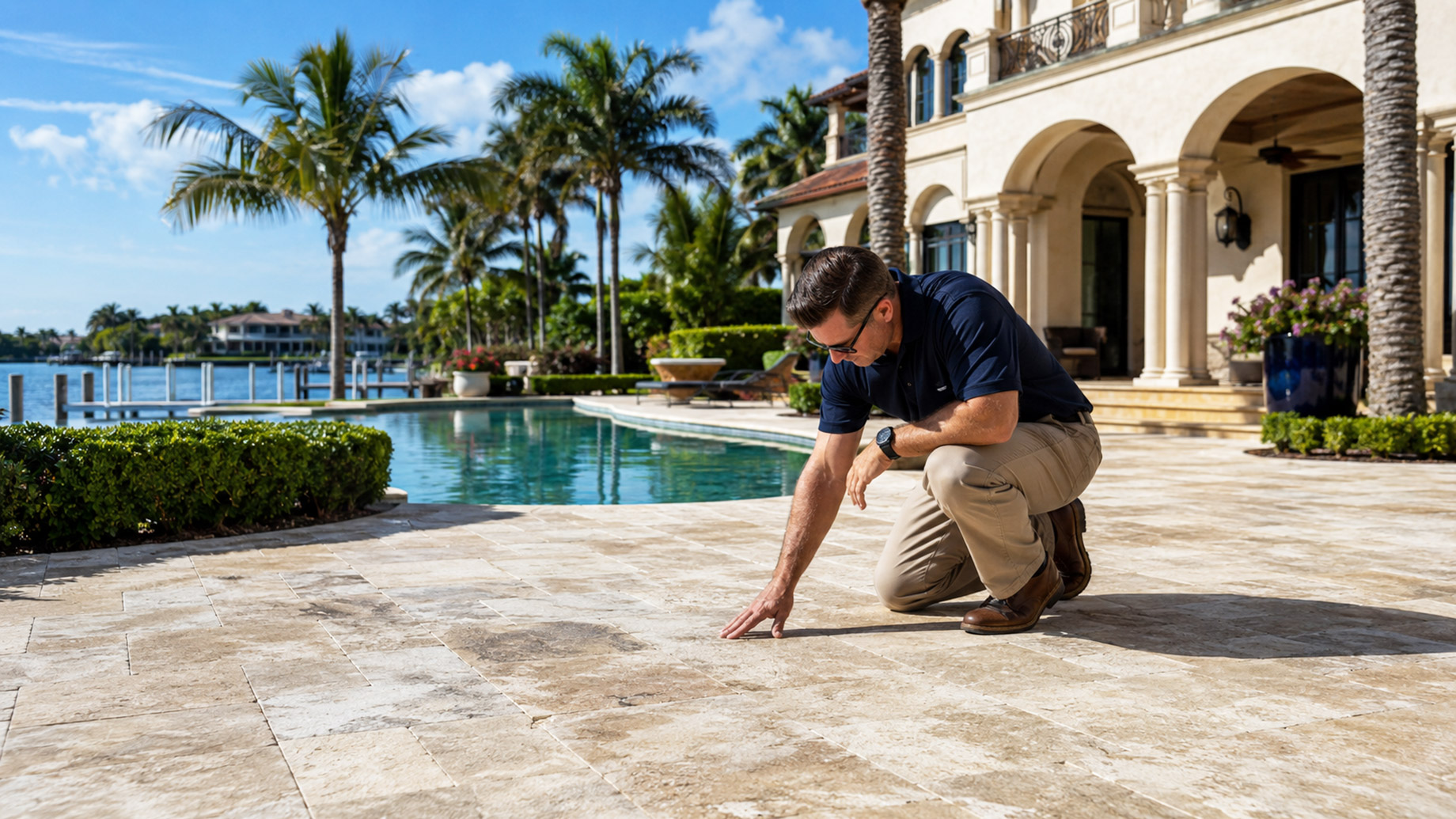
In places like Boca Raton, homeowners invest heavily in outdoor living spaces. Driveways, pool decks, patios, and walkways are designed to handle intense sun, humidity, tropical rain, and constant foot traffic. Yet many paver surfaces begin to look cloudy, patchy, slippery, or faded far sooner than expected. The problem is not always the pavers themselves. In many cases, the failure starts with poor sealing practices.
Most articles focus on the “benefits” of sealing pavers. What often gets ignored is why some sealing jobs fail within months while others continue looking clean and protected for years. Understanding the causes behind failed sealing projects can help homeowners avoid expensive restoration work later.
Florida’s climate creates unique challenges for paver maintenance. Coastal cities such as Boca Raton deal with salt air, high moisture levels, algae growth, UV exposure, and sudden weather changes. These conditions make the sealing process far more technical than many people realize.
One of the biggest causes of failure is sealing pavers before they are fully cleaned and dried. Contractors and DIY homeowners sometimes rush the process, especially during humid seasons. Dirt, moisture, haze, or organic residue can become trapped beneath the sealer. Once that happens, the surface may appear permanently stained or uneven. Reddit discussions from homeowners and contractors repeatedly mention this issue, especially when surfaces were sealed too quickly after installation or cleaning.
Another major issue involves improper pressure washing techniques before sealing. Many homeowners assume stronger pressure equals better cleaning, but excessive pressure can damage the surface layer of pavers. Professionals in the pressure washing industry often warn that turbo nozzles or aggressive washing can leave swirl marks, remove protective layers, and create permanent discoloration.
This is especially important in South Florida neighborhoods where decorative brick pavers are common around pools and luxury driveways. Once the surface texture is damaged, sealing alone cannot restore the original appearance. In some situations, the affected pavers must be replaced entirely.
Humidity also plays a larger role than many homeowners expect. Sealers require controlled drying conditions to bond correctly with the paver surface. Florida’s overnight moisture and morning condensation can interfere with curing. Contractors experienced with South Florida conditions often avoid sealing during unstable weather windows because moisture trapped beneath sealant layers can create whitening, hazing, or peeling later.
Joint sand is another overlooked factor. Many paver failures begin beneath the surface where sand erosion slowly destabilizes the installation. Water intrusion can wash away sand between joints, allowing movement, weed growth, and uneven settling. Quality sealing projects usually involve careful resanding before sealant application because stabilized joints help lock the entire system together. Several professional paver restoration companies in Boca Raton emphasize sanding as a critical step in long-term surface protection.
The type of sealer used also matters significantly. Some low-cost sealers create a glossy appearance initially but fail under prolonged UV exposure. Others trap moisture rather than allowing proper vapor transmission. In humid climates like South Florida, choosing the wrong product can shorten the life of the entire project.
This is why experienced contractors often tailor products to specific surfaces rather than using a universal formula. Travertine, concrete pavers, natural stone, and clay brick all react differently to moisture and sealant chemistry. A product suitable for one surface may create serious adhesion problems on another.
Efflorescence is another challenge unique to many Florida hardscape installations. This white, powdery residue forms when water carries salts through porous materials to the surface. If sealing occurs before efflorescence is fully treated, the minerals can become trapped beneath the coating. Homeowners frequently mistake this issue for fading or sealant discoloration. Professional restoration companies often perform specialized cleaning and neutralization before applying new sealers to prevent recurring problems.
Drainage problems can accelerate deterioration even faster. In some Boca Raton properties, improperly sloped patios or pool decks allow standing water to remain on sealed surfaces for extended periods. Over time, trapped moisture weakens sealant adhesion and encourages algae buildup. The result is a slippery, darkened surface that becomes both unattractive and unsafe.
Algae and mildew are constant concerns in coastal Florida. Even well-sealed surfaces require maintenance because humidity creates ideal conditions for biological growth. Professional maintenance cleaning helps prevent organic buildup before it penetrates the sealant layer. Some companies now use specialized soft washing systems designed specifically for delicate paver surfaces instead of relying solely on high-pressure equipment.
Traffic patterns also affect sealant performance more than most homeowners realize. Areas exposed to vehicle turning, pool chemicals, outdoor kitchens, or heavy furniture wear down unevenly. This creates inconsistent fading across the surface. High-quality sealing projects account for these conditions by selecting products based on expected use rather than appearance alone.
Another reason sealing projects fail is poor timing after installation. Fresh pavers may still contain residual moisture or ongoing mineral migration. Sealing too soon can lock in problems that become visible months later. Industry professionals often recommend allowing new installations adequate curing time before applying permanent coatings. Homeowners eager for immediate visual enhancement sometimes skip this waiting period and later face expensive corrections.
Many DIY sealing attempts also fail because homeowners underestimate preparation requirements. Sealing is not simply rolling liquid onto a surface. Proper restoration may involve deep cleaning, stain treatment, efflorescence removal, joint stabilization, moisture testing, and careful weather monitoring before sealant is even opened.
In luxury communities throughout Boca Raton, curb appeal is closely tied to property value. Faded or uneven pavers can negatively affect the appearance of otherwise well-maintained homes. That is why many homeowners choose experienced local paver sealers familiar with Florida-specific environmental conditions rather than general contractors unfamiliar with hardscape restoration.
Professional companies serving South Florida often use commercial-grade equipment, multi-step restoration processes, and climate-specific sealers designed for heat, UV exposure, and heavy rainfall. These details can significantly impact how long a surface remains protected.
Homeowners should also understand that not every paver surface needs the same finish. Some people prefer a natural matte appearance, while others want a wet-look enhancement. The chosen finish can affect traction, heat absorption, maintenance requirements, and long-term durability. An experienced contractor usually evaluates both aesthetics and environmental exposure before recommending products.
One emerging trend in Florida is preventative maintenance sealing rather than full restoration after deterioration appears. Instead of waiting for fading, erosion, or algae problems, homeowners schedule periodic inspections and light maintenance cleanings to extend the lifespan of existing protection. This proactive approach often costs far less than full restoration projects involving stripping and resealing.
Ultimately, paver sealing success depends less on the sealant itself and more on preparation, climate awareness, surface condition, and application technique. Coastal Florida conditions expose weaknesses quickly. A poorly executed project may look acceptable initially but begin failing after one rainy season.
For homeowners in Boca Raton, understanding these risks can help prevent unnecessary damage, premature fading, and expensive repairs. Quality sealing is not just about appearance. It is a technical preservation process designed to protect hardscape investments from one of the toughest climates in the country.
