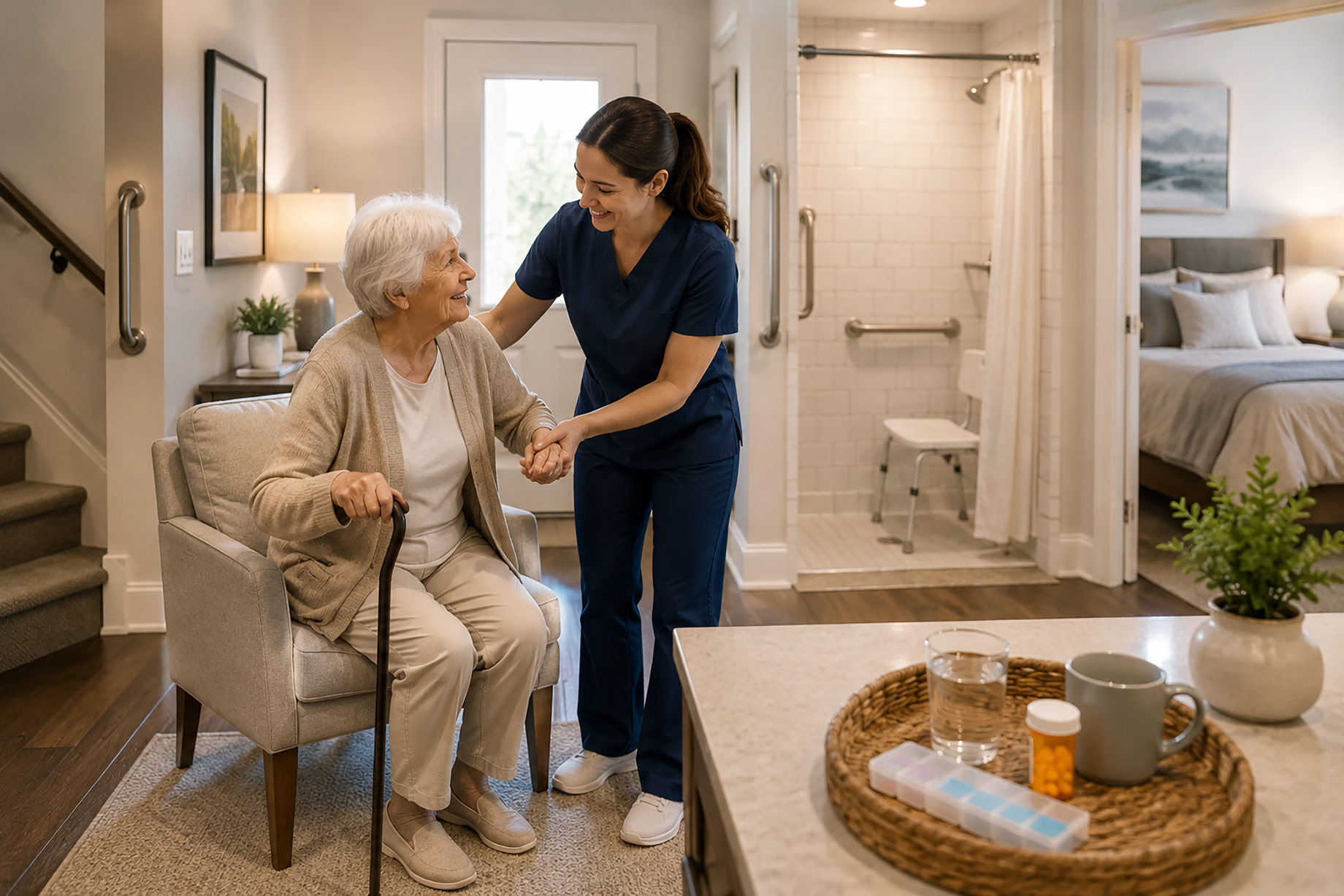
Home modifications are often one of the first steps families take when they begin worrying about an aging loved one’s safety. After a fall, surgery, hospital stay, or noticeable mobility decline, it makes sense to look around the home and ask, “What can we change to make this safer?”
Grab bars, stair railings, ramps, shower chairs, non-slip mats, and better lighting can all make a real difference. These updates can reduce hazards and help seniors move through the home with more confidence.
But home modifications are not a complete care plan. A safer bathroom is important, but there are more equally important matters, such as preparing meals. A ramp does not notice confusion. A grab bar does not remind someone to drink water, take medication, or slow down when standing up too quickly. While home updates can reduce certain risks, families may also need support from a trusted in-home senior care agency when a loved one needs routine guidance, reminders, supervision, or hands-on help.
For many seniors, the best approach is not choosing between home safety updates and personal support. It is combining both.
1. Home Modifications Can Reduce Risk
Home modifications are valuable because they address dangerous situations that make daily life more challenging for older adults. As strength, balance, vision, and flexibility change with age, even a familiar home can become difficult to navigate.
Simple changes can make everyday routines safer. Grab bars in the bathroom can provide support when getting in and out of the shower. Non-slip mats can reduce the chance of slipping on wet surfaces. Better lighting can help seniors see steps, corners, and clutter more clearly. Ramps may help those who use walkers, wheelchairs, or have trouble with stairs. Raised toilet seats, shower chairs, and stair railings can also make the home easier to use.
These changes are extremely important for seniors with mobility challenges or a history of falls. They can also make family members feel more confident that the home is better prepared for aging.
However, home modifications work best when seniors are able to use them correctly and consistently. That is where the limits begin. A safety feature is only helpful if a person remembers it, reaches for it, uses it properly, and has enough physical ability to benefit from it.
2. Modifications Cannot Prevent Every Fall
Falls are one of the biggest concerns for aging adults, and home modifications can help reduce the risk. But they cannot prevent every fall because not every fall is caused by the home itself.
A senior may fall because of dizziness, weakness, poor balance, medication side effects, low blood pressure, vision changes, or rushing to the bathroom at night. A grab bar can help, but it cannot stop someone from becoming lightheaded. A ramp can make entryways safer, but it cannot prevent a senior from losing balance while turning. A shower chair can help during bathing, but it may not be enough if someone needs help transferring safely.
Many falls happen during ordinary moments: getting out of bed, standing up from a chair, walking to the bathroom, stepping into the shower, or reaching for something in the kitchen. These are the moments when human support can make a major difference.
A caregiver can offer a steady arm, remind the senior to move slowly, help with transfers, keep pathways clear, and notice when someone seems weaker than usual. Home modifications improve the environment, but caregivers help manage the real-life movements that happen inside that environment.
3. Memory Loss Changes the Safety Equation
Home safety becomes more complicated when a senior has dementia, Alzheimer’s disease, or other memory-related changes. In these situations, the issue is not only physical safety. It is also judgment, awareness, and consistency.
A senior with memory loss may forget to use a grab bar. They may try to walk without their walker, leave the stove on, unlock the door, wander outside, or become confused about where they are. They may also resist bathing, forget whether they have eaten, or become anxious during certain parts of the day. These are common behaviors in seniors living with dementia, and they can be very stressful for family caregivers. That is why family caregivers need to know wired things dementia patients do and how to respond with patience, safety, and support.
Home modifications can reduce some risks, but they cannot provide supervision or redirection. They cannot calmly explain what is happening. They cannot guide a confused person back to a routine. They cannot recognize signs of agitation or help prevent unsafe behavior before it escalates.
This is why families caring for someone with memory loss often need more than equipment. They may need consistent routines, patient communication, supervision, and support from someone who understands how confusion affects behavior.
A safer home is important, but memory care also requires a calm human presence.
4. Daily Routines Still Need Human Support
A modified home may be safer, but it does not guarantee that a senior’s daily needs are being met. Many older adults struggle not because their home is unsafe, but because everyday routines are becoming harder to manage.
A senior may skip meals because cooking feels tiring. They may avoid bathing because they fear falling. They may forget to drink water or take medication at the right time. Laundry may pile up. Mail may go unopened. Dishes may sit in the sink. The home may slowly become cluttered, which then creates new safety risks.
These problems are easy to miss at first. Families may think everything is fine because the home has grab bars and clear pathways. But if a senior is not eating well, staying hydrated, keeping up with hygiene, or moving safely through the day, the home is still not truly safe.
Caregivers can help by bringing structure back into daily life. They can prepare meals, offer hydration reminders, assist with bathing and grooming, help with dressing, support safe movement, and keep the living area tidy. They can also notice changes, such as increased weakness, confusion, reduced appetite, or a new fear of walking.
Daily support helps prevent small issues from becoming bigger problems.
5. Loneliness and Isolation Are Not Fixed by Home Updates
A senior can live in a well-modified home and still feel lonely. Safety equipment can make a hallway easier to walk through, but it cannot provide conversation, encouragement, or human connection.
Many seniors spend long hours alone, especially if they no longer drive, have limited mobility, or live far from family. Over time, isolation can affect mood, appetite, energy, sleep, and overall well-being. A lonely senior may become less motivated to cook, bathe, exercise, or stay engaged with daily routines.
This is where companion care for adults can make a real difference by providing conversation, emotional support, shared activities, and help staying engaged at home.
Companion care may include talking over coffee, preparing a meal together, going for a short walk, playing cards, listening to music, organizing photos, helping with hobbies, or simply being present. These may sound like small things, but they can give structure and meaning to the day.
Emotional safety matters too. A home can be physically safer after modifications, but a senior also needs to feel seen, heard, and supported. Human connection is not a luxury. For many aging adults, it is an important part of staying well at home.
6. Family Caregivers Still Need Relief
Home modifications can reduce some stress for family caregivers, but they do not remove the full responsibility of caregiving. Adult children, spouses, and relatives may still worry about whether their loved one is eating, bathing, moving safely, sleeping well, or remembering daily routines.
Even with a safer home, family members may feel like they are always on call. They may check in multiple times a day, handle appointments, manage errands, respond to nighttime concerns, and carry the emotional weight of making care decisions.
Over time, this can lead to caregiver burnout. Signs may include poor sleep, irritability, guilt, anxiety, missed work, and feeling overwhelmed. Many family caregivers wait too long to ask for help because they believe they should be able to manage everything themselves.
But needing support does not mean a family has failed. It means the care needs have grown.
Respite support gives family caregivers time to rest, work, attend appointments, or handle their own responsibilities while knowing their loved one is not alone. This kind of help can protect both the senior and the family caregiver.
7. The Best Approach Combines Home Safety With Daily Support
Home modifications and in-home support work best together. They solve different parts of the same problem.
Home modifications create a safer environment. They reduce physical hazards and make the home easier to navigate. Caregiver support adds observation, reminders, hands-on assistance, companionship, and routine.
For example, a grab bar is helpful during a shower, but a caregiver can help the senior prepare safely, transfer carefully, and avoid rushing. Better lighting can reduce fall risk at night, but a caregiver can assist with bathroom trips if the senior is unsteady. A clutter-free home can improve safety, but a caregiver can help keep it that way through light housekeeping and routine support.
This combined approach is often more realistic for families. It does not rely only on equipment, and it does not ignore the importance of the home environment. Instead, it creates a safer home and adds the human support needed to make daily life more manageable.
For seniors who want to age at home, this balance can help preserve comfort, independence, and dignity.
Conclusion
Home modifications are important. They can reduce hazards, improve mobility, and make daily routines safer for seniors. But they are only one part of a complete aging-at-home plan.
Many seniors still need help with meals, hydration, bathing, dressing, mobility, memory support, companionship, and daily structure. Family caregivers may also need relief, especially when care needs become constant or stressful.
A safer home is a strong starting point, but it cannot replace human attention, patience, and support. The best senior safety plan often combines the right home setup with the right level of daily care. Together, these supports can help seniors remain safer, more comfortable, and more independent in the place they call home.
