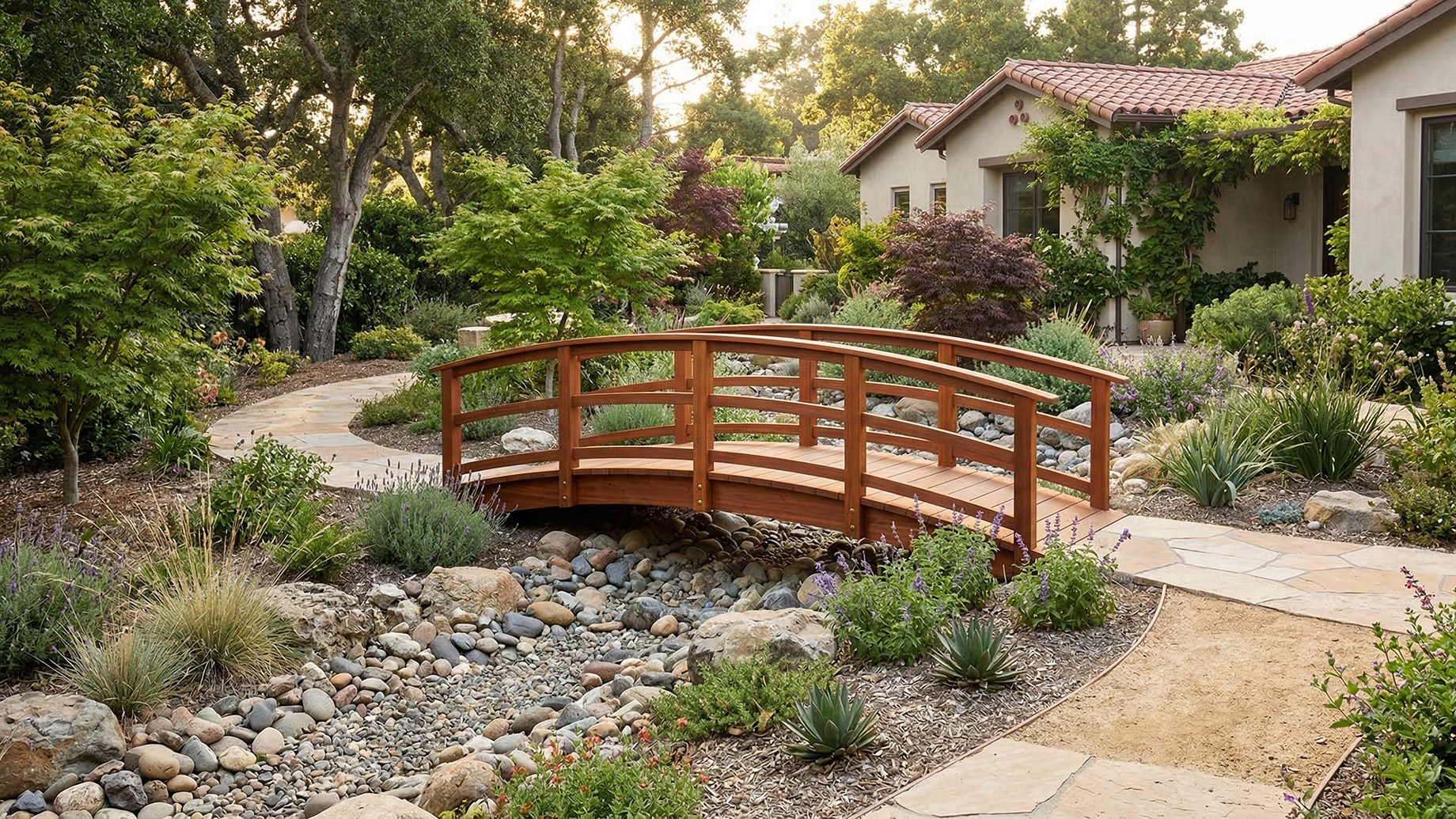
Garden bridges have become one of the most appealing outdoor features for homeowners who want to make a garden feel more refined, more memorable, and more intentionally designed. In California, where outdoor spaces often function as an extension of the home, garden bridges offer much more than a practical crossing point. They introduce elegance, visual structure, and a sense of movement through the landscape. Even in gardens without a stream or pond, garden bridges can create a focal point that adds depth and atmosphere to the entire property.
Many homeowners are drawn to garden bridges because they instantly enrich a backyard without making it feel crowded or artificial. A thoughtfully chosen garden bridge can help divide the landscape into more interesting zones, create a destination within the garden, and give the outdoor space a stronger sense of identity. In California, where so many people value both natural beauty and well-designed outdoor living, garden bridges fit perfectly into the lifestyle and aesthetic expectations of modern homeowners.
Another reason garden bridges are so attractive is that they work across many different garden styles. They can feel rustic, elegant, natural, traditional, or quietly luxurious depending on the wood, shape, and surrounding planting. This versatility makes garden bridges one of the most effective ways to enhance a landscape while still allowing the garden to feel personal and site-specific.
The Lasting Appeal of Wooden Garden Bridges in Outdoor Design
Wooden garden bridges remain one of the most desirable choices because wood has a warmth and authenticity that naturally belongs in a garden. Unlike colder or more industrial materials, wood blends easily with plants, stones, water, bark, gravel, and natural ground textures. Wooden garden bridges soften the overall look of the landscape and create a stronger connection between built elements and the living environment around them.
In California, wooden garden bridges are especially appealing because they suit the state’s diverse landscape styles. A garden can be rustic, Mediterranean-inspired, woodland-like, Japanese-influenced, drought tolerant, or classically residential, and wooden garden bridges can work beautifully in all of these settings. Their flexibility is one of the reasons they continue to be such a valuable design feature for homeowners who want a landscape element that feels timeless rather than temporary.
Wood also gives garden bridges a handcrafted and premium character. A well-made wooden garden bridge does not feel like a generic accessory. It feels like part of the architecture of the garden itself. This makes wooden garden bridges particularly attractive to homeowners who want their outdoor space to feel curated, thoughtful, and visually rich.
Why Redwood Garden Bridges Feel So Right in California
When discussing garden bridges in California, redwood deserves special attention. Redwood is one of the most iconic woods associated with the state, and it brings a distinctive beauty that works exceptionally well in outdoor design. Redwood garden bridges have a natural richness of tone, attractive grain, and a visual warmth that feels both organic and refined. They are especially well suited to California landscapes because they reflect the region’s material identity while also performing well in exterior applications.
For many homeowners, redwood garden bridges represent the perfect balance between beauty and practicality. A redwood garden bridge can feel substantial and elegant without appearing heavy or overdesigned. It complements native planting, warm stone, gravel pathways, dry creek beds, ponds, and a wide range of planting styles commonly found in California gardens. Whether the setting is lush and green or more drought-conscious and textural, redwood garden bridges tend to look as though they truly belong there.
Redwood also carries emotional appeal. In a California landscape, it feels authentic. A garden bridge made from redwood can strengthen the connection between the home, the garden, and the regional character of the setting. For homeowners who want their outdoor space to feel natural, elevated, and distinctly Californian, redwood garden bridges are often one of the strongest possible choices.
How Garden Bridges Add Depth, Character, and Movement to a Backyard
One of the greatest strengths of garden bridges is that they do far more than simply span a physical gap. Garden bridges create visual movement through the landscape. They guide the eye, suggest a pathway, and make a garden feel more layered and immersive. Even a relatively small bridge can create the impression that the yard has more dimension, more design intent, and more interesting transitions.
This sense of movement is especially important in California gardens, where many homeowners want outdoor spaces that invite lingering, entertaining, and relaxation. A garden bridge creates a journey through the yard. It can lead toward a pond, a seating area, a dry creek bed, a planted border, or a shaded retreat. In doing so, it turns the landscape into an experience rather than just a background.
Garden bridges also create character. Some features in a backyard may be useful but visually forgettable. A garden bridge is rarely forgettable. It tends to become one of the most distinctive and admired parts of the space. Because of this, garden bridges can play an important role in making a property feel unique and more emotionally engaging.
The Best Ways to Use Garden Bridges in California Landscapes
Many people first imagine garden bridges over water, and that remains one of the most classic and effective uses. A bridge placed over a pond, stream, or small water feature can immediately make the entire garden feel more graceful and complete. Water and wood complement one another naturally, and a garden bridge can help transform a water feature from a simple addition into the centerpiece of the landscape.
However, garden bridges are equally effective in California gardens that emphasize water-wise design. A dry creek bed is one of the most popular uses for garden bridges in the state. With stones, gravel, boulders, and drought-tolerant planting beneath it, a wooden garden bridge can create the romance and structure of a water crossing without requiring a large amount of water. This makes garden bridges particularly appealing for homeowners who want beauty, regional appropriateness, and practicality at the same time.
Garden bridges can also be used to connect different parts of a yard, mark an entry into a special garden zone, or simply serve as a decorative focal point. In sloped landscapes, terraced gardens, and larger backyards, they can organize circulation in a very natural way. Even in smaller spaces, a well-placed garden bridge can create a sense of thoughtful design that makes the entire yard feel more sophisticated.
Choosing the Right Garden Bridge Style for a California Home
The style of a garden bridge has a major influence on the mood of the landscape. Arched garden bridges are often chosen because they create elegance and softness. Their upward curve adds a sculptural quality that feels romantic and visually expressive. In California gardens with lush planting, Japanese-inspired elements, ponds, or naturalistic layouts, arched garden bridges can look especially graceful.
Flat garden bridges create a different effect. They feel more understated, more grounded, and often more contemporary. For homeowners who prefer a simpler and more architectural garden style, flat wooden garden bridges can be an excellent choice. They still provide the charm and focal value of garden bridges, but in a quieter and more restrained way.
Garden bridges with railings tend to feel more formal and more classic. They stand out strongly in the landscape and often become a central visual feature. Rail-less designs, by contrast, may feel more integrated into natural settings and more relaxed in their appearance. The right choice depends on whether the homeowner wants the garden bridge to be bold and defining or subtle and seamlessly blended into the overall composition.
How to Design Around Garden Bridges for a More Cohesive Landscape
A garden bridge has the strongest impact when it is treated as part of a larger composition rather than placed into the yard as an isolated object. The surrounding design should support the presence of the bridge. Pathways, planting, ground textures, and nearby focal points should all make the bridge feel integrated into the landscape story.
One of the most effective strategies is to give the bridge a clear approach. A path made of gravel, decomposed granite, stepping stones, or natural paving can lead toward the bridge and make it feel purposeful. When a garden bridge has a visible relationship to the movement through the yard, it feels natural and convincing. Without that connection, even a beautiful bridge can appear disconnected from the rest of the garden.
Materials matter as well. Wooden garden bridges, especially redwood garden bridges, pair beautifully with river rock, bark, mulch, warm stone, and earthy paving tones. These materials are common in California landscapes and help reinforce the bridge’s organic presence. When the garden bridge echoes the textures and colors already present in the space, the result feels balanced and visually satisfying.
Planting Ideas That Make Garden Bridges Look More Beautiful and Established
Planting is one of the most important elements in making garden bridges feel truly at home in a landscape. The right plants can soften the edges of the bridge, frame it attractively, and help it feel embedded in the garden rather than simply placed on top of it. In California, both lush and drought-tolerant planting schemes can work beautifully around garden bridges.
In water-wise landscapes, ornamental grasses, salvias, lavender, yarrow, kangaroo paw, manzanita, and other climate-appropriate plants can create a soft but structured setting around a wooden garden bridge. The warm tones of redwood pair especially well with silver foliage, green textures, and muted flower colors. A dry creek bed beneath the bridge can be enhanced with rounded stones and sculptural planting to create a very California-appropriate design.
In greener gardens or in regions with more moisture or irrigation, garden bridges can be framed with ferns, layered shrubs, Japanese maples in suitable areas, mossy accents, and flowering perennials. This creates a more serene and retreat-like atmosphere. In either case, the key is balance. The bridge should remain visible and graceful, while the plants around it give it softness, context, and seasonal richness.
Why Garden Bridges Can Work Beautifully Even in Smaller Backyards
A common misconception is that garden bridges are only suitable for large properties. In reality, garden bridges can work extremely well in smaller California backyards when they are properly scaled and thoughtfully placed. In a compact space, a garden bridge can create an immediate focal point and make the yard feel more layered, intentional, and memorable.
In smaller gardens, the most successful uses often involve narrow dry creek beds, decorative gravel channels, pebble features, or small ornamental water elements. A modest redwood garden bridge can introduce a sense of craftsmanship and charm that makes the entire yard feel more special. It can also help visually divide the space into zones, making even a simple rectangular backyard feel more designed and dynamic.
The key in small yards is restraint. The bridge should fit the proportions of the space and should be supported by clean planting and a limited number of other strong features. When used carefully, garden bridges can bring a surprisingly high level of visual interest to a small outdoor area without making it feel crowded.
Caring for Wooden Garden Bridges So They Stay Beautiful Over Time
Wooden garden bridges need sensible maintenance if they are to retain their beauty and structural integrity over the years. The amount of care depends on the type of wood, the climate, the amount of sun exposure, and the overall build quality. In California, where outdoor conditions can range from coastal moisture to intense inland sun, it is important to inspect and care for garden bridges regularly.
Keeping a garden bridge clean is one of the most basic and most useful maintenance habits. Dirt, leaves, and trapped organic debris can affect the appearance and long-term condition of the wood. Homeowners should also pay attention to how the finish ages, especially in strong sun. Some people enjoy the natural weathering of wood, while others prefer to preserve the richer original color of redwood or other exterior woods.
Structural stability matters just as much as appearance. A garden bridge should remain solid, safe, and level, especially if it is used frequently rather than serving only as a decorative feature. Well-maintained wooden garden bridges can continue to provide beauty, function, and value for many years, making them one of the most rewarding additions to a California garden.
How to Choose the Best Garden Bridge for Your Garden Vision
Choosing the right garden bridge starts with understanding what role it will play in the landscape. Some homeowners want garden bridges primarily for decoration and atmosphere. Others want them to provide an actual crossing over water, stone channels, or uneven terrain. Knowing this purpose helps determine the right size, structure, and style.
Material is equally important. For homeowners who want a bridge that feels warm, authentic, and naturally suited to California, wooden garden bridges are usually the most compelling choice. Within that category, redwood garden bridges often stand out as the premium option because they bring together regional character, visual richness, and outdoor suitability.
It is also important to think about proportion, surrounding materials, and the overall style of the yard. The best garden bridges do not feel random. They feel like a natural extension of the landscape and the home. When chosen well, a garden bridge becomes more than an accessory. It becomes one of the defining features of the property.
Garden Bridges as a Timeless Way to Enrich California Outdoor Living
Garden bridges continue to hold a special place in landscape design because they combine beauty, structure, and emotional appeal in a way few other garden features can match. In California, where outdoor living is deeply tied to lifestyle and property enjoyment, garden bridges offer homeowners a way to make their yard feel more complete, more artistic, and more inviting.
Wooden garden bridges are especially valuable because they bring warmth and authenticity to outdoor spaces. Redwood garden bridges, in particular, reflect the materials, colors, and design sensibilities that feel naturally at home in California. Whether placed over water, across a dry creek bed, or used as a purely decorative feature, garden bridges can transform a backyard into a richer and more memorable environment.
For homeowners who want to enhance the beauty of their garden, create a stronger focal point, and introduce a feature that feels both practical and poetic, garden bridges remain one of the most effective and rewarding choices. A well-designed garden bridge does not simply sit in the garden. It changes how the entire landscape is seen, experienced, and enjoyed.
