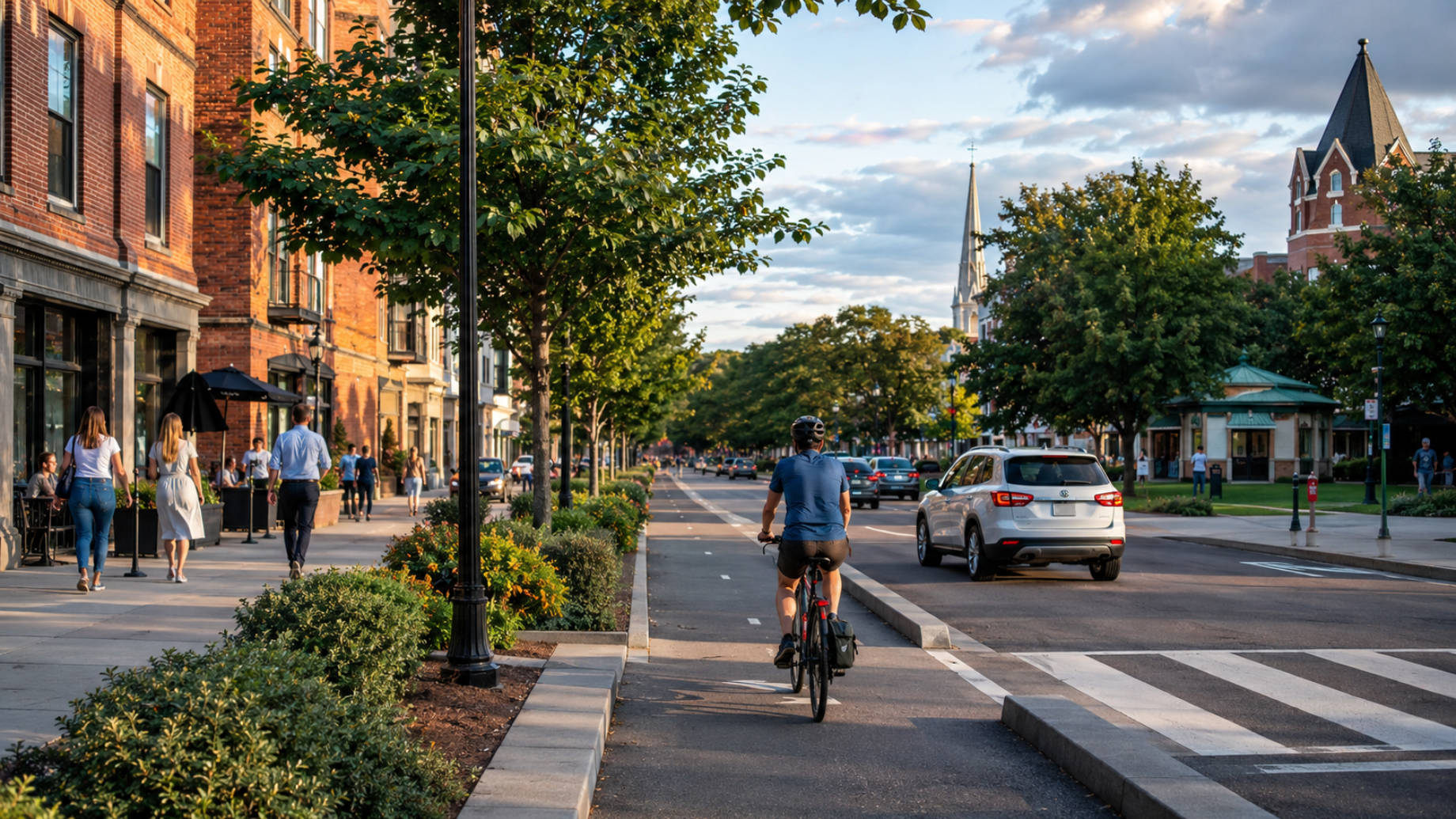
Communities that support safe cycling often enjoy healthier residents, stronger local economies, and more connected neighborhoods. As cities across the United States invest in bike lanes, shared-use paths, and pedestrian-friendly streets, bicycle safety has become an important part of urban planning.
Nashua, New Hampshire, is one example of a city where cycling plays a growing role in daily transportation and recreation. With scenic trails, residential neighborhoods, parks, and commercial districts connected by local roadways, many residents choose bicycles as an alternative to driving. However, increased bicycle activity also brings safety concerns that affect riders, drivers, property owners, and city planners alike.
Why Safe Streets Increase Community Value
Safe streets benefit everyone, not just cyclists.
When residents feel comfortable walking or riding bicycles, communities often experience increased outdoor activity and greater engagement with local businesses. Real estate professionals frequently note that walkable and bike-friendly neighborhoods attract buyers looking for convenience and quality of life.
Communities that prioritize safety often see benefits such as:
- Increased neighborhood appeal
- Better access to local businesses
- Reduced traffic congestion
- Improved public health outcomes
- Higher levels of community engagement
These advantages help make bicycle safety an issue that extends beyond transportation alone.
Nashua’s Growing Appeal for Cyclists
Nashua offers several features that attract bicycle riders.
The city’s location also makes cycling practical for short local trips. Many residents use bicycles for recreation, exercise, and transportation. Nashua’s continued investment in recreational spaces and community connectivity has helped make cycling more accessible. As bicycle use increases throughout the city, maintaining safe interactions between cyclists and motorists becomes increasingly important for preserving residents’ quality of life.
Popular cycling areas include:
- Mine Falls Park trails
- Residential greenways
- Local neighborhood streets
- Shared-use recreational paths
- Connections to nearby community destinations
As cycling activity grows, the need for safe interactions between cyclists and motorists becomes increasingly important.
Common Factors Behind Bicycle Accidents
Most bicycle accidents involve preventable mistakes.
Traffic safety experts consistently identify driver awareness as one of the most significant factors affecting cyclist safety. Understanding your rights after a crash and how bicycle accident claims are handled can help injured cyclists better protect their interests and navigate the recovery process.
Common causes include:
Distracted Driving
Drivers who focus on phones, navigation systems, or other distractions may fail to notice cyclists nearby.
Even a few seconds of distraction can create dangerous situations at intersections and lane crossings.
Failure to Yield
Many bicycle collisions occur when drivers fail to yield the right of way.
This often happens during turns, at intersections, or when entering roadways from driveways and parking lots.
Unsafe Passing
Cyclists require adequate space to operate safely.
Drivers who pass too closely increase the risk of sideswipe accidents and loss of control.
Dooring Incidents
Parked vehicles can create hazards when occupants open doors without checking for approaching cyclists.
These incidents are particularly common in areas with on-street parking.
The Financial Impact of Bicycle Injuries
According to the Centers for Disease Control and Prevention (CDC), hundreds of thousands of people visit emergency departments each year for bicycle-related injuries, creating significant medical and economic costs for individuals, families, and communities.
Because cyclists have limited physical protection, injuries can be severe even at relatively low vehicle speeds. Recovery frequently involves medical treatment, rehabilitation, and time away from work.
Common expenses may include:
- Emergency medical care
- Diagnostic testing
- Physical therapy
- Follow-up appointments
- Prescription medications
- Lost income
- Future medical treatment
The Centers for Disease Control and Prevention has reported that bicycle-related injuries generate significant medical and economic costs across the United States each year.
For families, these expenses can create long-term financial challenges that continue well after the accident itself.
How Community Design Can Reduce Risks
Thoughtful planning plays a major role in improving cyclist safety.
Cities across the country continue exploring infrastructure improvements that help separate cyclists from vehicle traffic while improving visibility for all road users.
Examples include:
Protected Bike Lanes
Physical barriers between cyclists and motor vehicles help reduce collision risks.
Many transportation planners view protected lanes as one of the most effective safety measures available.
Improved Intersection Design
Intersections are among the most common locations for bicycle accidents.
Enhanced visibility, dedicated signals, and better lane markings can help reduce conflicts between drivers and cyclists.
Traffic Calming Measures
Lower vehicle speeds often result in fewer serious injuries.
Traffic calming strategies may include:
- Speed humps
- Narrower travel lanes
- Raised crosswalks
- Improved signage
These measures encourage safer driving behavior while supporting active transportation.
What Cyclists Should Do After an Accident
The actions taken immediately after an accident can have lasting consequences.
Safety should always come first. Seeking medical attention is important even when injuries initially appear minor. Some conditions may not become fully apparent until hours or days later.
Important steps include:
- Call emergency services if needed.
- Seek medical evaluation.
- Obtain a police report.
- Document the accident scene.
- Collect witness information.
- Preserve medical records and receipts.
Accurate documentation helps establish what occurred and supports future insurance or legal claims.
Why Accountability Supports Safer Communities
New Hampshire law provides legal remedies for injured cyclists when accidents result from negligence. Understanding these rights can help accident victims pursue compensation for medical expenses, lost income, and other damages.
Holding negligent parties accountable can contribute to broader public safety. When drivers, property owners, and other responsible parties understand the consequences of unsafe behavior, it encourages greater caution and awareness.
Legal accountability also helps injured individuals recover compensation for losses that result from another person’s negligence.
For those who have been injured in a bicycle accident, speaking with an attorney may help clarify available options and responsibilities under New Hampshire law.
Understanding legal rights can be an important part of the recovery process.
What Real Estate and Community Leaders Can Learn
Bicycle safety is increasingly connected to community development.
Developers, planners, local officials, and property owners all influence how people move through neighborhoods. Communities that invest in safe transportation infrastructure often create environments that attract residents, support local businesses, and improve overall quality of life.
Features that support cycling can enhance community appeal, including:
- Connected trail systems
- Safe street networks
- Accessible parks
- Mixed-use development
- Improved pedestrian infrastructure
As more people seek active lifestyles, these features continue to gain importance in residential planning.
Conclusion
Bicycle safety is about more than transportation. It affects public health, neighborhood livability, economic activity, and overall quality of life. In Nashua, New Hampshire, growing interest in cycling highlights the need for continued attention to safe infrastructure, responsible driving, and community planning.
When cities create environments where cyclists and motorists can safely share the road, everyone benefits. Safer streets support stronger neighborhoods, healthier residents, and more attractive communities. By combining thoughtful design, public awareness, and accountability, communities can continue building places where people feel confident traveling on two wheels. While infrastructure improvements help reduce risks, accidents can still occur. Understanding bicycle safety practices, local traffic laws, and available legal options after a crash can help cyclists protect both their health and financial well-being.
