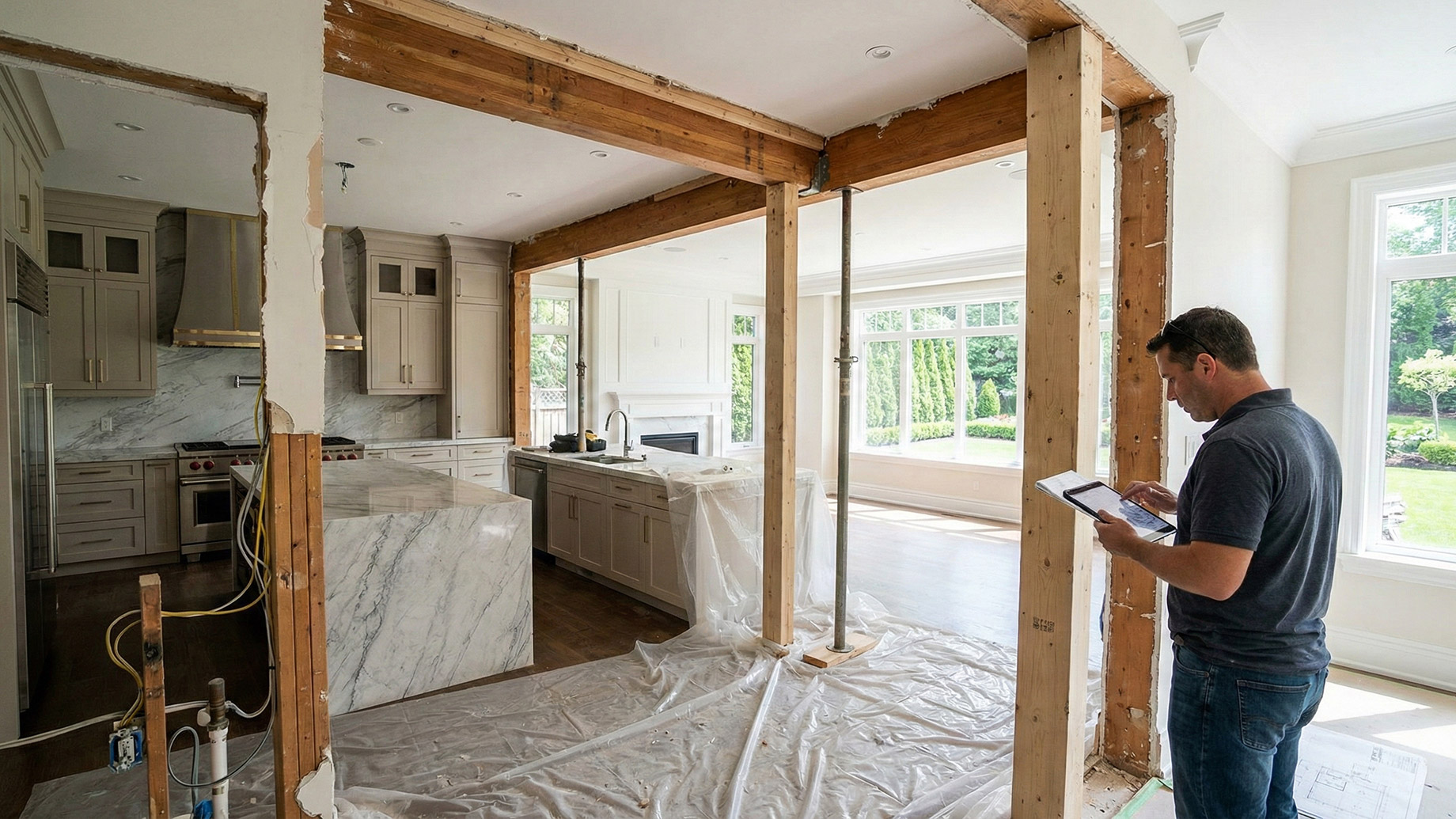
Removing a kitchen wall can completely change the flow and feel of a home. Whether creating an open-concept design or expanding cooking space, understanding the process and potential challenges is essential before starting any demolition work.
Assessing Structural Considerations
Not every wall can be safely removed. Some walls are load-bearing, meaning they support the structure above. Taking out such a wall without proper reinforcement can compromise the building’s stability. A structural assessment by a qualified professional is necessary to determine the safest approach.
In many projects, adding a beam or post can carry the load once the wall is removed. The materials, size, and placement of these supports depend on factors like ceiling span and the building’s overall layout.
Understanding Electrical and Plumbing Impact
Walls often contain electrical wiring, outlets, or plumbing lines. Before demolition, it is important to identify these components and plan for their relocation or integration into the new design. Unexpected wiring or pipes can delay the project and increase costs if not identified early.
For kitchen spaces, this step is especially important because appliances and fixtures usually rely on nearby connections. Planning ahead ensures that function and safety remain top priorities.
Design and Layout Planning
Once structural and utility concerns are addressed, design planning can begin. Removing a wall creates opportunities for improved lighting, better traffic flow, and visual continuity between spaces. However, it also changes how storage, cabinetry, and furniture are placed.
Projects like kitchen remodeling in Vienna often showcase how thoughtful design choices maximize both beauty and efficiency after a wall removal. Careful planning ensures the new layout feels cohesive and practical.
Building Codes and Permits
Many local building departments require permits for structural changes. Inspections help verify that new supports, wiring, and plumbing meet safety standards. Ignoring these requirements can cause problems during future home sales or insurance claims.
Following proper procedures protects both the investment and the household. Always confirm which permits are needed before starting any physical work.
Budgeting and Timeframe Expectations
A wall removal project can vary in cost depending on size, materials, and complexity. Load-bearing walls, custom beams, and finished surfaces all influence the total budget. Setting aside a contingency fund for unexpected findings is wise.
Timeframes also depend on inspection schedules, contractor availability, and design decisions. Clear communication and realistic expectations help keep the project on track.
Integrating the New Space
After demolition and reconstruction, finishing touches bring the space together. Flooring transitions, paint, and lighting unify the new and existing areas. Many homeowners use this opportunity to refresh cabinetry, countertops, or fixtures to match the updated layout.
Examples like an Alexandria kitchen remodel demonstrate how removing a wall can seamlessly connect cooking and dining spaces while maintaining functionality. The result often feels brighter, larger, and more inviting.
Making Informed Decisions
Taking down a kitchen wall requires careful planning and professional input. When homeowners understand the structural, electrical, and design implications, the process becomes smoother and safer. With preparation and attention to detail, the transformation can enhance both the look and value of the home.
