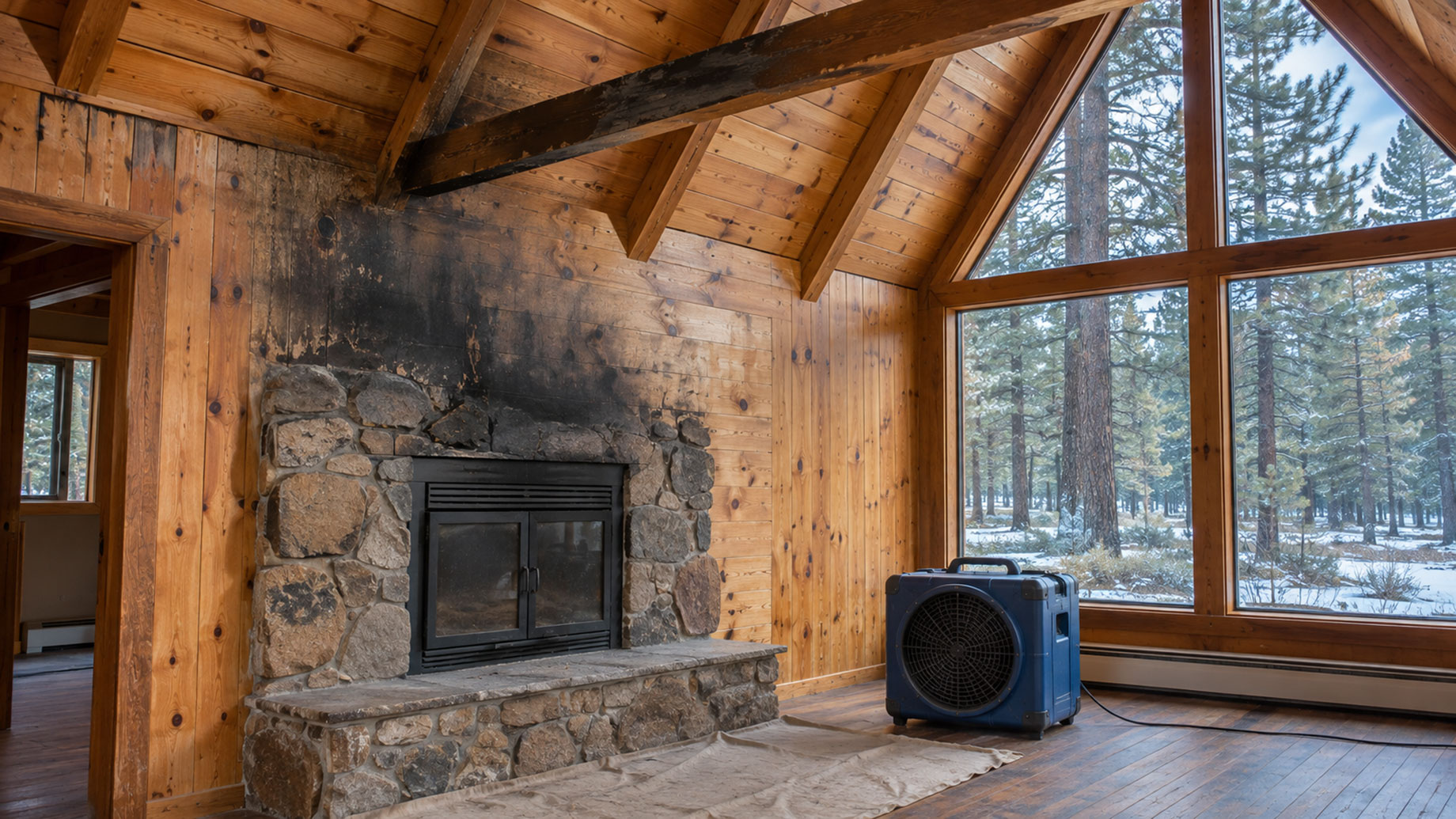
Living in Truckee, California means living with wildfire risk as part of daily life. Between dry summers, heavy pine cover, and the strong winds that move through the Tahoe Basin, even a small kitchen fire or a chimney spark can turn into significant structural damage fast. Knowing what to do before, during, and after a fire helps protect your home and makes fire damage restoration in Truckee go far more smoothly.
Why Fire Damage Restoration in Truckee Requires a Different Approach
Fire damage restoration in Truckee is not the same as restoration in a lower-elevation, less forested community. The combination of high altitude, pine-heavy landscaping, older A-frame and log-style construction, and long dry seasons means fires here behave differently, and so does the cleanup. Many homes in the area were built decades ago with materials, like older electrical wiring or wood paneling, that burn and smolder differently than modern construction, which affects both the damage pattern and the restoration timeline.
Homeowners in Truckee should understand that smoke and soot can travel further into a home’s structure here than in many other regions. High-elevation air is drier, which allows smoke particles to penetrate wood surfaces, insulation, and HVAC systems more deeply. This is one of the main reasons that fire damage restoration in Truckee often takes longer than homeowners expect, even when the visible flame damage looks minor.
What Truckee Homeowners Should Know Right Now
A few key facts shape how fire damage restoration works in this area. First, Truckee’s elevation and dry climate mean soot and smoke odor can linger in wood framing and insulation for weeks if not treated properly. Second, homes near Donner Lake, Glenshire, and Tahoe Donner often have cedar or pine siding, which absorbs smoke differently than stucco or vinyl. Third, winter restoration work can be delayed by snow and freezing temperatures, so timing matters. Fourth, insurance claims in high fire-risk zones like Truckee often require more documentation than claims filed in lower-risk areas. Finally, local building codes in Placer and Nevada counties may require updated fire-resistant materials during the rebuild phase, which can affect cost and timeline.
Local Conditions That Make Fire Damage Different Here
The Tahoe Basin’s climate and terrain play a direct role in how fire damage spreads and how restoration needs to be handled. Truckee sits at over six thousand feet, and that altitude changes how smoke, heat, and soot interact with building materials. Homes tucked into heavily wooded neighborhoods like Prosser Lakeview or Glenshire Devonshire often have more ember exposure risk due to tree density close to structures.
Winter weather adds another layer of complexity. A fire that happens in December or January, when temperatures regularly drop below freezing, creates a race against time. Water used to fight the fire can freeze in pipes and walls, and restoration crews need to manage both fire damage and potential freeze damage simultaneously. The region’s reliance on wood stoves and fireplaces for winter heating also makes chimney fires and creosote-related incidents more common here than in warmer, lower-elevation towns.
At higher elevations, we have seen smoke damage settle into open beam ceilings and exposed wood trusses, a common feature in many Truckee homes and cabins. This kind of construction looks beautiful, but it also means smoke has more surface area to cling to, which extends the cleaning and deodorizing process.
The Reality of Smoke Damage in a Mountain Town
Fire damage restoration work in this part of the Sierra Nevada foothills involves more than just removing charred materials. Even in homes where the fire was contained to a small area, like a stovetop fire or an electrical fault, smoke residue can spread through the entire structure within minutes. Soot particles are acidic and can etch metal surfaces, discolor countertops, and corrode electronics if not addressed quickly.
We often find that homeowners underestimate how far smoke travels through a home’s duct system. In many Truckee properties, especially those built before updated HVAC codes, a fire in one room can leave a smoke odor throughout the entire house within hours. That is one reason professional assessment matters so much here: what looks like a contained incident on the surface may require full-system cleaning behind the walls and in the attic.
Getting Started With Restoration After a Fire
If your home has experienced a fire, the first step is a professional assessment before any cleanup begins. We recommend homeowners avoid attempting large-scale cleanup themselves, since soot is acidic and can cause permanent damage to surfaces if wiped incorrectly or left too long. A trained restoration team evaluates the structure, checks for hidden damage in walls, insulation, and ductwork, and creates a documented plan that your insurance company can review.
According to Placer County building officials, any structural repair following fire damage must meet current fire-resistant building code requirements, which can affect material choices and overall project cost. The Town of Truckee’s building department can confirm which permits are needed depending on the extent of the damage, especially for homes in designated high fire-severity zones.
What Happens When You Wait Too Long
Delaying fire damage restoration in Truckee creates compounding problems. The longer soot sits on surfaces, the more it etches into wood, metal, and even grout lines, making full restoration more expensive and more time-consuming. Water used during firefighting efforts, combined with Truckee’s humidity swings between seasons, can lead to mold growth within as little as 48 hours if moisture is not addressed quickly. Homeowners who wait weeks to begin cleanup often find that odor has set permanently into fabric, carpet, and wood framing, requiring replacement rather than cleaning. Insurance companies may also reduce coverage amounts if they determine that delayed action contributed to additional damage. In colder months, standing water from firefighting efforts can freeze inside walls, creating structural problems that are far more costly to fix than the original fire damage.
Warning Signs You Need Professional Help
Several signs point to the need for immediate professional fire damage restoration rather than a DIY cleanup attempt. A persistent smoky smell that lingers days after the fire is extinguished usually means soot has penetrated porous materials like drywall or wood. Visible soot on ceilings, walls, or inside closets, even in rooms far from the original fire, signals that smoke traveled through the HVAC system. Discoloration on metal fixtures, including faucets, light fixtures, or door hardware, suggests corrosive soot residue is already affecting surfaces. Warped or buckled flooring, especially hardwood common in many Truckee homes, often means water and heat combined to damage subflooring. A musty smell developing within a few days of the fire points to early mold growth from firefighting water. Electrical outlets or switches that feel warm or show scorch marks need immediate professional electrical inspection before any other restoration work begins. Finally, any ash or soot found inside the attic space, even when the fire started on a lower floor, indicates the need for full attic assessment and cleaning.
If these signs are ignored, homeowners risk long-term structural damage, mold infestation, and health issues from continued exposure to smoke particles and chemical residue left behind by firefighting efforts.
When to Call a Professional Versus Handling It Yourself
Minor, surface-level soot on hard, nonporous surfaces like glass or tile can sometimes be cleaned safely by homeowners using gentle, non-abrasive methods. However, any fire involving structural elements, insulation, HVAC systems, or widespread smoke odor requires professional restoration. The risk here in Truckee is elevated because many homes have wood interiors and open-beam ceilings that make DIY cleaning both difficult and potentially damaging if the wrong products are used. Professional equipment, including ozone treatment and industrial air scrubbers, is often necessary to fully remove smoke odor from wood surfaces at this altitude, where dry air allows particles to bond more tightly to porous materials.
Common Causes of Fire Damage in This Region
Fire damage in the Truckee area most often stems from conditions tied directly to mountain living. Wood-burning stoves and fireplaces, used heavily during long winters, are a leading cause of residential fires, particularly when creosote buildup in chimneys is not addressed before cold weather sets in. Electrical issues in older cabins and A-frame homes, many built decades ago with wiring that was not designed for today’s electrical loads, also contribute significantly. Dry summer conditions combined with dense pine forest surrounding many neighborhoods increase the risk of ember-caused fires reaching structures during wildfire season. Space heaters, commonly used as supplemental heat in older homes, are another frequent cause, especially when placed too close to flammable materials. Kitchen fires remain common year-round, though they tend to spread faster in homes with open floor plans and exposed wood ceiling beams.
Preventing Fire Damage Before It Happens
Prevention starts with seasonal maintenance tailored to Truckee’s climate. We recommend scheduling chimney inspections every fall before wood-burning season begins, since creosote buildup is one of the most preventable causes of house fires in this area. Clearing defensible space around the home, at least thirty feet of reduced vegetation, helps protect against ember-driven wildfire exposure during dry months. Homeowners should also have electrical systems inspected if their home is more than twenty years old, particularly in older Tahoe Donner or Donner Lake properties where original wiring may still be in place. Installing updated smoke detectors with interconnected alarms ensures faster response time throughout larger homes. Finally, keeping space heaters at least three feet from any flammable surface and never leaving them unattended reduces one of the most common causes of residential fire in the region.
What to Expect From the Restoration Process
Fire damage restoration timelines vary depending on severity, but most moderate residential fires in Truckee take anywhere from two to six weeks for full restoration, including smoke odor removal, structural repair, and content cleaning. Homes with extensive smoke penetration into open-beam ceilings or older wood paneling may take longer due to the deeper cleaning required. Full odor elimination is achievable in nearly all cases when professional equipment and techniques are used promptly, rather than relying on surface cleaning alone. Homeowners can expect a phased process: initial assessment and water extraction if applicable, soot and smoke removal, structural drying, odor treatment, and finally reconstruction of any damaged areas.
Common Mistakes Homeowners Make After a Fire
One common mistake is attempting to clean soot with household cleaners before a professional assessment, which can smear acidic residue deeper into surfaces rather than removing it. Another mistake is delaying contact with insurance providers, since many policies require damage to be documented and reported within a specific window. Opening windows to air out smoke smell, while well-intentioned, can actually pull in cold mountain air that worsens condensation and mold risk in homes without proper ventilation control. Homeowners sometimes also throw away damaged belongings before documenting them for insurance purposes, which can reduce claim payouts significantly. Finally, choosing a contractor based solely on price, without verifying fire restoration experience specific to mountain homes, often leads to incomplete odor removal and repeat service calls.
A Common Local Scenario
A homeowner in the Glenshire area once dealt with a chimney fire that appeared contained to the fireplace itself. Within a day, a strong smoke smell had spread to bedrooms on the opposite side of the house, traced back to the home’s shared HVAC return system. Full assessment revealed soot had traveled through ductwork into the attic insulation as well. Addressing the issue required duct cleaning, insulation replacement, and odor treatment throughout the home, not just the room where the fire occurred. This kind of spread is common in Truckee homes with open floor plans and central heating systems, which is why a full-home assessment matters even when fire damage looks limited to one area.
Related Services That Help Prevent Future Damage
Beyond restoration, several related services help protect Truckee homes going forward. Duct cleaning and HVAC inspection after any fire ensures smoke particles are not recirculated through the home. Structural drying and mold prevention services address water damage from firefighting efforts before mold has a chance to develop in walls or flooring. Content cleaning and restoration can save furniture, textiles, and personal belongings that would otherwise need replacement. For homes in higher fire-risk zones, defensible space consulting and fire-resistant material upgrades during rebuild phases add long-term protection against future incidents.
Comparing Your Restoration Options
Homeowners generally face a choice between DIY cleanup, hiring a general contractor, or working with a restoration-specific team. DIY cleanup works only for very minor, surface-level soot on non-porous materials and carries real risk of spreading acidic residue if done incorrectly. General contractors can handle structural rebuild but may lack specialized equipment for full odor removal and soot neutralization. Restoration-specific teams bring targeted equipment, like ozone treatment and industrial air scrubbers, along with experience specific to how fire damage behaves in older mountain homes with wood interiors. For most fires beyond a small, contained incident, a dedicated restoration approach produces better long-term results and reduces the risk of lingering odor or hidden damage.
Areas We Serve Across the Truckee Region
Our team works throughout Truckee and the surrounding Tahoe Basin communities, including Tahoe Donner, Glenshire, Donner Lake, Prosser Lakeview, and Martis Valley. Response times stay fast across these areas because our crews understand the terrain, elevation challenges, and seasonal access issues that can affect restoration work in winter months. Familiarity with local building styles, from A-frame cabins to newer custom builds, means less guesswork and faster, more accurate assessments when a fire occurs.
The Cost of Waiting to Address Fire Damage
Delaying fire damage restoration almost always increases total cost. Soot left untreated for even a few extra days can permanently stain wood, grout, and fabric that would otherwise have been salvageable. Water damage from firefighting efforts, if not dried quickly, can lead to mold remediation costs on top of the original fire repair. Insurance companies may also scrutinize claims more closely when restoration is delayed, sometimes reducing payout amounts if they determine neglect contributed to worsening damage. Acting quickly, ideally within the first forty-eight hours, gives homeowners the best chance at a faster, more affordable restoration process.
Frequently Asked Questions
How long does fire damage restoration take in Truckee?
Most moderate residential fires take two to six weeks to fully restore, depending on smoke penetration and structural damage. Homes with open-beam ceilings or older wood interiors may need additional time for full odor removal.
Does homeowners insurance cover fire damage restoration?
Most standard homeowners policies cover fire damage, though coverage details vary by provider and policy. It is important to document damage thoroughly and contact your insurer promptly after any fire incident.
Common steps insurance companies typically require include:
- Photographing damage before any cleanup begins
- Filing a claim within the timeframe specified in your policy
- Keeping receipts for any temporary repairs or lodging
- Allowing an adjuster to inspect the property before major repairs start
Can I clean smoke damage myself?
Minor soot on hard, non-porous surfaces can sometimes be cleaned safely with gentle methods, but soot is acidic and can cause permanent damage if handled incorrectly. Any smoke damage involving walls, insulation, or HVAC systems should be assessed by a professional first.
Why does smoke smell linger so long in Truckee homes?
Truckee’s high elevation and dry air allow smoke particles to bond more deeply into porous materials like wood and insulation. This is especially true in homes with open-beam ceilings or older wood paneling common throughout the area.
What causes most house fires in the Truckee area?
Wood-burning stoves and chimney creosote buildup are among the leading causes, along with older electrical wiring in cabins and space heater misuse during winter months. Dry summer conditions also raise the risk of wildfire-related structural damage.
Will I need permits to repair fire damage?
Permits are often required for structural repairs, especially in designated high fire-severity zones within Placer and Nevada counties. The Town of Truckee’s building department can confirm specific permit requirements based on the extent of damage.
What should I do immediately after a house fire?
Contact a professional restoration team for assessment before attempting any cleanup, and reach out to your insurance provider as soon as possible. Avoid using household cleaners on soot, since this can spread acidic residue deeper into surfaces.
We Understand What Fire Damage Means for Truckee Homes
Fire damage restoration in Truckee requires more than general cleanup knowledge. It requires understanding how elevation, climate, and the area’s unique building styles affect the way smoke and soot settle into a home. We have worked with homeowners throughout Glenshire, Tahoe Donner, Donner Lake, and the surrounding region, and we know what it takes to restore a mountain home properly, not just make it look clean on the surface.
Protect Your Truckee Home Today
If your home has experienced fire damage, acting quickly makes a real difference in cost and outcome. Our team understands the specific challenges of restoring homes in this region and is ready to help you through every step of the process.
