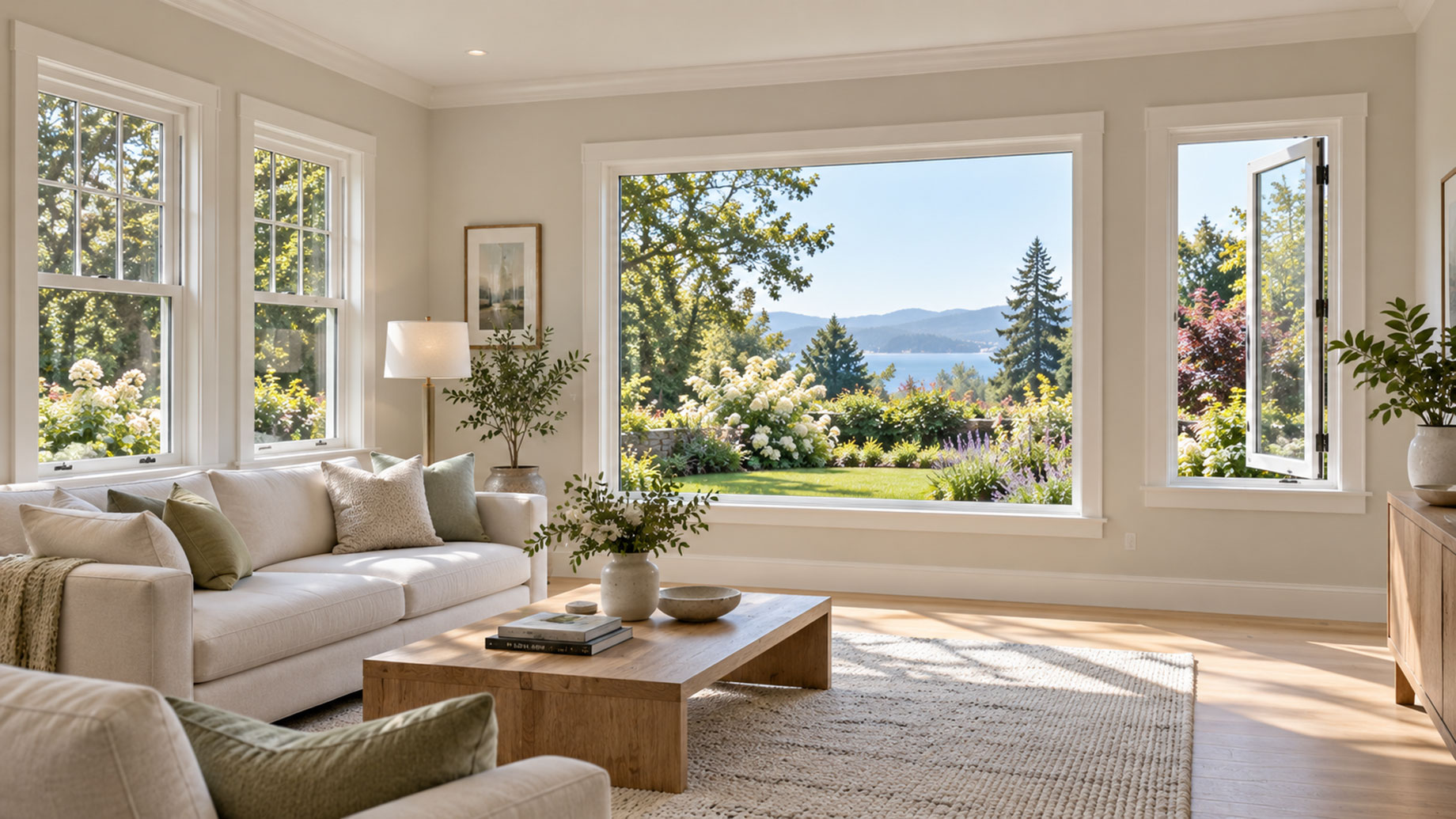
Every opening in a house serves a slightly different purpose, and the style installed there determines how much air moves through, how much light enters, and how a room feels through a long summer. The windows by Advanced Window Products are frequently chosen by homeowners who treat the decision as more than appearance, since operating style has just as much bearing on daily comfort. Understanding how each configuration behaves makes it easier to match the right unit to the right wall.
Double Hung and Single Hung Designs
Both styles use sashes that travel vertically within the frame, though only a double hung allows the upper sash to move as well. That second operable sash creates a useful convection path, letting warm air escape near the ceiling while cooler air enters below. Tilting sashes also make cleaning the exterior glass possible from inside, which matters on upper floors. Single hung units cost less and have one fewer moving component to maintain, a reasonable trade for openings that are rarely operated or positioned where ventilation is not a priority. Both suit traditional elevations without altering a facade.
Casement and Awning Configurations
Casement sashes swing outward on side hinges, driven by a crank rather than a lift. Because the sash presses against its weatherstripping when closed, this style seals unusually tightly, and a fully opened casement catches passing breezes and directs them indoors. Awning units hinge along the top edge and open outward from the bottom, forming a small shelter that permits ventilation during light rain. Both configurations suit narrow or high placements where reaching a sliding sash would be awkward, and the crank mechanism gives precise control over how far a sash opens.
Sliding and Picture Windows
Horizontal sliders move along a track and need no swing clearance, which makes them practical beside walkways, patios, or landscaping. Their wide proportions suit modern elevations and rooms where an unbroken horizontal view matters. Picture windows do not open at all, and that fixed construction eliminates the air leakage paths any operable sash introduces. For that reason an Advanced Window Products energy efficient window is often a fixed unit paired with smaller operable ones nearby, combining a tight thermal envelope with the ventilation a room still needs.
Bay and Bow Projections
These assemblies extend beyond the wall plane, combining several units into a single structure that adds floor area and gathers light from multiple directions. A bay typically joins three sections at fixed angles, while a bow curves gently across four or more. Both create a deep interior sill suitable for seating or plants and noticeably change the proportions of a room. Because the projection carries its own weight and load path, correct structural support and flashing are essential, and roof detailing above the projection deserves equal attention. These installations demand more planning than a flush replacement.
Specialty and Custom Shapes
Arches, circles, trapezoids, and transoms resolve architectural situations that standard rectangles cannot. They fill gable ends, crown entryways, and follow rooflines where a square unit would look imposed rather than intended. Most are fabricated as fixed glazing, so thermal performance stays strong even in unusual geometry. Accurate templating is the demanding part, since a shape measured slightly out of true cannot be trimmed to fit on site the way a stock unit sometimes can. Careful field measurement before fabrication prevents costly delays and keeps the finished unit aligned with surrounding trim.
Conclusion
Selecting a style is a room by room decision rather than a single choice applied across a house. Bedrooms benefit from sashes that ventilate, living areas often favor uninterrupted glass, and kitchens or bathrooms suit configurations that operate easily from an awkward reach. Frame material, glass package, and installation quality then determine how long that performance lasts through the humidity and heat of the upper Texas coast. Matching configuration to purpose at the outset produces a house that works better every day rather than only looking better from the curb. The right style in each opening pays back in comfort long after the installation crew has gone.
