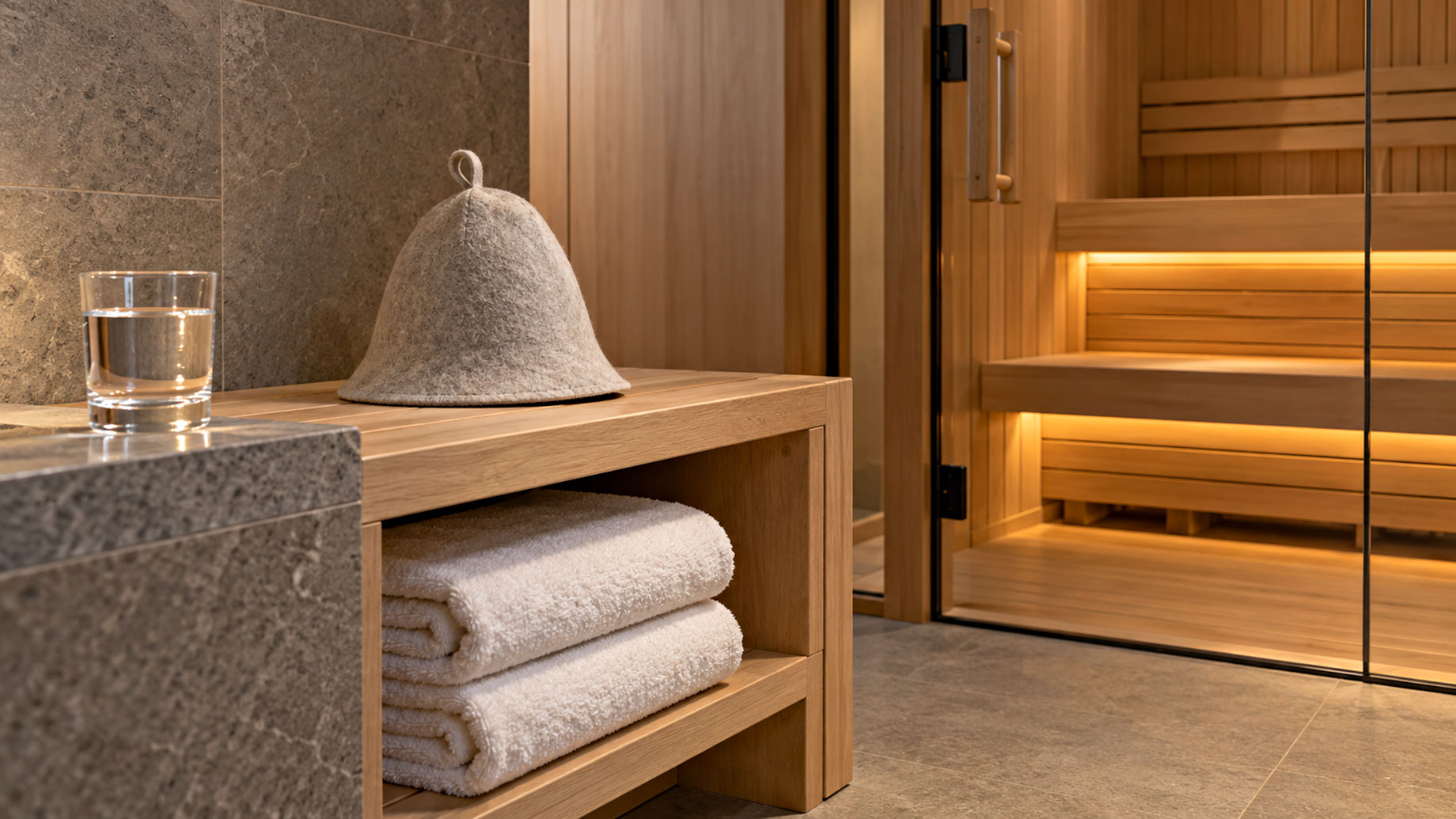
A private sauna can be one of the most compelling spaces in a contemporary residence. It offers an experience that is physical, sensory and remarkably simple: warm timber, considered lighting and a place to be still. Yet the difference between an impressive sauna and one people use regularly often lies outside the architecture itself. The approach from the bathroom, the location of towels, somewhere to place a glass of water and a discreet area for accessories all influence how the amenity functions. Designing for the actual ritual, rather than only the photograph, gives a home sauna lasting value.
Plan the sequence before choosing finishes
The best design process begins with the movements a person will make. They arrive from a workout or shower, leave shoes and electronics outside, collect a towel, enter the heated room, cool down and change. Sketch that sequence on a floor plan before settling on cabinetry or decorative stone. A sauna next to a bathroom has different circulation requirements from one in a detached garden pavilion. Think about wet feet, privacy, sightlines and safe transitions between temperatures. A beautiful but awkwardly placed towel storage area can make the room unpleasant to use. Conversely, a modest bench just beyond the sauna door may become one of the most appreciated design decisions. Successful luxury is often the elimination of minor friction.
Materials should be chosen for function first
Soft wood surfaces are popular inside traditional saunas because they provide a welcoming tactile environment, but the precise species and construction must suit the heater, humidity, temperature and maintenance plan. Homeowners should follow qualified installation guidance rather than choosing timber solely by appearance. The same principle applies to accessories: select materials that are suitable for heat and repeated use. Metal objects left in a hot room may become uncomfortable to touch; electronics are generally better stored outside. For textiles, prioritize washable towels and materials intended for the environment. A neatly edited set of practical items contributes more to a refined experience than a shelf filled with objects that cannot withstand sauna conditions.
Create a dedicated place for sauna essentials
A well-positioned cubby or drawer outside the heated room can hold spare towels, drinking water and small personal items. Some enthusiasts also keep a collection of wool sauna hats close to the entrance. These traditional accessories provide a layer of insulation around the head and hair for those who prefer one. A closed cabinet protects stored textiles from dust, while ventilated spaces help damp accessories dry after use. Consider individual hooks or baskets for guests and family members. The design language need not resemble a retail display. A quiet arrangement in natural wood, linen and muted finishes often integrates more gracefully with the architecture of a contemporary wellness suite.
Think carefully about lighting and sensory atmosphere
Good sauna lighting helps people navigate and relax without feeling exposed under intense glare. Warm, indirect illumination can emphasize the texture of wooden surfaces, but all fixtures must be approved for the temperatures and installation zones involved. Lighting in adjacent shower and changing spaces deserves equal attention; a harsh transition can undo the intended calm. Avoid overcomplicating the sensory program. Strong fragrances can irritate some users, and speakers or decorative items inside the cabin may not be suitable without explicit manufacturer approval. Architecture offers its own atmosphere through proportions, sound absorption, material texture and a framed view. The most elegant sensory decisions are usually those that support the room’s primary purpose.
The cooling area deserves its own design budget
A sauna session includes what happens after heat exposure. A nearby shower, comfortable seat and practical drainage route can be as important as the sauna heater. Outdoors, a sheltered terrace or privacy screen may make cooling down feel connected to the landscape. Indoors, non-slip flooring and a place to set a fresh towel make movement more comfortable. Very cold plunges are visually dramatic but should not be treated as essential to sauna use; sudden cold exposure carries risks for some people. Provide a way to cool gradually without forcing one ritual on every visitor. The luxury of choice is particularly valuable when family members or guests vary in age, heat tolerance and medical circumstances.
Respect operating conditions and safety clearances
A residential sauna is still a technical installation. Heater sizing, ventilation, electrical supply, fire protection and clearances must be established with appropriate professionals and the manufacturer’s documentation. Glass and other uninsulated surfaces can change thermal requirements, so design decisions affect engineering choices. The location of controls matters too. They should be convenient while meeting specification, with enough space for users to enter and exit safely. Place clocks or timers where they are useful without encouraging competition over the longest stay. It is unwise to assume that premium materials compensate for poor mechanical planning. In a well-resolved luxury project, the technical work becomes almost invisible because every element supports the same calm experience.
Allow personal accessories to remain personal
The most thoughtfully designed spa is not necessarily the one with the most equipment. Some users enjoy a towel and nothing else; others bring a head covering, robe or personal water bottle. The value of a natural-wool sauna accessory comes from how it feels to the user, not whether it completes a particular aesthetic. If the house is used for entertaining, storage should accommodate different preferences without clutter. Place guest guidance near the changing area rather than mounting instructional signage across every surface. A small card can explain where towels are located, whether bathing suits are expected, how to request help and where to leave used linens. Hospitality often depends on anticipating questions before a visitor needs to ask them.
Maintenance is part of the interior concept
Designers sometimes treat maintenance as an operational issue that can be addressed later. In a humid wellness area, it deserves early attention. Choose finishes that can be cleaned according to the manufacturer’s recommendations and allow sufficient access behind benches or panels where required. Plan for air circulation after sessions and provide separate storage for clean and used textiles. A visually discreet laundry hamper is more useful than another decorative object. For wool items, allow room for air drying and avoid storage that traps persistent moisture. A sauna that is straightforward to keep fresh is more likely to be used frequently. Durability, rather than visual novelty, is the more convincing expression of quality.
Design around a realistic household schedule
A private sauna should accommodate the life actually lived in the home. If someone hopes to use it after a workout, locate it near changing and shower spaces. If evening relaxation is the priority, consider acoustics, views and lighting at night. Families may need clear rules about access and supervision; guests need intuitive navigation. Plan for modest sessions rather than assuming people want to spend extended periods in intense heat. Health guidance commonly advises beginners to start briefly and regular users to avoid overly long stays. A delightful sauna does not tempt people to ignore signs of overheating. It makes an appropriate session easy to enjoy, and an appropriate exit just as easy.
The lasting appeal of restraint
The most successful home wellness spaces are not defined by how many features can be added. They are defined by how naturally the experience flows, from the first step into the changing area to the final quiet moment afterward. Choose the right heater and room systems, respect safety, plan storage and make room for users’ individual rituals. A home sauna designed this way becomes a meaningful part of everyday life rather than a spectacular room that is rarely occupied. That is a more durable expression of luxury than any single trend.
