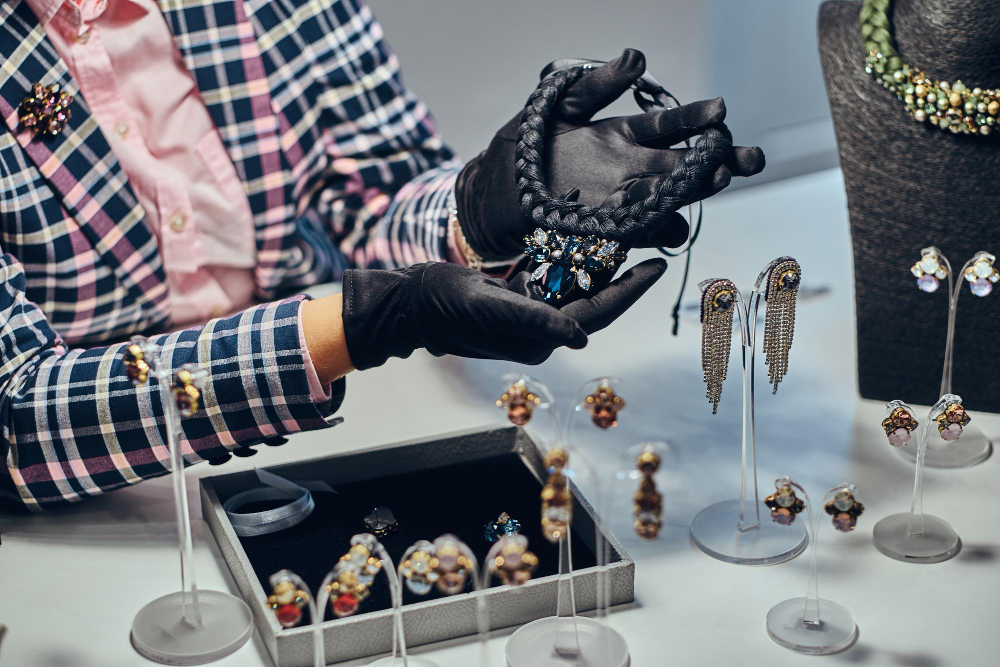
Most fine jewelry is stored badly. Necklaces share a tray and knot together. Rings roll loose in a drawer. A watch worth more than the dresser it sits in gets pushed to the back beside loose change.
The damage is slow and quiet: a scratch on a band, a stone knocked loose, one earring that never turns up again. The fix is often already in your closet. It is the box the piece came in.
Why the original box is worth keeping
A well-made presentation box is built around one piece. The insert holds a ring upright, lays a necklace flat or cradles a watch on a cushion sized to its strap. Nothing you buy later will fit as well.
Rigid construction matters too. A box made from wrapped board protects against pressure in a crowded drawer or a packed safe.
For watches, there is a practical reason as well. Many collectors and resellers put real value on a complete set, with the original box and papers included. Throwing the box away can cost you later.
The case for the drawer box
Among presentation boxes, the drawer style is especially good for home storage. The tray slides out of an outer sleeve, so there is no lid to set down or lose. Drawer boxes also stack neatly, which suits a dresser drawer or a safe shelf.
That is one reason many jewelers and watch brands present their pieces in rigid drawer boxes. The same design that makes the first opening feel special makes daily storage simple.
If a piece arrived in one, keep it. If it did not, a drawer-style case with a fitted insert is worth buying for your most valuable pieces.
Storage rules by piece
Necklaces. Lay them flat or hang them individually. Never pile chains together. Fine links knot quickly and are hard to free without damage.
Rings. Store them upright in slotted pads, one ring per slot, so stones do not rub against metal.
Earrings. Keep pairs together on a card or in a divided compartment. Most lost earrings go missing at home, not in the street.
Watches. Store each one separately, dial up, on a cushion or in its box. Keep mechanical watches away from strong magnetic sources such as speakers, which can affect their accuracy.
Keep hard stones apart
Diamonds are the hardest natural material and will scratch softer gemstones and precious metals they touch. Store diamond pieces separately from pearls, opals, emeralds and gold. It is the single simplest habit that preserves a collection.
Mind the humidity
Moisture tarnishes silver and dulls some finishes. Bathrooms are the worst place to keep jewelry, however convenient. A bedroom drawer or a safe is better, and anti-tarnish strips in silver compartments help.
Know what you own
Keep a simple inventory: a photograph of each piece, its purchase details and any valuation. Store it somewhere separate from the jewelry. If you ever need to make an insurance claim, you will be glad it exists.
Traveling with fine pieces
Travel is where most damage happens. Pack only what you will wear, and carry valuable pieces in your hand luggage, never in checked bags.
A drawer box with a fitted insert travels well. It keeps each piece in place and protects it from pressure in a packed bag. For a trip with several pieces, a dedicated travel case with separate compartments does the same job.
The simplest habit
Good storage is not complicated. It comes down to one piece per space, hard stones kept apart, dry conditions and a record of what you own.
Start with the boxes. The next time a fine piece arrives beautifully packaged, keep the packaging. It was designed to protect exactly what is inside.