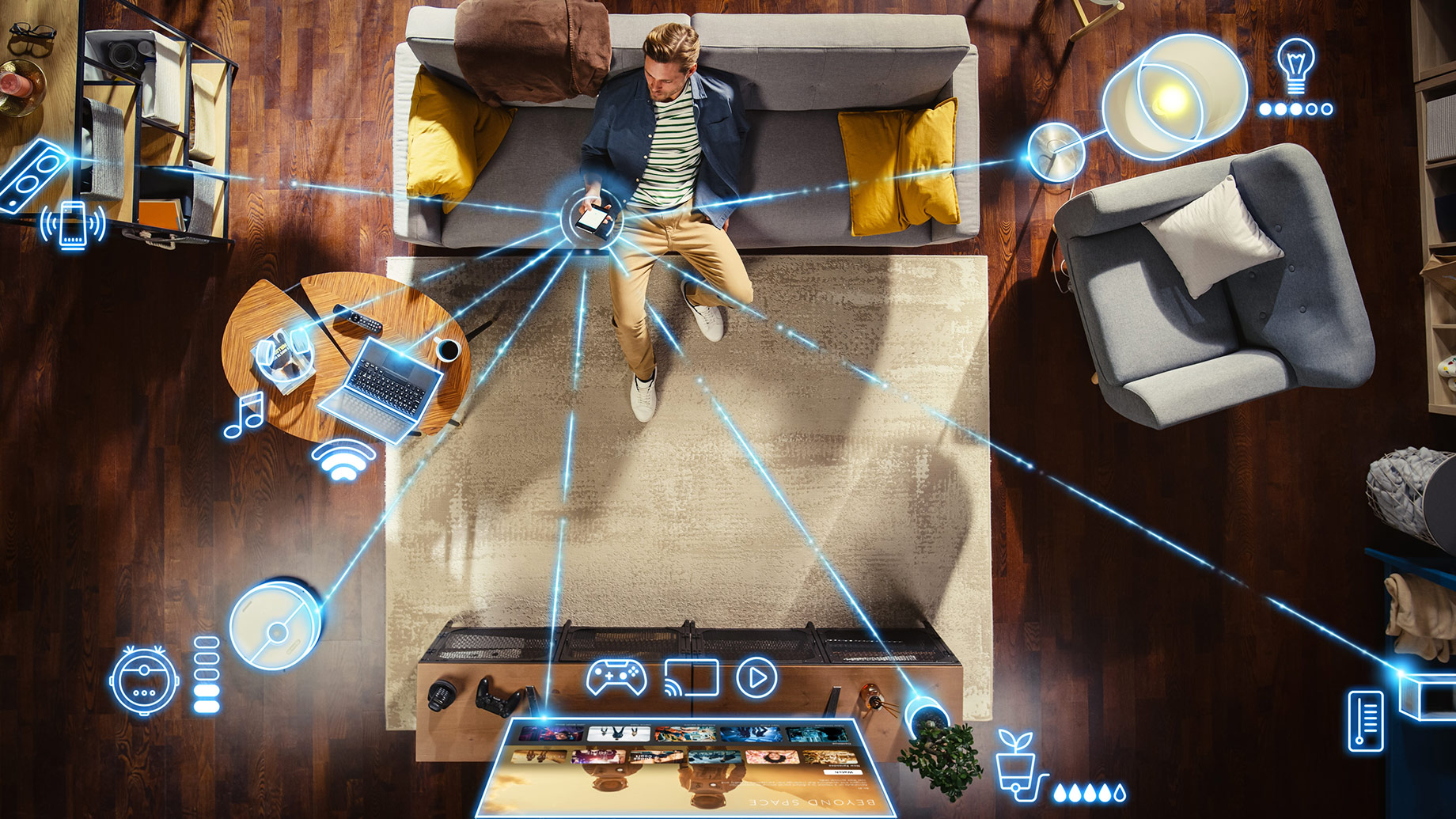
Imagine waking up to a fresh coffee smell, light slowly turning on to simulate the sunrise, a comfortable temperature, and a disarmed security system. Your smart house already knows you and your everyday routine. Nevertheless, at the moment when you enjoy convenience, some hacker somewhere in the world may be looking for a backdoor to your house through the internet.
The development of technology has changed people’s lives and habits. With some capital investment, everyone is able to get a premium connected house and all its conveniences. However, while using smart home systems, one should know about possible vulnerabilities. Therefore, this article will provide some advice on how to use connected systems safely in 2026.
The Attraction and Realities of Connected Houses
For centuries, luxury houses have been associated with exclusivity and luxury. Smart houses represent an opportunity to get all these characteristics. In addition, one is able to manage almost everything remotely – from lighting and temperature regulation to lawn irrigation.
Nevertheless, when buying smart houses, one should understand the reality behind these devices – that every connected device is a door for intruders.
It seems ironic that in order to make a house convenient, one opens doors to criminals and other people with malicious intentions. Indeed, every device that is connected to the Internet creates the possibility of accessing your system and stealing money or personal information.
Understanding the Security Environment of the Smart House
Nowadays, home protection means not only physical security measures. It is necessary to protect oneself from cyber-attacks that are much more difficult to cope with than thieves. Therefore, home security now means protection from several parties – your internet service provider, the producer of the device, the software, and even you as an owner.
For example, the typical luxury home in 2026 can contain:
- Networked security cameras and smart locks
- Connected thermostats, lights, and blinds
- Smart entertainment systems and smart household appliances
- Voice-activated assistants throughout the whole house
- Environmental monitoring systems
All these devices create a so-called “attack surface,” which means the number of ways to get access to the house. The more devices are present in the house, the more openings there are for intruders.
Common Problems in Connected Devices
Most people do not know that the software of smart devices often becomes outdated. Companies produce connected systems, and years may pass before they provide security updates for them. Moreover, unlike smartphones, most users do not regularly install updates on their smart refrigerators.
For example, security researchers find a vulnerability in the software of a smart lock and inform the producers about it. Then, the producers fix the problem and release a patch. Nevertheless, if one does not install it, the system remains unprotected. Many homeowners do not even know that their devices need updating or simply ignore notifications.
Weak passwords are another very common mistake. One thinks that using passwords such as “123456” or “password” is enough to protect oneself from intruders. Actually, the situation is not like that, and any intruder can easily access the system using this method.
Data collection is another threat for homeowners. Most connected devices collect information about the owner’s activity – the time of leaving and returning home, temperature preferences, entertainment habits, and other important details.
Moreover, this information is sometimes sold to third parties. Thus, the vulnerability of the device is dangerous since it can result in revealing intimate information about the homeowner.
Security of Your Network and Data
Protection of the smart house begins with the security of your network since it is the main channel connecting all devices. Any person who gets access to your network can either intercept your data or infect your system with malware.
To begin with, you should ensure that your Wi-Fi router uses WPA3 encryption (or, at least, WPA2) protocol. Then, change your default password on the router immediately and choose a strong, unique one.
Many people neglect this step since they do not see their router. However, the router is the entrance to the whole network of the house.
One should consider using separate networks for smart devices. There should be one network for your PC, mobile phone, and other devices with sensitive data and another one for smart household appliances.
For instance, if the smart speaker becomes infected, it cannot access the computer of its owner.
Understanding what devices are connected to your network is very important nowadays. To keep track of what is connected, you should check devices on the network periodically using tools that allow you to perform an IP lookup or scan your network.
Only by knowing all the devices connected to your network can you notice suspicious devices. For instance, a strange device name or MAC address can be a warning sign.
Updating your software is one of the most annoying steps in managing connected devices. Nevertheless, it can be very useful since updates often contain patches for security holes. One should turn automatic updates on if the device supports it.
Multi-factor authentication is also one of the best solutions when using smart homes. It means that even if a hacker obtains the password of your user account, they cannot gain access to the system without additional authentication.
Recommendations for Security in the Luxurious Residence
The way of approaching the security of the connected home should be commensurate with the value of the assets to be protected. The luxury residence is expensive, and the privacy of the householder should be protected.
First, one should analyze their needs. Not all devices need to be smart. People connect every appliance just for convenience, while in fact, each connection is a possible risk.
For instance, does your refrigerator really need an Internet connection? Do you really need the smart shower system?
Second, one should choose devices from reputable companies. Here, brand recognition is crucial. Established companies usually have departments working on security updates, while no-name brands rarely have them.
When choosing connected devices, one should look at the reputation of the company regarding security updates and customer support.
Third, it is necessary to organize documentation of your connected devices. The list of your devices, places where they are installed, their connections, and dates of updating will be very helpful if something happens.
This documentation is also important in order to notice the appearance of new devices on the network.
Fourth, you should cooperate with professionals who are able to provide good protection for your smart home. Usually, luxury homes demand professional installation since it is needed to provide correct network segmentation, security configuration, and other important settings.
Finally, one should establish a regular maintenance schedule. Just as one inspects electricity every year, one should organize an annual inspection of their connected home system.
New vulnerabilities emerge, and this procedure helps one to cope with the changes.
Future of Home Security
We are only six months before the end of 2026, but smart home technology is still developing. Edge computing is becoming more widespread, and it means that devices process more information locally rather than transfer it to the cloud.
Actually, it is better for security since sensitive information remains inside your house.
Biometric identification is also developing rapidly. Fingerprint scanners and face recognition systems are becoming better and less susceptible to spoofing.
On the other hand, these security measures raise new questions related to the privacy of the homeowner.
The security industry tends to move towards zero trust architecture, which means that nobody who connects to the network is automatically trusted. Every device has to prove itself.
This solution will definitely improve security in the near future.
Conclusion
Thus, owning a luxury smart home does not mean choosing between comfort and security. It is possible to have both of them.
The homeowners who peacefully sleep in connected homes are not those who have the most complex systems, but those who understand them and take care of them.
Your smart home should be your friend, not your enemy. The start should be with basic steps – a secure network, regular updates, strong passwords, and awareness of the devices connected to the network.
Then, you can add other security features according to your needs. Technology is wonderful, but it is only as safe as you treat it.
The future of luxurious living is connected. Ensure that it is also secure.
