
The most thoughtfully designed homes have a way of making technology feel almost invisible. Lighting, speakers and connected appliances do their jobs without asking to become the centre of attention. Wearables introduce a different challenge. A device that leaves the house with its owner also enters kitchens, restaurants, hotel lounges and other spaces where the people nearby may have different expectations about technology.
The Jobs Circle camera-free smart glasses offer one illustration of this design choice. Their round titanium frames bring open-ear audio, calls and voice-based functions into everyday eyewear, but leave out the camera. That omission has practical implications: it removes photo and video capture from the glasses while leaving room for useful audio features. It also invites a more interesting question than whether eyewear can be smart: which functions actually belong in something worn around other people?
What Camera-Free Smart Glasses Can Actually Do
A camera is only one possible component of smart eyewear. Audio-first models can play music or podcasts, handle calls and, depending on the software, provide voice assistance, translation or spoken-note transcription. Some camera-free glasses take a different route, using small displays for information rather than speakers for sound. The absence of a camera does not identify a single set of features.
The distinction matters when deciding what a device will contribute to an ordinary day. Someone who takes frequent calls might appreciate not having to search for earbuds. A multilingual traveller may value spoken translation. Another person may want discreet visual prompts and have little interest in audio at all. All three needs can lead to different products, even when none has a camera.
There are meaningful limits. Camera-free eyewear cannot photograph a damaged fixture, scan a printed menu through a built-in camera or record a first-person video of a property tour. Audio functions cannot replace visual evidence. The most useful feature set depends less on a technology checklist than on the tasks that recur in the wearer’s routine.
Good Design Has to Work Beyond the Mirror
Eyewear has an unusual relationship with personal style: it sits in the middle of the face for hours, not just for a photograph or a special occasion. A well-proportioned frame can work with both a tailored jacket and relaxed weekend clothes. An otherwise elegant shape may become impractical, however, if the bridge slips or the temples create pressure during a long afternoon.
Smart glasses introduce another design constraint. Their arms may need to accommodate speakers, microphones, controls and a battery. That makes the side profile and weight distribution as important as the front of the frame. A light specification does not guarantee comfort, just as a premium material does not guarantee the right fit for every nose bridge or head width.
For buyers drawn to understated design, the most revealing question is simple: would these still be appealing as ordinary glasses? The answer should hold up after the novelty wears off. Familiar styling is valuable only when the frame also stays in place, works with the wearer’s lenses and feels natural during everyday movement.
Not Filming Is Different From Not Recording
A camera-free design changes what smart glasses can collect, but it does not make every interaction private. Glasses without cameras cannot take photographs or video through the frame. Models with microphones may still capture speech, and connected software may process audio to produce transcripts, translations or summaries. Those are separate capabilities with separate implications.
Consider a relaxed evening at home. A guest can see a smart speaker on a shelf and may know that a doorbell has a camera. Eyewear is harder to read at a glance. Even when the glasses have no camera, a visitor cannot necessarily tell whether their microphones are active, whether speech is being saved or whether an assistant is processing a request. The responsible response is not to promise perfect privacy; it is to make the device’s use understandable.
A practical rule is to treat recording as an explicit choice, not a background convenience. Ask permission before capturing a conversation, follow local recording rules and respect household or workplace policies. Review the companion app’s audio storage, sharing and deletion controls. When a conversation involves a guest, child, employee or confidential matter, leaving recording off may be the most considerate option.
This is where the design discussion becomes more human. Removing a camera can ease one concern about wearable technology. Trust still depends on the behaviour of the person wearing it.
Where Open-Ear Audio Fits Into Daily Life
Open-ear audio is useful because it does not seal the ears in the way in-ear headphones can. A wearer may listen to a podcast while preparing breakfast, answer a short call while moving between rooms or follow spoken directions during an ordinary walk. The appeal is less about creating a private sound bubble than about making brief audio interactions convenient.
That distinction also explains the limitations. Traffic, restaurant noise and busy public spaces can make speech harder to hear. At higher volume, some sound may be audible to people close by. And hearing the room does not mean the listener is giving it full attention. A conversation with a family member can still be interrupted by an unexpected call or assistant response.
Shared spaces call for small decisions: lower the volume when someone is working nearby, pause audio when a guest speaks and move a sensitive call away from other people. Camera-free glasses are not automatically appropriate for every meeting or gathering simply because they cannot film it. Considerate use is part of the product experience, not an optional extra.
Prescription Lenses and Everyday Fit Deserve Equal Attention
For someone who already relies on prescription eyewear, the smartest frame is of little value if it cannot provide clear, comfortable vision. “Prescription-ready” is a starting point, not proof that every lens type or prescription strength will fit. The exact model, lens geometry and optical requirements still need checking.
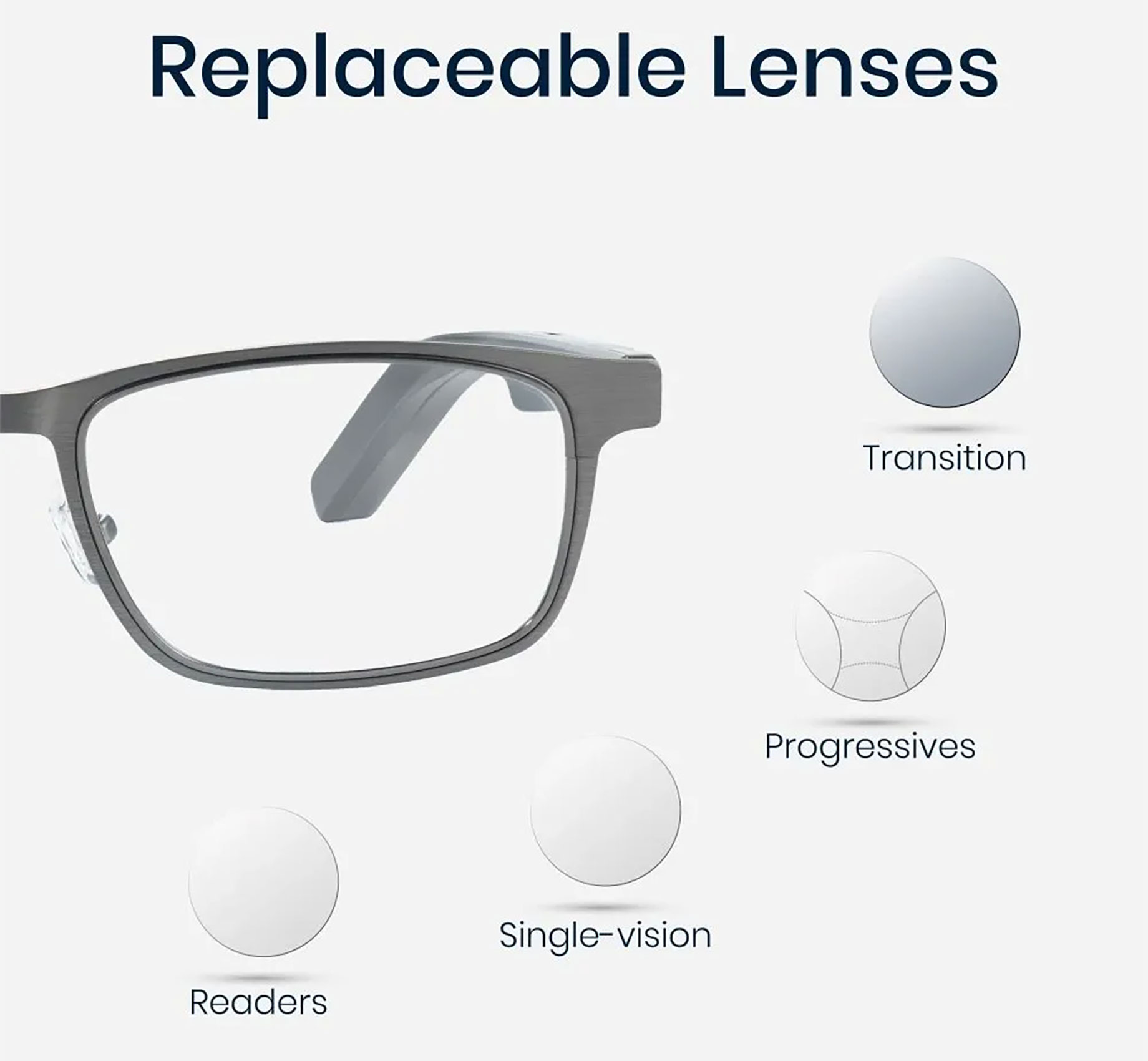
Before choosing a frame, compare its width, bridge and temple measurements with an existing pair that fits well. Ask whether the supplier can accommodate the required single-vision or progressive lenses, and confirm any prescription limits. Accurate pupillary-distance and fitting measurements matter, particularly for more complex prescriptions. An optician can help resolve questions that a product photograph cannot answer.
People considering a first pair can use a guide to prescription smart glasses to understand the difference between direct-fit lenses and inserts, check the practical fitting steps and anticipate costs beyond the frame itself. It is also worth confirming who can adjust the finished glasses and what happens when a prescription changes. A device worn every day should have a credible plan for everyday optical care.
Choosing Technology That Respects Everyday Life
The best wearable choice begins with the life around the device. Does the user actually need voice features? Will open-ear sound be convenient in the places they spend time? Can the frame support their vision needs? And will people sharing those places understand when the technology is being used?
Smart glasses without a camera offer a legitimate middle ground between conventional eyewear and camera-equipped wearables. They can bring useful connected functions into a familiar accessory without adding visual capture. They do not eliminate recording responsibilities, solve every audio problem or make physical fit irrelevant. Thoughtful technology earns its place through those everyday details—not through the number of features it can advertise.
