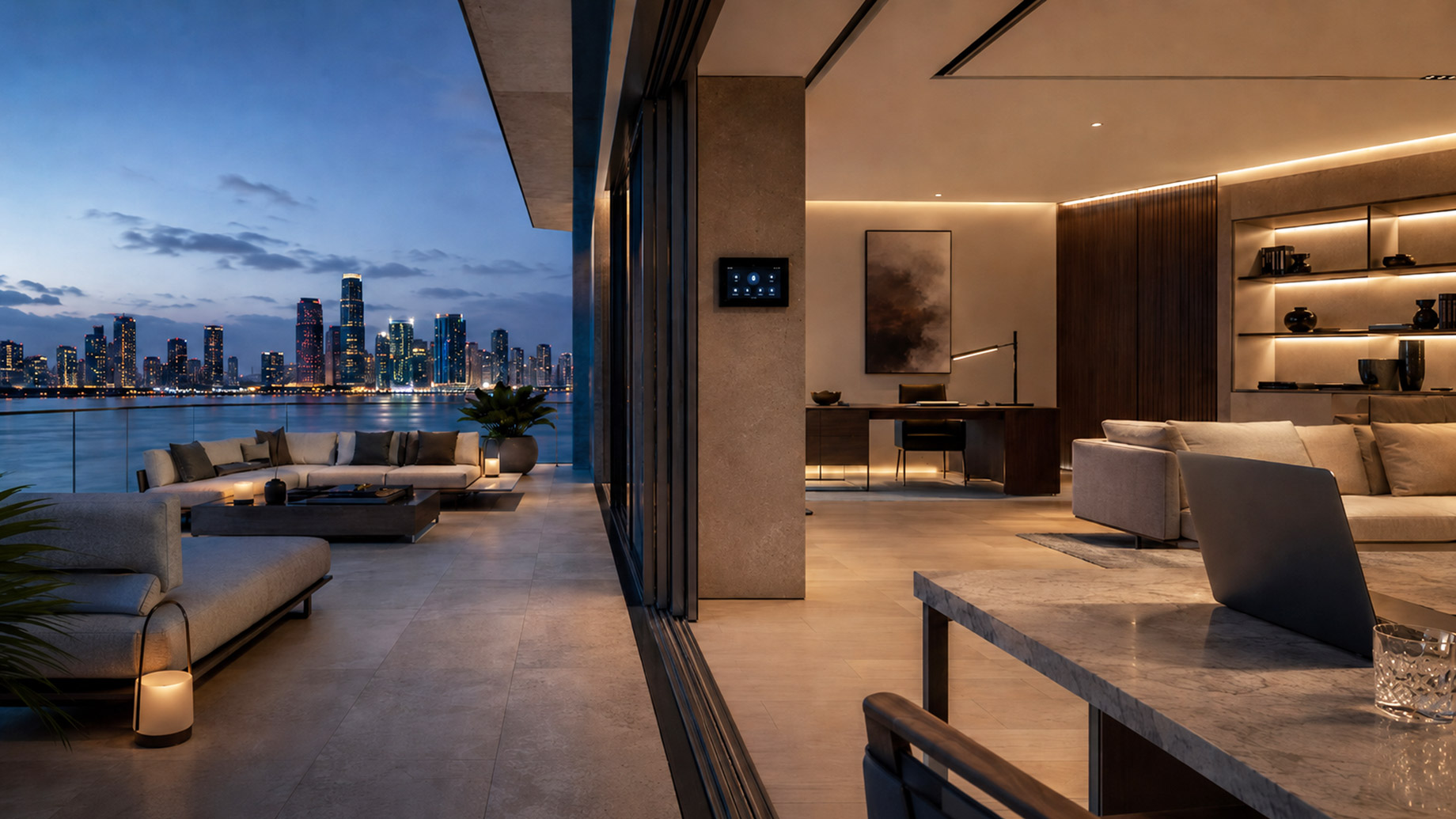
Luxury living is becoming increasingly mobile
Luxury real estate has always been associated with location, architecture, privacy and comfort. A waterfront villa, a penthouse in a global city, a mountain residence or a private island retreat still represent the traditional codes of high-end living. However, the expectations of luxury buyers, investors and international homeowners have evolved. Today, a premium property is not only judged by its design or amenities, but also by the way it supports a mobile, digital and globally connected lifestyle.
Many luxury property owners divide their time between several residences, travel frequently for business or leisure, and expect the same level of convenience wherever they are. A home may function as a family retreat, a remote working space, a seasonal residence or a base for international travel. In this context, connectivity has become part of the overall experience. Reliable access to digital services is no longer a secondary feature; it is now closely linked to comfort, productivity, security and lifestyle flexibility.
Smart homes depend on strong digital infrastructure
The rise of smart home technology has transformed the luxury real estate market. High-end properties increasingly include connected lighting, climate control, security systems, entertainment platforms, automated blinds, smart appliances and remote monitoring tools. These systems are designed to make daily life more comfortable and efficient, but they all depend on one essential element: stable connectivity.
For homeowners, this means that a property’s digital infrastructure is becoming as important as its physical infrastructure. A residence may have elegant interiors and exceptional views, but if its connected systems are unreliable, the overall experience can be affected. Owners want to control their home remotely, receive security alerts, manage energy usage, communicate with staff and access services from anywhere in the world.
This shift is particularly relevant for international owners who may not be present year-round. The ability to monitor a property from abroad, check cameras, manage access or coordinate maintenance remotely adds real value to the ownership experience. In luxury real estate, technology is no longer only about innovation; it is about peace of mind.
International homeowners expect seamless travel
Luxury property ownership is often linked to international mobility. Buyers may live in one country, invest in another and travel regularly between destinations. A property in Miami, Dubai, Paris, London, Los Angeles or the Mediterranean may be part of a wider lifestyle built around movement and flexibility. This global way of living requires seamless digital access not only inside the home, but also during the journey.
Travelers increasingly rely on their smartphones to manage flights, private transfers, hotel bookings, restaurant reservations, navigation, banking, communication and concierge services. For luxury travelers, the expectation is simple: services should be available immediately, without friction. Waiting to find a local SIM card, depending on public Wi-Fi or dealing with complicated roaming options can feel inconsistent with a premium travel experience.
This is why mobile connectivity has become an important part of modern luxury travel planning. The journey between residences, business meetings and leisure destinations is now supported by digital tools at every stage.
eSIM technology supports a more flexible lifestyle
One technology that fits naturally into this evolution is the eSIM. Unlike a traditional SIM card, an eSIM is digital and integrated directly into a compatible smartphone. It allows users to activate a mobile data plan without inserting a physical card. For people who travel frequently or move between countries, this can simplify access to mobile internet.
For luxury homeowners and international travelers, the practical value is clear. A data plan can be prepared before departure, activated upon arrival and used without visiting a local mobile provider. This reduces friction and allows travelers to stay connected from the moment they land. Platforms such as Holafly provide eSIM solutions for different destinations, making mobile connectivity easier to include in travel preparation.
The eSIM is not presented as a luxury product in itself, but as a discreet tool that supports the modern luxury lifestyle. It helps maintain continuity between home, travel and work, which is increasingly important for global property owners.
Connectivity improves property management
Digital connectivity also plays a key role in managing high-end residences. Owners who spend time away from their properties often depend on digital systems to stay informed. Smart locks, alarm systems, surveillance cameras, water leak sensors, temperature controls and energy management tools can all send real-time updates to a mobile device.
For a luxury property, this level of control is especially valuable. A homeowner can authorize access for staff, monitor maintenance visits, check whether systems are functioning properly or receive alerts if something unusual happens. Property managers can also communicate more efficiently with owners, sharing updates, photos, reports or urgent information.
This creates a more responsive and transparent management process. For owners who travel often, reliable mobile access ensures that they remain connected to their property even when they are thousands of miles away.
Remote work has changed luxury property expectations
The growth of remote work has also influenced the way luxury properties are used. Many buyers now expect their homes to support professional activity as well as leisure. A private office, fast internet, strong mobile coverage, video conferencing capacity and quiet workspaces have become important criteria.
This is particularly true for entrepreneurs, executives, investors and digital professionals who want the freedom to work from different locations. A coastal villa or mountain chalet is no longer only a vacation space. It can also become a productive environment where business continues without interruption.
As a result, digital readiness has become part of the value proposition of luxury real estate. A home that allows its owner to move easily between relaxation, family life and professional responsibilities is better aligned with today’s high-end lifestyle.
Travel, privacy and digital independence
Privacy is another important consideration in the luxury market. High-net-worth individuals often value discretion and control over their personal environment. Digital independence supports this expectation. Relying less on public Wi-Fi networks and more on private mobile connectivity can be useful for travelers who want greater control over how and where they connect.
While mobile connectivity does not replace cybersecurity best practices, it can reduce dependence on unknown networks in airports, hotels, cafés or public spaces. For travelers managing sensitive communications, financial tools or business platforms, this added layer of control can be meaningful.
Luxury travel is not only about comfort; it is also about reducing unnecessary exposure and maintaining autonomy. Connectivity solutions that are simple, private and easy to manage fit naturally into this environment.
The future of luxury real estate is connected
The luxury real estate market is evolving toward a more integrated vision of comfort. Architecture, design, wellness, sustainability, technology and mobility now work together to shape the ownership experience. Buyers are no longer only looking for beautiful homes. They are looking for properties that support the way they live, travel, work and communicate.
In this context, connectivity is becoming a defining feature of modern luxury. It supports smart homes, remote management, international travel, digital services and flexible work. Technologies such as eSIM are part of this broader transformation because they allow users to maintain access to essential services across borders.
Luxury living is therefore becoming more connected, more mobile and more digitally supported. The most desirable properties will not only offer exceptional locations and refined interiors. They will also support a lifestyle where owners can move freely, stay informed and remain connected wherever they are.
