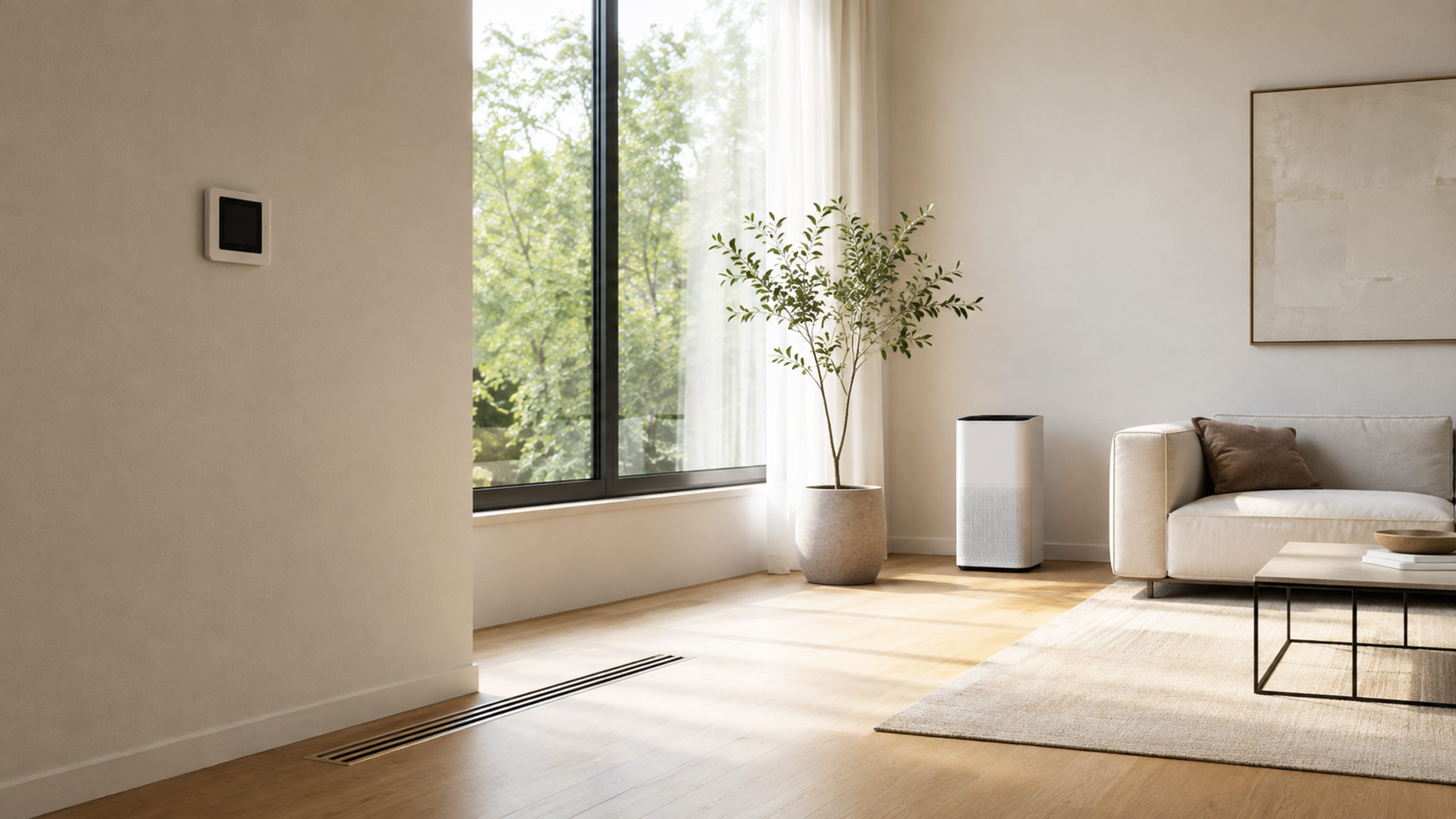
A comfortable home depends on more than having a furnace for winter and an air conditioner for summer. Residential HVAC systems influence temperature, humidity, airflow, indoor air quality, and energy use throughout the year. Efficient Comfort is one example of a full-service residential HVAC provider, assisting homeowners who need furnace repair Thornton, Colorado services, as well as heating and cooling repair, replacement, routine maintenance, and preventative service plans. The company also provides indoor air quality solutions and helps homeowners pursue more efficient home-comfort systems, while offering flexible financing through Wells Fargo and FTL Finance with convenient monthly payments and competitive rates that can make qualifying system upgrades more affordable.
Why Residential HVAC Services Matter
Heating, ventilation, and air conditioning systems perform several interconnected jobs inside a home. They heat or cool living spaces, circulate conditioned air, help manage moisture, and provide a pathway through which air can be filtered and, depending on the system, ventilated.
This makes HVAC performance relevant to both comfort and household energy consumption. Heating and cooling represent a substantial portion of energy use in many homes, making the condition and operation of HVAC equipment an important part of overall residential energy efficiency.
A well-performing system should do more than reach the thermostat setting. Homeowners should expect reasonably consistent temperatures, adequate airflow, controlled humidity, and reliable operation without excessive cycling, unusual noises, or recurring breakdowns.
When one of those elements begins to deteriorate, professional HVAC service can help determine whether the underlying problem involves the equipment itself, airflow, ductwork, controls, maintenance, or another part of the home’s mechanical system.
Heating Services for Reliable Winter Comfort
Residential heating systems can include furnaces, boilers, heat pumps, and other equipment depending on the property, climate, and energy source. Whatever system is installed, its performance becomes especially important when outdoor temperatures fall.
Common warning signs of a heating problem include:
- Uneven temperatures between rooms
- Weak airflow from registers
- A furnace that repeatedly turns on and off
- Unusual rattling, banging, or mechanical noises
- Unexpected increases in heating costs
- Difficulty reaching the thermostat setting
- A system that runs for unusually long periods
- Complete or intermittent loss of heat
Some issues can be corrected through repair or maintenance. Others may indicate that an older system is approaching the point where replacement is a more practical long-term solution.
For example, homeowners looking for a furnace service Denver, CO offering may benefit from having the entire system evaluated rather than focusing only on the most obvious symptom. Efficient Comfort services furnaces and other heating systems, including repairs, maintenance, and replacement when existing equipment can no longer adequately meet a home’s needs.
Furnace Repair or Replacement?
The appropriate decision depends on the condition of the equipment and the home rather than age alone.
| Situation | Repair May Make Sense | Replacement May Be Worth Evaluating |
|---|---|---|
| Occasional minor problem | Yes | Usually not necessary |
| Repeated breakdowns | Less attractive over time | Yes |
| Uneven heating | After checking airflow and controls | If equipment is inadequate or deteriorating |
| Rising energy consumption | If a correctable fault is found | If aging equipment is operating inefficiently |
| Major component failure | Depends on system condition | Often worth comparing |
| Home renovation or addition | Possibly | New sizing may be required |
| Poor comfort despite repairs | Further diagnosis needed | Replacement may provide a better solution |
The goal should not simply be to install newer equipment. A replacement system needs to be appropriately selected and installed for the home. Equipment capacity, airflow, ductwork, insulation, climate, and the layout of the property can all affect actual performance.
Professional load calculations are particularly important because an HVAC system that is too large or too small for the residence can compromise comfort, efficiency, and equipment performance.
Cooling Services for Summer Performance
Air conditioning becomes equally important during hot weather, particularly when high indoor temperatures are accompanied by excess humidity.
Professional cooling services generally fall into three categories: repair, replacement, and preventative maintenance.
A repair may be needed when an air conditioner develops weak airflow, inadequate cooling, unusual noises, ice accumulation, abnormal cycling, or other operational problems. When an existing system is no longer dependable or efficient enough for the property, replacement may become the better long-term option.
Maintenance also plays an important role. Filters, coils, condensate drains, electrical components, refrigerant systems, and other parts require periodic attention for reliable cooling performance.
A professional cooling inspection may involve evaluating:
- Air filters
- Evaporator and condenser coils
- Refrigerant condition
- Condensate drainage
- Electrical components
- Thermostat operation
- Blower performance
- Supply and return airflow
- Outdoor equipment condition
The exact work required depends on the system, its condition, and manufacturer recommendations.
Preventative HVAC Maintenance Can Reduce Surprises
Waiting until a furnace fails on a freezing night or an air conditioner stops during a heat wave is rarely the ideal maintenance strategy.
Preventative HVAC service allows technicians to inspect equipment before periods of heavy seasonal use. Heating systems are commonly serviced before colder weather, while cooling equipment can be inspected ahead of the summer season.
Preventative maintenance can help identify developing problems such as worn components, restricted airflow, dirty coils, clogged drains, control issues, or other faults before they become more disruptive.
Homeowners also have an important role. Air filters should be checked regularly and replaced according to the filter manufacturer’s and HVAC system’s requirements. A clogged filter can restrict airflow, forcing equipment to work harder and potentially contributing to efficiency and performance problems.
The Value of an HVAC Service Plan
Some homeowners prefer to place maintenance on a recurring schedule rather than remembering to book individual appointments.
Preventative service plans can provide scheduled inspections and maintenance while potentially including benefits such as repair discounts, priority scheduling, service reminders, or other conveniences depending on the provider and plan.
Efficient Comfort offers preventative maintenance through its Comfort Club program, giving homeowners another way to make HVAC care part of routine property maintenance rather than waiting for an emergency.
For owners managing larger residences, second homes, rental properties, or simply busy schedules, a service plan can make ongoing HVAC maintenance easier to organize.
Indoor Air Quality Is Part of Whole-Home Comfort
Temperature is only one component of a comfortable indoor environment.
Indoor air can also be affected by particulate matter, moisture, inadequate ventilation, household products, combustion sources, outdoor pollution, allergens, and other contaminants.
A comprehensive indoor air quality strategy can therefore involve several approaches rather than relying on a single product.
Depending on the property and household needs, HVAC-related indoor air quality improvements may involve:
- Higher-efficiency filtration compatible with the HVAC system
- Whole-home air cleaners
- Humidity management
- Dehumidification
- Humidification during dry conditions
- Mechanical ventilation
- Inspection of ductwork and airflow
- Proper kitchen and bathroom exhaust
- Addressing sources of excess moisture
- UV-based HVAC accessories where appropriate
Efficient Comfort provides indoor air quality solutions that can include air cleaners, humidifiers, ventilators, and UV systems.
The best approach depends on the home’s construction, climate, occupants, ventilation, existing HVAC equipment, and any specific comfort or air-quality concerns.
Airflow and Ductwork Should Not Be Overlooked
Replacing a furnace or air conditioner will not necessarily solve every comfort problem if conditioned air cannot move effectively throughout the house.
Duct leakage, damaged ducts, restricted return airflow, poorly balanced rooms, dirty filters, or unsuitable equipment sizing can create hot and cold spots even when the HVAC equipment itself is functioning.
This is why a comprehensive HVAC evaluation should look beyond the mechanical unit.
Sealing and insulating ductwork can improve system performance, particularly when ducts pass through unconditioned areas such as attics, crawlspaces, garages, and unfinished basements.
For renovated, expanded, or custom homes, airflow deserves particular attention. Changes to floor plans, added living space, converted attics, large expanses of glazing, and remodeled rooms can alter heating and cooling demands from those for which the original HVAC system was designed.
When Is It Time to Upgrade an HVAC System?
There is no single age at which every furnace or air conditioner should automatically be replaced.
A homeowner should instead consider the complete performance picture.
An HVAC replacement evaluation becomes increasingly reasonable when:
- Repairs are becoming frequent or expensive
- Equipment has difficulty maintaining comfortable temperatures
- Some rooms remain consistently too warm or too cold
- Energy use has increased without another obvious explanation
- The system operates noisily or cycles excessively
- Major components are deteriorating
- The home’s layout or conditioned area has changed
- Better humidity or indoor air quality control is desired
- Older equipment no longer meets the owner’s comfort expectations
System age can be useful context, but condition, maintenance history, repair frequency, comfort, efficiency, and the cost of future repairs are often more important when deciding whether to replace equipment.
Financing Can Make Major HVAC Upgrades Easier to Plan
A full heating and cooling replacement can be a significant home-improvement project, particularly when multiple pieces of equipment, duct modifications, electrical work, or other upgrades are involved.
Financing can allow qualifying homeowners to spread that expenditure over monthly payments rather than paying the entire amount upfront.
Efficient Comfort offers financing through Wells Fargo and FTL Finance. These options can provide convenient monthly payments and competitive financing terms for qualifying customers, helping make major HVAC repairs, replacements, and system upgrades more manageable.
Actual interest rates, promotional terms, payment amounts, and eligibility depend on the lender, financing program, purchase amount, and applicant approval.
For homeowners already planning renovations, energy-efficiency improvements, or major property upgrades, financing can also make it easier to coordinate an HVAC replacement with the broader capital-improvement plan for the residence.
Choosing a Residential HVAC Contractor
Technical expertise matters, but homeowners should also consider how thoroughly a contractor evaluates the property.
Before approving a significant repair or replacement, consider asking:
- What is causing the current problem? A contractor should be able to explain the diagnosis rather than simply recommend equipment.
- Can the existing system be repaired economically? Understanding both repair and replacement options helps homeowners make a more informed decision.
- How will replacement equipment be sized? The recommendation should account for the characteristics and heating or cooling demands of the home.
- Has the ductwork and airflow been evaluated? Comfort problems can originate outside the furnace or air conditioner itself.
- What efficiency options are available? Higher-efficiency equipment may be appropriate depending on climate, usage, and the home.
- What maintenance will the new system require? Owners should understand ongoing service requirements from the beginning.
- Are indoor air quality improvements appropriate? Filtration, ventilation, and humidity control should be based on actual household needs.
- What financing options are available? For larger replacements, comparing payment terms can help with financial planning.
A qualified HVAC provider should help the homeowner understand the system as a whole rather than treating every service call as an isolated equipment problem.
A Whole-Home Approach to Comfort and Efficiency
Modern residential comfort requires a coordinated approach to heating, cooling, airflow, indoor air quality, and preventative maintenance.
Repairing equipment when problems occur remains essential, but proactive homeowners can go further by scheduling regular maintenance, monitoring filters, paying attention to changing system performance, assessing airflow, and considering indoor air quality alongside temperature.
When replacement eventually becomes necessary, the objective should be more than simply swapping old equipment for new. Proper system selection, sizing, installation, airflow, controls, and ongoing maintenance all influence how effectively that investment performs.
Companies such as Efficient Comfort demonstrate the increasingly comprehensive role of residential HVAC contractors, combining heating and cooling repair, replacement, maintenance, preventative service plans, indoor air quality solutions, and financing options within one home-comfort strategy. For homeowners, that integrated approach can make it easier to maintain dependable comfort and pursue better energy performance throughout every season.
