Extreme weather is no longer an occasional disruption—it’s part of regular facility planning. High winds, rapid temperature shifts, heavy rainfall, and snow accumulation place steady pressure on roofs, foundations, windows, and mechanical systems. For facility managers and property owners, preparation isn’t about reacting to the next storm. It’s about making steady, well-scoped upgrades that keep buildings operational and reduce emergency repair calls.
Most owners want the same outcomes—predictable system performance, manageable lifecycle costs, and fast recovery when weather hits hard. Practical projects such as reinforcing roof perimeters, improving site drainage, tightening window and door assemblies, stabilizing HVAC equipment, and protecting exterior electrical systems create that stability. When upgrades are planned with clear scopes and verified installation standards, properties stay more resilient, maintenance becomes easier to manage, and budgeting decisions feel far less reactive.
High-Performance Roof System Upgrades
Membrane seams, flashing transitions, and perimeter securement are frequent failure points during wind, hail, and freeze–thaw cycles. Schedule a detailed roof inspection with a qualified roofing company before severe weather seasons to review drainage flow paths, fastener spacing, and penetration flashings. Document uplift risk areas and repair recommendations to guide capital planning.
Specify UL 2218 Class 4 impact-resistant shingles or reinforced 60–80 mil TPO or PVC membranes with heat-welded seams to improve wind and hail resistance. Replace edge metal with ANSI/SPRI-compliant perimeter systems, confirm fastener spacing meets uplift requirements, and install self-adhered ice and water membrane along eaves, valleys, and penetrations to reduce infiltration and lengthen assembly life.
Foundation and Perimeter Drainage Corrections
Heavy rain and fast snowmelt can push thousands of gallons of water toward a building in a single storm. Start by correcting surface grading to create at least a six-inch drop within the first ten feet away from the foundation. Use compacted clay-based soil to resist erosion, and extend 3- or 4-inch solid PVC downspouts 8 to 10 feet from the structure. Where moisture stains or efflorescence appear inside, install 4-inch perforated drain tile wrapped in geotextile fabric at footing depth to redirect groundwater.
Good drainage does more than move water—it protects structural integrity over decades. When soil stays saturated, foundations shift incrementally, leading to cracks, slab movement, and door misalignment. Correct grading and subsurface drainage protect load-bearing walls and reduce the likelihood of long-term settlement repairs.
Window and Door System Reinforcement
Window frames frequently show sash misalignment, sealant failure, and glazing bowing after wind events and thermal cycling. Replace aging commercial windows with insulated, low-E, argon-filled glass units rated to local wind load requirements and verified by product data and test reports. Specify rated framing, proper anchorage, and warm-edge spacer systems to reduce condensation and improve performance.
Door upgrades limit frame racking and latch failures from pressure swings. Reinforce entries with 16-gauge steel frames, heavy hinges, and strike plates fastened with 3-inch structural screws into framing members. Remove failed sealant and apply commercial-grade silicone or polyurethane with full adhesion, then adjust thresholds and replace worn door sweeps.
HVAC Equipment Stabilization
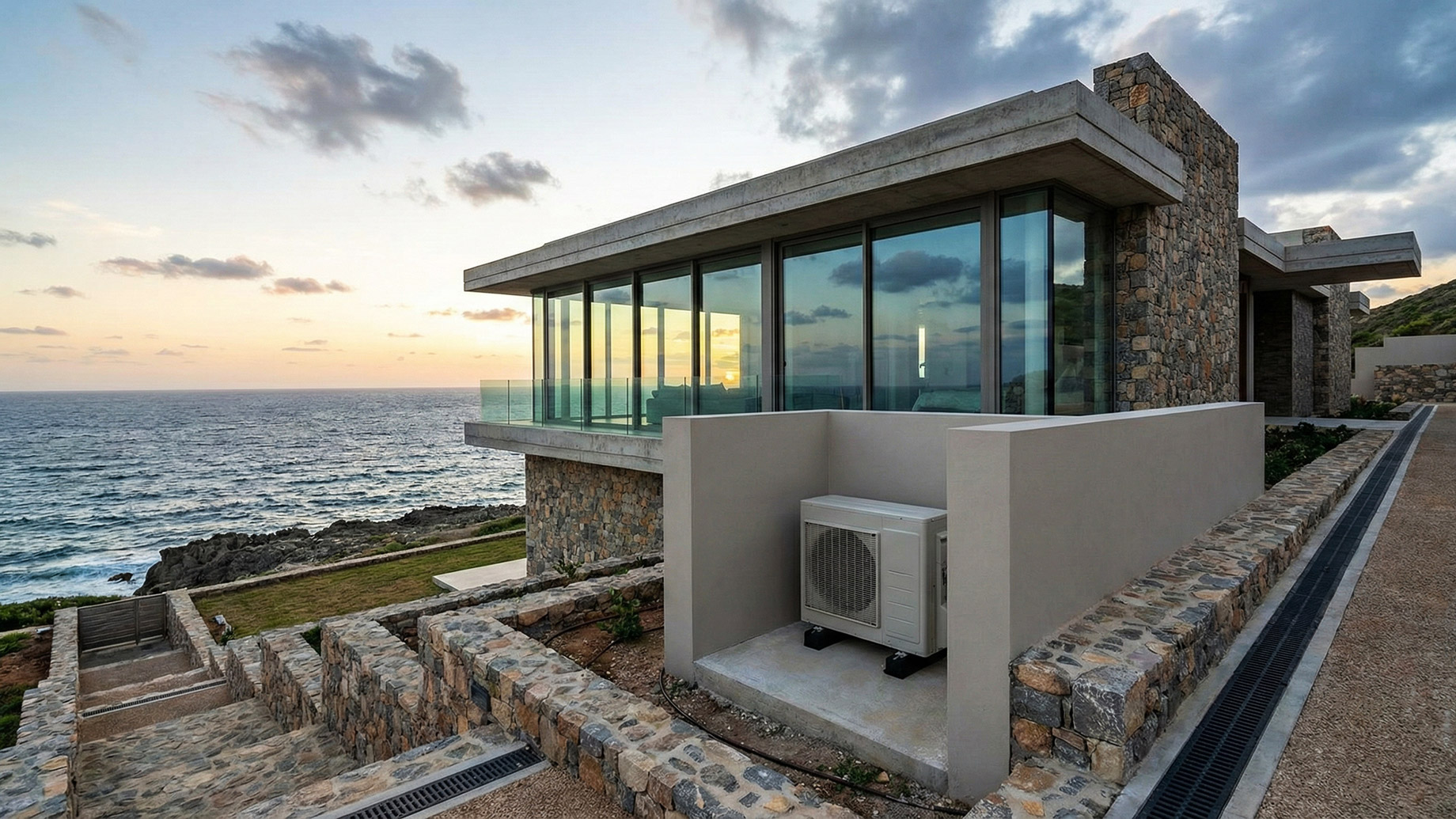
Rooftop HVAC units can weigh several thousand pounds, yet wind uplift and vibration still threaten stability. Secure units with manufacturer-approved wind restraint kits fastened directly to structural framing, not only roof decking. Ground-mounted condensers should sit on reinforced concrete pads at least 12 inches above grade in snow-prone or flood-risk areas. Add powder-coated steel hail guards to shield condenser coils without restricting airflow, and confirm refrigerant lines are properly supported.
Stable equipment performs better under stress. When units remain level and properly restrained, compressors cycle correctly and airflow stays balanced. Reduced mechanical strain lowers the risk of breakdowns and helps extend equipment lifespan during extreme temperature swings.
Exterior Electrical and Lighting Protection
Storm-driven moisture and voltage spikes often enter through service panels and conduit penetrations. Install Type 1 or Type 2 surge protection devices at main service panels to defend key systems from lightning-related surges. Upgrade exterior fixtures to IP65 or higher-rated LED luminaires built for wide temperature swings and heavy precipitation. Seal all conduit entries with watertight fittings and weather-resistant sealant to block water intrusion.
Electrical resilience supports operational continuity. Surge protection reduces the risk of equipment damage, and weather-rated lighting maintains visibility during storms. Well-sealed panels and fixtures contribute to safer conditions and faster recovery after power interruptions.
Preparing a property for extreme weather does not require dramatic overhauls—it requires focus on the systems that matter most. Roofing, drainage, openings, mechanical equipment, and exterior electrical infrastructure all work together to protect daily operations. When these areas are addressed through clearly defined scopes, verified products, and routine performance checks, emergency repairs become less frequent and budgeting becomes more predictable. Steady, planned upgrades reduce downtime and protect tenant relationships. Start with a prioritized project list and a qualified contractor review, then move forward with a phased plan that supports long-term property stability.
