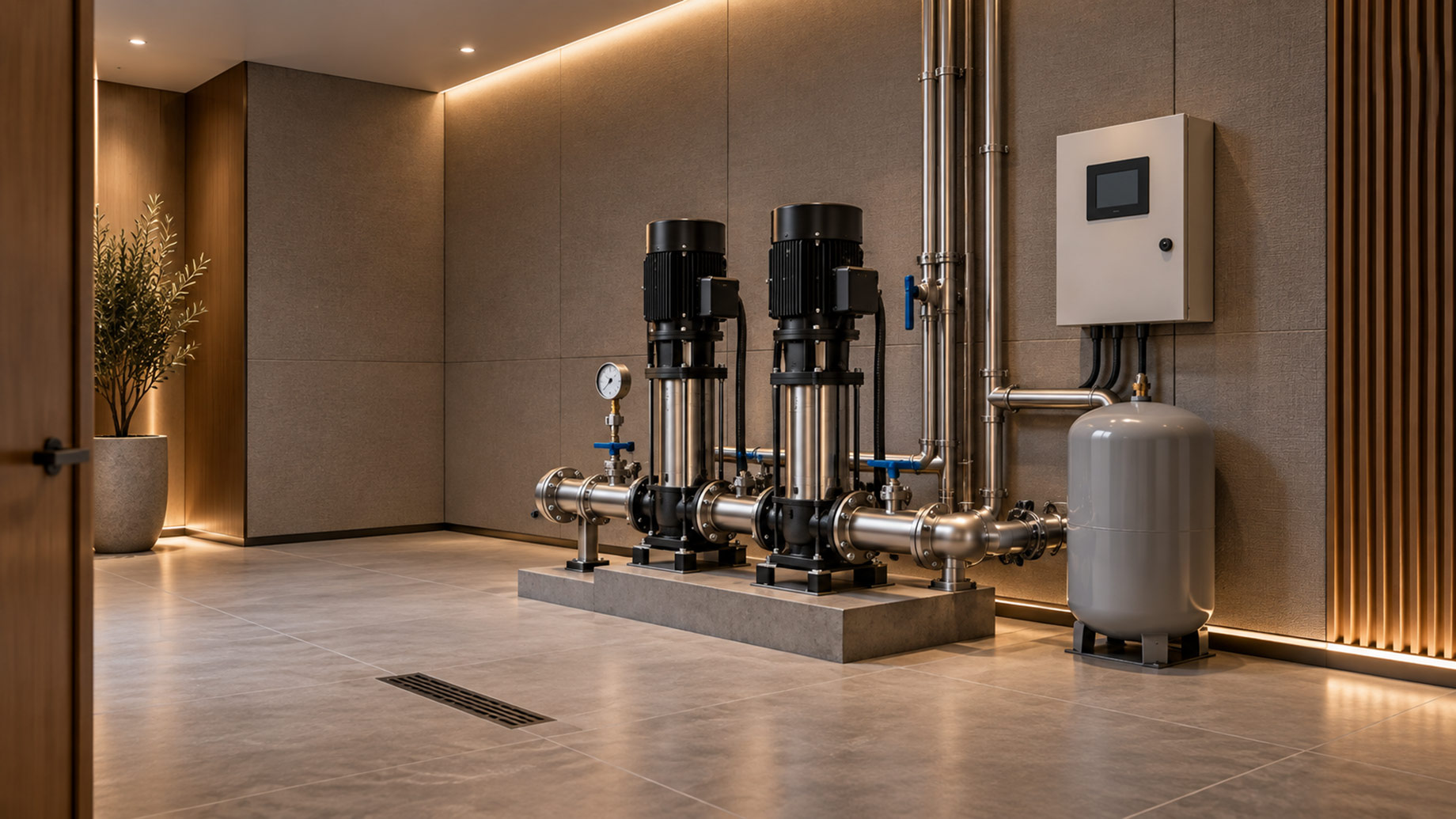
A pressure-boosting room hidden behind a handsome door can still create a persistent problem for the property. Residents may hear a hum through a wall, notice pressure changes at fixtures, or find that a routine repair requires moving pipework that was never intended to move. These are system questions. The answer is not a promise that one pump, one mounting detail, or one enclosure will make every booster room silent.
The BBP vertical multistage pump range identifies QDL and QDLS equipment for pressure boosting in compact in-line arrangements. That gives a project team a starting category for an enquiry, including questions about noise and maintenance access. Suitability for a residence, drinking-water service, fire service, a particular sound level, or a local code requirement needs separate confirmation. Room layout, pipe system, duty, controls, and service plan require their own review.
Describe the resident complaint with operating context
“The pump is noisy” is a useful alert but a poor diagnosis. Record where the sound is heard, when it occurs, which fixtures or zones are active, whether the pump starts or changes speed, and whether occupants report a pressure change at the same time. Quiet overnight events can have a different system story from a peak-morning event. Retain both in the log rather than combine them into a single complaint.
KSB notes that vibration from a pump casing or pipework can transmit noise, and that transient flow-pressure changes and cavitation can contribute. Those observations point to a system review. They do not let a property manager identify the source by ear or authorize a repair from a sound recording. Pipe supports, controls, pump condition, water route, and suction conditions may all need qualified examination.
For each event, capture a short record: date, time, zone demand, available pressure readings, control state, audible description, and any recent work. Mention whether the sound travels through a wall, floor, or pipe route. Later reviewers can compare that evidence with the room layout and operating sequence without relying on a resident’s memory alone.
Keep noise and pressure fluctuation in the same record
Noise and pressure complaints sometimes arrive separately. They should be reviewed together when they occur in the same period. Pressure changes may follow a demand change, a control response, a valve movement, or a restriction. Changed noise may travel through structure or water. Timing helps a qualified team decide which observations deserve closer measurement.
Grundfos notes that booster-system noise may spread through structure and water routes, and that fixing or control issues can be involved. This is a reason to look beyond the pump body. These observations do not establish that a particular fixing or adjustment will remove noise at a particular property. Control changes should be considered by people responsible for the installed system and its operating limits.
Ask the commissioning file for the intended pressure setpoints, the control sequence, the sensor locations, and the design duty. Then compare the complaint record against the confirmed operating state. Even a vertical multistage pump in a compact booster arrangement still works within a larger hydraulic and control system. The records should describe that whole system.
Give the pump room a maintenance route
Luxury finishes do not eliminate maintenance. The room needs space for safe isolation, inspection, seal-related work where applicable, lifting, and replacement of service items. Access to a control panel should not require a technician to reach over hot or moving equipment. Pipes, valves, and supports should be arranged so that routine work can follow site procedure after isolation.
Mark the route on the drawing before fit-out closes it off. Identify the equipment access door, clear working area, lifting path, drain arrangement, and points where a technician will need to see an instrument or remove a component. Dimensions depend on the actual equipment and local requirements, so a generic clearance figure should not be copied into a construction drawing without confirmation.
Before approving the finished layout, ask the maintenance team to trace the route for removing a service component from the installed vertical multistage pump, past the pipe supports and control equipment, through the access door, and out of the building, while identifying the isolation points and lifting arrangements that make the proposed route usable without dismantling unrelated services or damaging completed finishes.
For BBP enquiries, state the required pressure boosting duty, space restrictions, liquid information, pipe layout, and maintenance access. Terms such as vertical multistage pump, QDL, QDLS, in-line arrangement, and booster pump can focus the enquiry, while final selection remains subject to the confirmed application and supplier review.
Set expectations for isolation and acoustic treatment
Acoustic measures and vibration isolation are project decisions, not decorative afterthoughts. Their value depends on the equipment, structure, pipe routing, supports, operating points, and installation workmanship. Reducing one transmission path may not address another. The design record should name the purpose of each measure and who is responsible for checking it at handover.
Do not promise an absolute result. Booster rooms may still have audible operating sound, and pressure behaviour can change when the building’s demand pattern changes. The useful commitment is a process: record the event, verify the operating context, inspect the relevant system elements under safe conditions, and decide on corrections from evidence.
BBP can review a well-defined request for a booster-pump category, including a vertical multistage pump where appropriate. The request should avoid unsupported claims about drinking water, fire duty, or silent operation. It should contain the building duty, expected pressure and flow, liquid, controls, room constraints, and the documentation needed for a responsible product discussion.
Use handover to protect the property after opening
Complete handover information should give the facilities team a map, asset identifiers, design duty, control description, normal alarms, maintenance access notes, and a way to attach future event records. Residents should know who receives a sound or pressure complaint; the facilities team should know what information to collect before escalating it. That division keeps a comfort complaint from becoming an unsupported technical conclusion.
During later review, compare like conditions. Pressure complaints during high demand should not be treated as equivalent to a quiet-period vibration report. Where records identify flow, pressure, control state, and demand, a qualified team can investigate the water route, pump, supports, and control response in a sensible order. That is more useful than assigning blame to a single component.
Residential properties benefit from a booster room that can be understood and maintained. The strongest plan combines an appropriate pump category, a documented hydraulic duty, access for service, and a calm evidence trail for noise or pressure reports. Such a plan does not claim that a label on a vertical pump resolves every building-system question.
