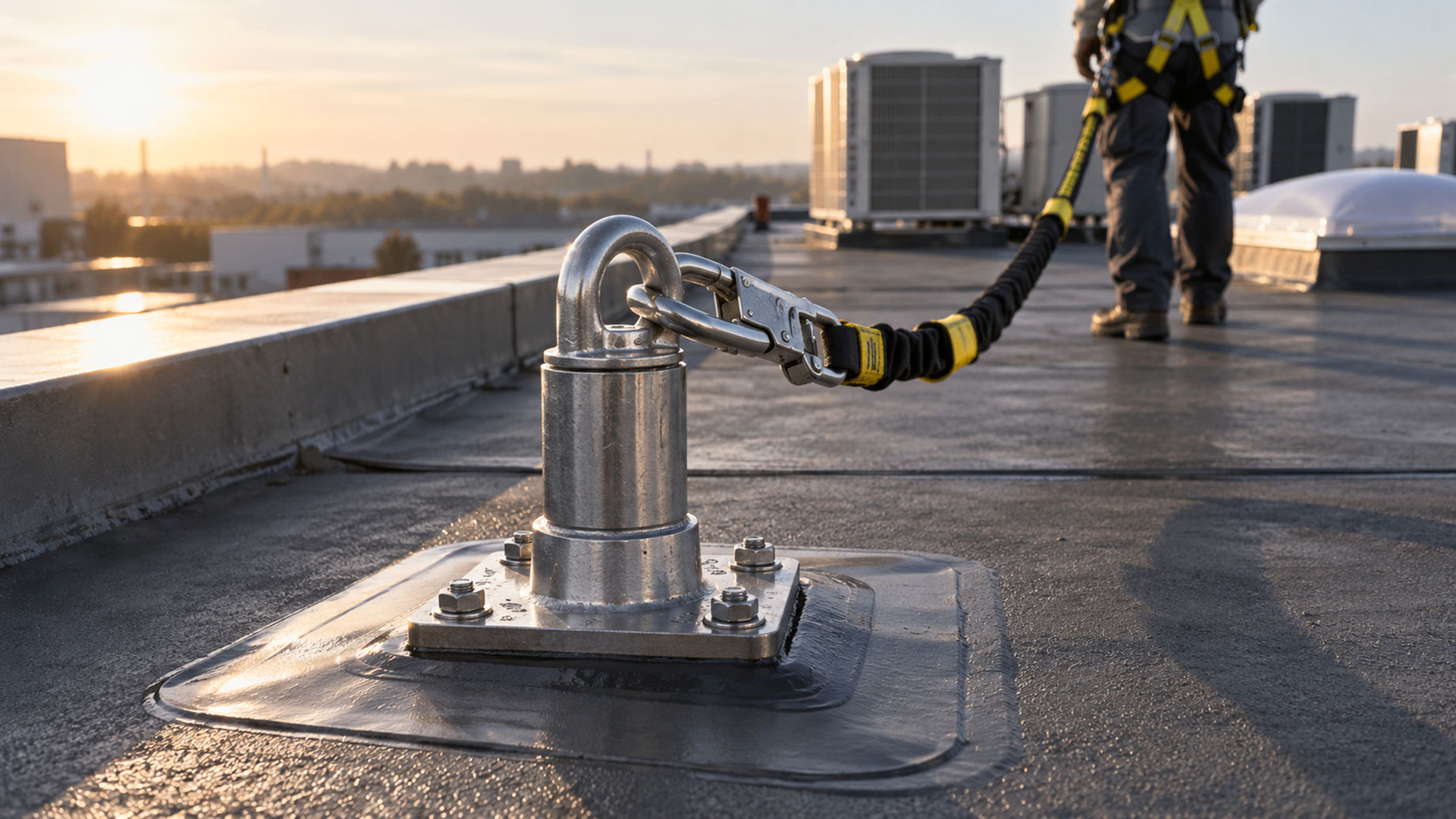
Fall protection failures rarely trace back to a single dramatic oversight. More often, they result from a permanent anchor that was installed without proper engineering review, positioned somewhere convenient rather than somewhere functional, or left uninspected long enough that nobody noticed it had degraded past the point of reliable use. Permanent rooftop anchors form the foundation of a properly designed fall-protection system, and getting them right requires attention to structural design, thoughtful placement, a consistent inspection schedule, practical worker access, and alignment with applicable safety regulations. Treating any one of these elements as an afterthought undermines the reliability of the entire system built around it.
Understanding the Role of Permanent Anchors in Fall Protection
A fall-protection system exists to arrest a fall safely if one occurs, and the anchor point represents the single element the entire system depends on to hold under load. Unlike temporary anchors that get installed and removed for specific projects, permanent rooftop anchors remain in place indefinitely, supporting ongoing maintenance work, inspections, and any other task that requires workers to operate near a roof edge or opening on a recurring basis. Because these anchors stay installed long-term, they need to withstand years of weather exposure, thermal cycling, and repeated use without losing structural integrity.
This permanence changes how anchors need to be evaluated compared to temporary alternatives. A temporary anchor gets inspected and rated for a specific, limited use case, while a permanent installation needs to account for degradation over time, changes in how the roof gets used, and the possibility that the original installer’s assumptions about load and frequency of use may not hold years later. When assessing permanent rooftop anchors from Title 8 Builders, building owners should review the engineering documentation, inspection requirements, compatible connection equipment, and expected service conditions rather than judging the system only by its performance on the installation date.
Structural Design Requirements for Reliable Anchors
Permanent rooftop anchors need to be engineered to withstand the forces generated during an actual fall arrest, which are considerably higher than the static weight of a worker standing nearby might suggest. A fall generates dynamic loading forces that can multiply a worker’s body weight several times over in the instant an anchor catches the fall, and an anchor design that doesn’t account for this dynamic force, rather than just static weight, risks failure at precisely the moment it’s needed most.
Anchor design also needs to account for the specific roof structure it’s being attached to, since a design that works well on a steel-framed commercial roof won’t necessarily transfer safely to a wood-framed residential structure or a roof with a different decking material. Engineers typically specify anchor placement relative to structural members like rafters, trusses, or beams that can actually bear the required load, rather than attaching solely to decking or sheathing that wasn’t designed to carry that kind of force on its own. This engineering step matters considerably, since an anchor that looks secure on the surface can still fail if it’s fastened into material that can’t structurally support a fall-arrest event.
Strategic Placement Across the Roof
Where an anchor gets installed matters just as much as how well it’s built, since even a properly engineered anchor provides limited protection if it’s positioned somewhere workers can’t reasonably reach while performing their actual tasks. Effective placement starts with mapping out the specific work that regularly happens on a given roof, whether that’s HVAC maintenance, skylight servicing, or general roof inspection, and positioning anchors to provide coverage across the areas where that work actually occurs.
A well-planned anchor layout typically considers several factors together:
- Proximity to roof edges, skylights, and other fall hazards workers need to approach during routine tasks.
- Anchor spacing that allows workers to move between work areas without disconnecting and reconnecting excessively.
- Placement that avoids swing-fall hazards, where a worker could pendulum into an obstruction during a fall.
- Clearance below the anchor point sufficient to prevent a falling worker from contacting a lower roof level or the ground before the system fully arrests the fall.
Anchors placed without this kind of deliberate planning often end up technically present but practically underused, since workers facing an inconvenient connection point sometimes skip proper tie-off entirely rather than walk out of their way to use a poorly positioned anchor.
Establishing a Consistent Inspection Schedule
An anchor that was properly engineered and correctly placed can still fail if it degrades unnoticed over years of exposure to weather, UV radiation, and the general wear that comes with recurring use. Regular inspection catches this degradation before it reaches a point where the anchor can no longer be trusted to perform during an actual fall event. Visual inspection before each use should check for obvious signs of damage, corrosion, or loosening at the mounting point, while more thorough periodic inspections, typically conducted at intervals defined by the manufacturer or a qualified safety professional, should examine the anchor’s structural connection more closely.
Documentation matters as much as the inspection itself, since a verbal confirmation that an anchor “looked fine” provides little value during a safety audit or after an incident. Maintaining clear, dated inspection records for every permanent anchor gives an organization concrete evidence of ongoing diligence, and it also creates a pattern that can reveal gradual degradation across multiple inspections that might not be obvious from any single check alone.
Supporting Practical Worker Access
Even a well-designed, properly placed, and regularly inspected anchor system fails to protect workers if using it correctly proves cumbersome or time-consuming in practice. Worker access considerations include how easily someone can physically reach the anchor point, how straightforward the connection process is, and whether the broader system, harness, lanyard, and anchor together, allows workers to move through their actual tasks without excessive friction that tempts shortcuts.
Training plays a central role here as well, since workers need to understand not just how to connect to an anchor, but how to recognize when an anchor doesn’t look right and should be reported rather than used. A system design that assumes workers will always follow procedure perfectly under time pressure tends to underperform in practice compared to one that accounts realistically for how work actually happens on a busy job site or maintenance schedule.
Meeting Regulatory Compliance Requirements
Permanent rooftop anchors fall under specific safety regulations governing fall protection, and compliance requires more than installing an anchor that seems sturdy. Regulatory standards typically specify minimum load ratings, documentation requirements, and inspection frequencies that installations need to meet, along with requirements around who is qualified to design and certify a permanent anchor system. Working with a firm experienced in these regulatory requirements can help building owners confirm that an installation includes the documentation and engineering records needed for ongoing inspection and review.
Compliance shouldn’t be treated as a one-time checkbox completed during installation, since regulations and best practices continue to evolve, and an anchor system installed years ago under older standards may need updates to remain fully compliant with current requirements. Periodic review of a fall-protection system against current regulatory standards, not just its own original installation documentation, helps organizations avoid the gap between what was compliant at installation and what’s actually required today.
Key Takeaways
A complete fall-protection system depends on permanent rooftop anchors that are engineered to handle real fall-arrest forces, placed thoughtfully across the areas where workers actually need protection, inspected on a consistent and well-documented schedule, and designed with genuine worker access in mind rather than treated as a compliance formality. Regulatory requirements provide a baseline, but a system that only meets the minimum standard without accounting for how the roof is actually used tends to underperform when it matters most. Organizations should address design, documentation, installation, and recurring inspection together so gaps are identified before workers depend on the system.
