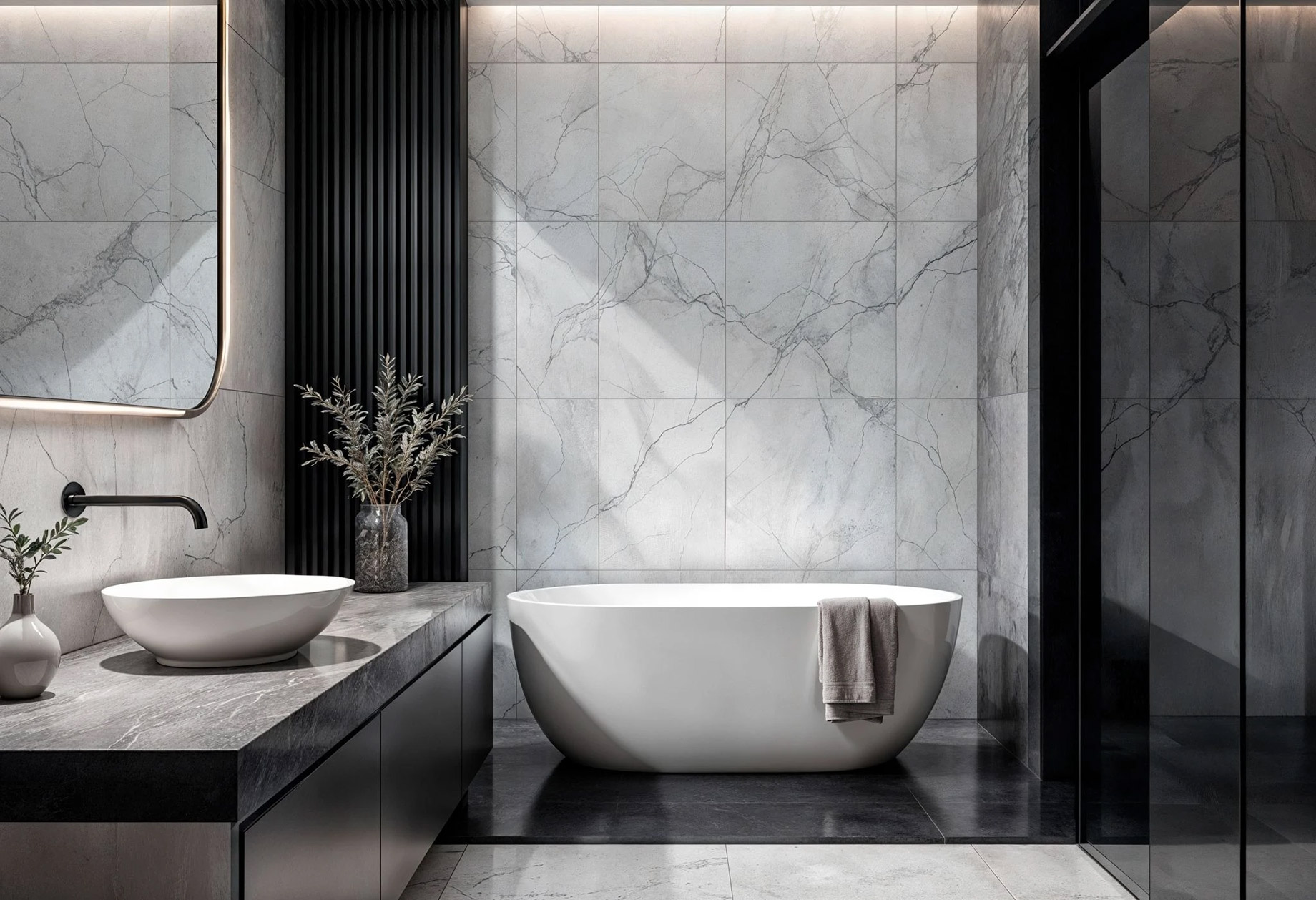
Architecture no longer revolves around form alone. Stone, wood, metal, and glass no longer serve as secondary design elements. These materials now shape the way people experience space itself.
Granite holds a special place in this approach. The material still carries a sense of geological origin, natural mass, and time. Millions of years of pressure, temperature shifts, and mineral movement formed patterns that architecture now integrates into modern interiors.
Modern spaces often rely on large surfaces and solid materials. Rooms feel calmer when walls, floors, and architectural details connect visually. In these projects, granite no longer acts as a decorative insert. It becomes part of the interior’s overall identity.
The natural pattern of stone works well with clean architectural lines. Sharp geometry makes the texture stand out more clearly. At the same time, soft mineral transitions reduce visual rigidity. Interiors look refined but still natural.
Even with precise planning, granite keeps its natural uniqueness. Almost no two surfaces look identical. That quality makes the material far more valuable in modern architecture.
Granite as a Natural Archive of Time
Every granite surface carries traces of processes that existed long before architecture. Mineral inclusions, texture depth, and color transitions formed under natural conditions that people cannot recreate artificially.
Even slabs from one quarry can look completely different. Some surfaces show calm graphite tones and near-monochrome textures. Others reveal layered structures with visible veins and complex color movement. Light reveals these details step by step. In daylight, the stone looks calm and deep. Evening light creates a softer and more intimate atmosphere.
Years ago, designers saw texture variation as a flaw that disrupted visual unity. Today, that variation creates a stronger sense of authenticity. Interiors feel less artificial and gain natural complexity without visual overload.
Granite works with strong impact on large surfaces. Wide planes reveal the structure of the stone gradually. People start to see the material as part of the architecture itself rather than decorative cladding. Spaces gain depth that plain materials and artificial imitations cannot create.
The Aesthetic Logic of Granite in Contemporary Spaces
Today, designers build interiors around texture, light, and scale. In this type of architecture, materials must shape the space itself, not only its appearance. Granite fits this logic naturally through its interaction with light and geometry.
Polished surfaces reflect light with softness and depth. Matte areas create a calmer and more intimate mood. Because of this, interiors change throughout the day. Light does more than illuminate the stone. It reveals its internal structure.
Surface continuity also plays an important role. When granite connects several architectural planes, the space feels more complete and balanced.
- Continuous surfaces reduce visual fragmentation
- Natural texture softens strict geometry
- Large patterns increase the sense of depth
- Stone strengthens minimalist interiors
Minimalism with perfectly smooth surfaces can sometimes feel cold and predictable. Natural stone changes that feeling. It keeps the architectural clarity of the room while adding natural complexity.
The contrast between precise geometry and organic irregularity creates visual balance. Interiors no longer look overly calculated. The space starts to feel more alive and layered.
Many architects now explore granite in contemporary design because the material adds warmth without visual excess.
When Stone Becomes Surface: The Shift in Scale and Meaning
Architectural views on granite changed after large-format slabs became common. In the past, people associated stone with smaller fragments divided by joints and visible transitions. Surfaces looked fragmented and visually busy.
Today, architects follow another approach. Large granite slabs changed the relationship between material and space. The pattern no longer breaks every few centimeters. The surface works as one architectural plane instead of separate pieces.
This shift changes spatial perception on several levels:
- Fragmentation disappears
- Interiors look calmer
- The stone pattern unfolds as one composition
- Architecture gains stronger visual unity
Scale affects more than visual perception. Large surfaces also create emotional stability. Complex mineral patterns stop looking decorative. The material becomes part of the architectural structure itself.
Granite also changes character through scale. Inside a quarry, the stone looks heavy and raw. Inside architecture, the same surface interacts with light, reflections, and room proportions. The material starts to look softer and more fluid. Architecture reveals qualities that remain hidden inside quarry blocks.
That shift explains the growing role of granite slabs in architecture today. Designers no longer use granite only as an accent material. Stone now shapes the spatial composition itself.
Granite in Residential Architecture
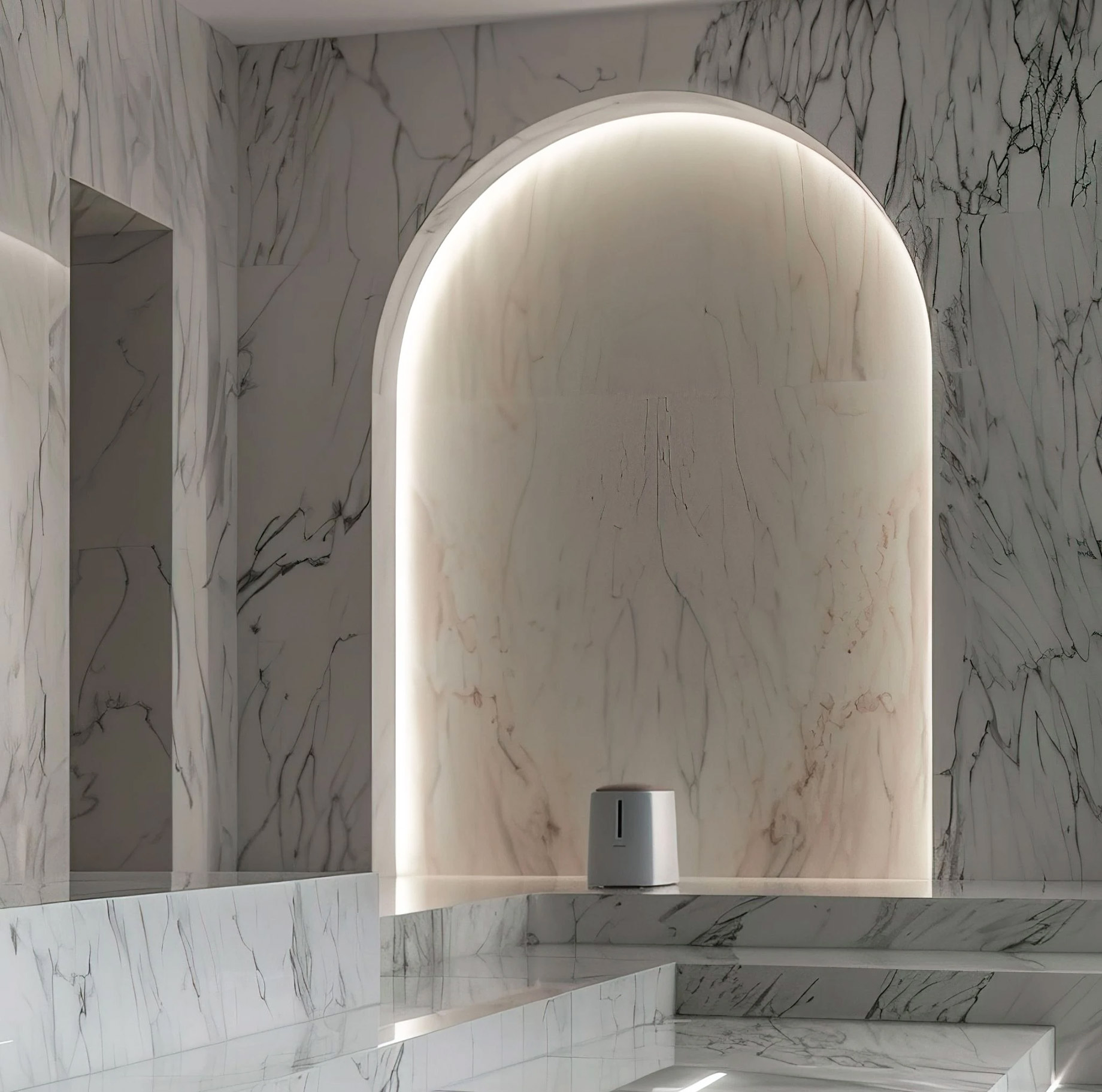
Kitchens as Spatial Focal Points
In premium interiors, kitchens often become the main architectural feature of the home. This appears most clearly in open-plan layouts where kitchens connect with living and dining areas.
Granite suits this role naturally. Large islands and monolithic countertops create a sense of stability and spatial unity. Here, stone no longer looks like a work surface alone. It becomes a sculptural part of the interior.
Granite works with strong impact in projects where one material connects several architectural elements:
- Kitchen islands
- Countertops
- Vertical panels
- Built-in storage systems
This approach strengthens spatial continuity. Interiors look calmer because visual transitions decrease. The room feels cleaner and more balanced.
Designers also value how stone ages over time. The surface keeps its texture depth for many years. The material rarely looks outdated. Instead, it develops a more natural character as time passes.
Bathrooms as atmospheric environments
In modern residential architecture, bathrooms now resemble private spa spaces more than technical rooms. Calm visuals and soft interaction between light and surfaces shape the atmosphere here.
Granite creates this mood through natural texture depth and its ability to connect architectural planes.
- Walls and floors flow into one surface
- Built-in elements almost disappear visually
- Reflections become softer and deeper
- Interiors feel calmer and cleaner
Monolithic surfaces change the impression of the room itself. Spaces feel more complete and architecturally refined. At the same time, granite avoids the cold feeling that many smooth materials create.
Texture also matters here. People experience stone not only visually, but through temperature, density, and natural surface character. These layered sensations shape the atmosphere of premium interiors.
Designers continue to explore natural stone aesthetics because this material creates calm spaces without making them feel empty.
Granite in High-End Architectural Contexts
Public and Transitional Spaces
Lobbies, reception areas, halls, and corridors shape first impressions through scale, light, and materials. Granite works with strong impact in these spaces. Stone surfaces create a sense of stability and architectural confidence without complex decoration. Interiors feel organized, calm, and visually refined.
High ceilings and natural light strengthen texture depth. Light moves across the stone surface and reveals the complexity of mineral patterns. Even minimalist architecture looks richer and more layered in this setting.
Granite also helps large public spaces feel less sterile. Natural texture adds warmth and visual rhythm without disrupting architectural clarity.
Exterior Applications
In exterior architecture, granite interacts not only with light, but also with climate, time, and the urban environment. Natural stone facades preserve their structure, color, and visual clarity even after years of outdoor exposure.
The material keeps its texture and visual density for decades. Surfaces do not lose character after design trends change or architectural styles evolve.
Materials play a major role in minimalist architecture because they define the character of the space itself. Granite works well with simple forms and makes facades or interiors more expressive through natural texture and surface depth.
Natural stone also changes the way buildings interact with light during the day. Morning light reveals sharper mineral details. Evening light softens the surface and adds visual depth to the facade.
Conclusion
Modern architecture changed the way people view natural stone. Granite no longer serves only as a symbol of luxury or decoration. Today, people value the material for another reason. It shapes spaces through texture, scale, and natural depth.
Granite also avoids pulling all attention toward itself. Instead, it makes interiors feel calmer, more unified, and more balanced. The material supports architecture rather than competing with it.
Material choices in architecture no longer function as technical decisions alone. Materials now define emotional atmosphere, durability, and long-term perception. Granite remains one of the few materials that combines geological origin, architectural expression, and natural complexity without unnecessary decoration.
