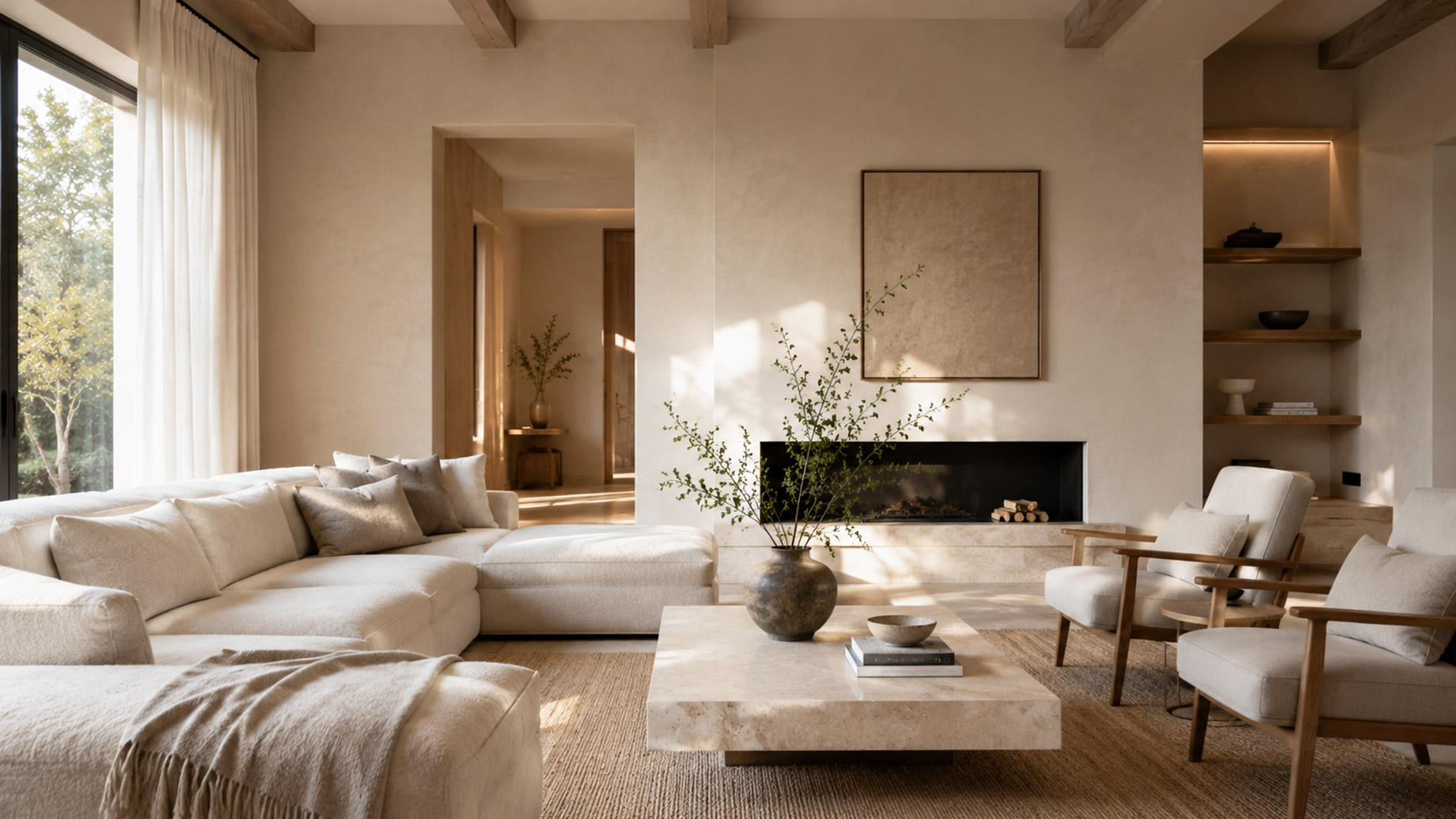
Some homes feel expensive before you can name a single object in the room. The sofa may be simple. The coffee table may be quiet. The walls may have no dramatic color at all. Still, the space feels calm, polished, and deeply considered. That feeling rarely comes from one statement piece. It comes from surfaces, light, texture, and restraint working together. This is also why thoughtful finish work from specialists like Mr. Rarov can change the atmosphere of a room without making it feel decorated to death.
Luxury Interiors Rarely Feel Visually Loud
Luxury does not usually shout. It lowers its voice.
High-end rooms often avoid harsh color contrast because contrast can make the eye jump around too much. A black-and-white room can look striking in photos, sure. Living in it every day is another story. Softer palettes tend to feel calmer because the eye can move through the space without bumping into visual noise.
That is one answer to what makes interiors feel luxurious: restraint.
Cream, stone, warm gray, clay, soft white, muted taupe – these colors do not compete for attention. They create a backdrop that makes the whole room feel easier to breathe in.
The expensive feeling comes from intention. Nothing looks random. Nothing begs for applause. The room feels edited, not empty.
Texture Creates Depth Without Clutter
A flat room can be beautiful, but it often needs something more to feel rich.
Texture gives a space depth without adding clutter. Limewash, plaster-inspired finishes, matte walls, stone-like surfaces, linen fabrics, raw wood, and brushed metals all bring quiet movement into a room.
This is where luxury interior design psychology gets interesting. People often respond to texture before they consciously notice it. A wall with soft movement feels warmer than a flat, glossy surface. A matte finish absorbs light gently. Natural imperfections make a room feel less staged.
You see it in details like:
- A wall that changes slightly as daylight moves
- A stone-inspired finish behind a fireplace
- A matte ceiling that softens the room
- Wood grain that adds warmth without pattern overload
Texture gives the eye somewhere to rest. That sounds small. It isn’t.
Paint and Finish Quality Quietly Change Everything
In a luxury interior, bad paint work has nowhere to hide.
Crooked lines near trim. Uneven wall texture. Roller marks. Patchy ceilings. Glossy spots where the finish should be soft and consistent. These flaws may seem minor, but light will find them. It always does.
Clean paint lines make a room feel sharper. Smooth surfaces make the architecture feel more expensive. Consistent finishes create that polished, hotel-like calm people often associate with high-end spaces.
Poor finish work does the opposite. It makes even beautiful furniture look less impressive because the room itself feels unfinished.
This is one of those details homeowners underestimate until they see the difference. A wall is not just a wall. It is one of the largest surfaces in the home. If it looks uneven, the entire room feels slightly off.
Lighting Works Differently in Well-Designed Homes
Lighting is where luxury either comes alive or falls flat.
Wall color affects how light reflects. Paint finish affects how softly it moves. Ceilings affect how bright or heavy a room feels. A warm white wall with a matte surface can make evening light feel gentle. A cool glossy wall under harsh bulbs can make the same room feel clinical.
The U.S. Department of Energy explains that lower color temperatures, around 2700K to 3000K, are considered warm, while higher temperatures feel cooler and bluer. That simple choice can completely change the mood of a room.
Harvard Health also notes that blue light can affect sleep, which is one reason softer evening lighting often feels more relaxing in bedrooms and living areas.
Luxury lighting is rarely one bright ceiling fixture. It is layered. Lamps, sconces, hidden lighting, wall washes, and dimmers create softness. The room starts to glow instead of glare.
That glow is doing a lot of emotional work.
Why Luxury Homes Feel Relaxing Instead of Overdecorated
Older ideas of luxury often leaned toward more. More shine. More pattern. More furniture. More proof.
Modern luxury feels different. It is quieter, warmer, and more livable.
A relaxing high-end home usually has visual balance. There are fewer loud surfaces. Textures are softer. Colors feel connected. Furniture has breathing room. The space does not look like a showroom where everyone is afraid to sit down.
Comfort now carries more status than perfection.
That is why muted tones, natural finishes, and matte surfaces have become so common in premium interiors. They make a room feel settled. You can imagine coffee on the table, bare feet on the floor, a book left open on the sofa.
Luxury feels better when it lets people live.
Small Surface Details Shape the Entire Experience
People notice surface details even when they do not know they are noticing them.
A seamless wall finish. Sharp trim. Smooth ceilings. Balanced paint tones. Subtle texture changes between rooms. These details shape the emotional temperature of the home.
A room with clean surfaces feels calmer because the eye does not keep catching on mistakes. A ceiling without patches feels higher. Trim with crisp edges makes the architecture feel more intentional. Even a soft variation in wall texture can make a plain room feel designed.
Natural light also plays a role. Research on daylight and homes has linked natural lighting improvements with residents’ emotional subjective well-being, which supports what many people already feel instinctively: light changes how a home lives.
The best luxury interiors understand that atmosphere is cumulative. One detail may seem small. Together, they create the feeling.
Final Thoughts
Luxury interiors are rarely defined by expensive furniture alone. The real atmosphere comes from surfaces, texture, lighting, and visual calm working together. Matte finishes, soft palettes, clean paint lines, natural materials, and layered light make a room feel sophisticated without making it feel stiff. The most luxurious spaces do not demand attention. They make the body relax before the mind knows why.
