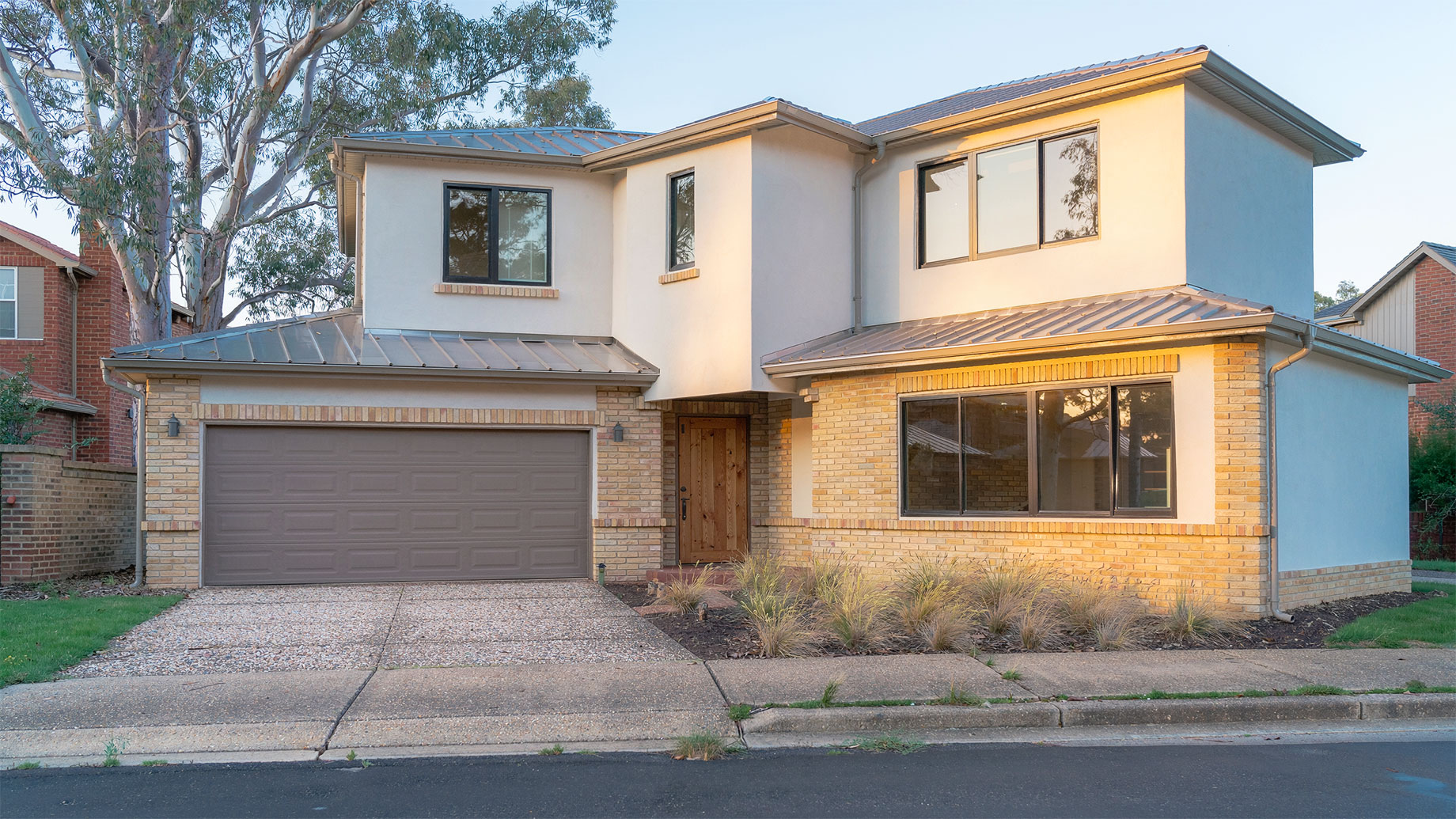
You love the street. The kids are settled at school, the commute works and the neighbours are good people. The house, though, is another story: cold in winter, cramped at dinner time and one leaking roof away from a very expensive weekend.
This is the point where a lot of Sydney families start looking at a knockdown rebuild Sydney project. You keep the land and the location you already paid for, and you replace an ageing house with a new one designed around how you live now.
This guide covers when a knockdown rebuild makes sense, what it costs in 2026, how approvals work in NSW, how long it takes and the mistakes that blow out budgets. All figures are in Australian dollars.
Is a knockdown rebuild right for you?
A knockdown rebuild suits owners who like where they live but not what they live in. If several of these sound familiar, it is worth getting a site assessment:
- The renovation quotes keep climbing: once you are fixing the roof, rewiring, restumping and adding a second storey, you are paying new-build money for an old structure.
- The layout fights you: small, closed-off rooms, one bathroom for a family of five, or no flow to the backyard.
- Moving means paying stamp duty again: buying a comparable home in the same suburb can add tens of thousands of dollars in duty before you spend a cent on improvements.
- The house is costly to run: older Sydney homes often have little insulation and single glazing, so heating and cooling bills stay high all year.
- Your family has changed: you need a home office, room for ageing parents, or a layout that suits teenagers.
Knockdown rebuild vs renovating vs moving
- Location: a knockdown rebuild and a renovation both keep you where you are. Selling usually means moving suburbs to find the right home.
- Stamp duty: there is none on a build contract when you own the land, and none on a renovation. Selling and buying means paying duty on the new purchase.
- Design freedom: a rebuild gives you a blank slate. A renovation is limited by the existing structure, and buying limits you to what is on the market.
- Cost certainty: a fixed-price build contract gives you a clear number. Renovations often uncover hidden problems that add cost.
- Energy performance: a new home is built to current NSW standards, while a renovated home mixes old and new parts.
- Time out of your home: a rebuild means renting for roughly 12 to 18 months. A renovation can mean months of disruption or living on a building site.
The biggest financial argument is stamp duty. You do not pay duty on a building contract, and you do not pay it on a construction loan for land you already own. Duty only applies if you buy a new block.
How much does a knockdown rebuild cost in Sydney?
Most Sydney knockdown rebuilds land between $600,000 and $1.5 million all in. The build itself is the biggest line, but the extras are where budgets go wrong.
Here is where the money typically goes:
- Demolition: $15,000 to $35,000 for a standard single-storey home, plus $5,000 to $10,000 if there is a pool, granny flat or heavy concrete.
- Asbestos removal: $5,000 to $20,000 or more, depending on how much is present.
- The build: $2,000 to $2,800 per square metre with a volume builder, or $3,000 to $4,500 or more with a custom builder.
- Site costs: $10,000 to $20,000 on a flat block, while retaining walls on a sloping block can cost $30,000 to $80,000.
- Council fees and professional reports: $5,000 to $20,000, plus $3,000 to $8,000 if you need tree, bushfire or acoustic reports.
- Landscaping, driveway and fencing: $30,000 to $80,000.
- Rent while you build: $600 to $1,000 per week.
A few things push the total up quickly:
- Two storeys: expect to pay roughly 10% to 20% more than the same floor area on one level.
- Tight access: battle-axe blocks or narrow streets can add $10,000 to $30,000 for cranes and deliveries.
- What the quote leaves out: landscaping, driveways and fencing are often excluded from builder quotes.
Set aside a contingency of 10% to 15% of the total. On a $1 million project, that is $100,000 to $150,000 you hope not to touch.
Paying for it
Most owners use a construction loan. The lender releases money in stages (slab, frame, lock-up, fit-out and completion) after an inspection confirms each stage is done, and you pay interest only on what has been drawn. Equity in your current home can often cover the deposit, demolition and approval costs. Speak to a broker early, because lenders assess the loan on the projected value of the finished home.
CDC or DA: which approval do you need?
In NSW you will need either a Complying Development Certificate (CDC) or a Development Application (DA). The right one depends on your block and your design, and it can change your timeline by months.
A CDC can be issued by a council or a private certifier when your design meets set planning standards for setbacks, height and site coverage. For a new home, it can be approved in as little as 20 days once lodged. The trade-off is flexibility, because the rules are fixed.
A DA is assessed by your local council. You need one when the design falls outside those standards, or when the site has heritage, flooding or bushfire constraints. It usually takes several months, but council can approve variations a CDC cannot.
If your block qualifies, a CDC is usually the faster and more predictable path. If you want a design that pushes the limits, or your land sits in a heritage conservation area, plan for a DA and allow extra time.
Every new home in NSW also needs a BASIX certificate, which sets energy and water targets for the design. A good builder handles this as part of the approval package.
The knockdown rebuild process, step by step
From first meeting to moving in, plan for 18 to 24 months. The build itself is usually 12 to 18 months; the rest is design, approvals and site work.
- Site assessment and feasibility (2 to 4 weeks): a builder checks your block’s size, slope, access, easements, trees and zoning, then confirms which designs will fit.
- Design and quote (1 to 3 months): choose a floor plan and facade, select inclusions and sign a fixed-price contract.
- Finance approval: your lender approves the construction loan based on the contract and the projected value of the new home.
- Approvals (1 to 4 months): your CDC or DA is lodged with BASIX and any specialist reports.
- Move out and disconnect services: organise rental accommodation and have electricity, gas, water and sewer disconnected.
- Demolition (2 to 3 weeks on site): the house is removed, including any asbestos. In NSW, removing more than 10 m² of non-friable asbestos requires a licensed removalist.
- Site preparation: soil testing, levelling, drainage and any retaining walls.
- Construction (12 to 18 months): slab, frame, lock-up, fit-out and practical completion, with inspections at each stage.
- Handover: a final walk-through, defect list and keys. Then landscaping, fencing and the driveway if they were not in your contract.
6 mistakes that blow out knockdown rebuild budgets
- Choosing a design before checking the block. A plan that suits a flat 600 m² lot may need major changes, or retaining walls, on a sloping or narrow site.
- Comparing base prices only. Ask every builder what is included: site costs, BASIX upgrades, driveways, flooring and window coverings. Two quotes $50,000 apart can end up the same price.
- Forgetting the cost of living elsewhere. At $600 to $1,000 a week, 15 months of rent can reach $40,000 to $65,000.
- Skipping the asbestos check. Many Sydney homes built before 1990 contain asbestos. Get a report before demolition so the cost is known early.
- No contingency. Rock under the slab, a council condition or a supply delay can add thousands. Keep 10% to 15% aside.
- Picking a builder without knockdown experience. A builder who handles demolition, disconnections and approvals in one contract saves you from coordinating several trades yourself.
Questions to ask any builder
- Do you manage demolition and approvals, or do I organise them?
- Is the contract fixed price, and what could change it?
- What site costs are included in this quote?
- How many knockdown rebuilds have you completed in my area?
- Can I visit a recently finished home or speak to a past client?
Start with your block, not the brochure
A knockdown rebuild lets you keep the suburb, the school and the street you chose, without the compromises of an old house or the cost of moving. The projects that run smoothly start with a proper site assessment, a fixed-price contract that spells out site costs, and a realistic budget for rent and contingency.
If you are weighing up your options, book a site assessment with an experienced builder. You will find out what your land allows, what it will cost and how long it will take before you commit to anything.
