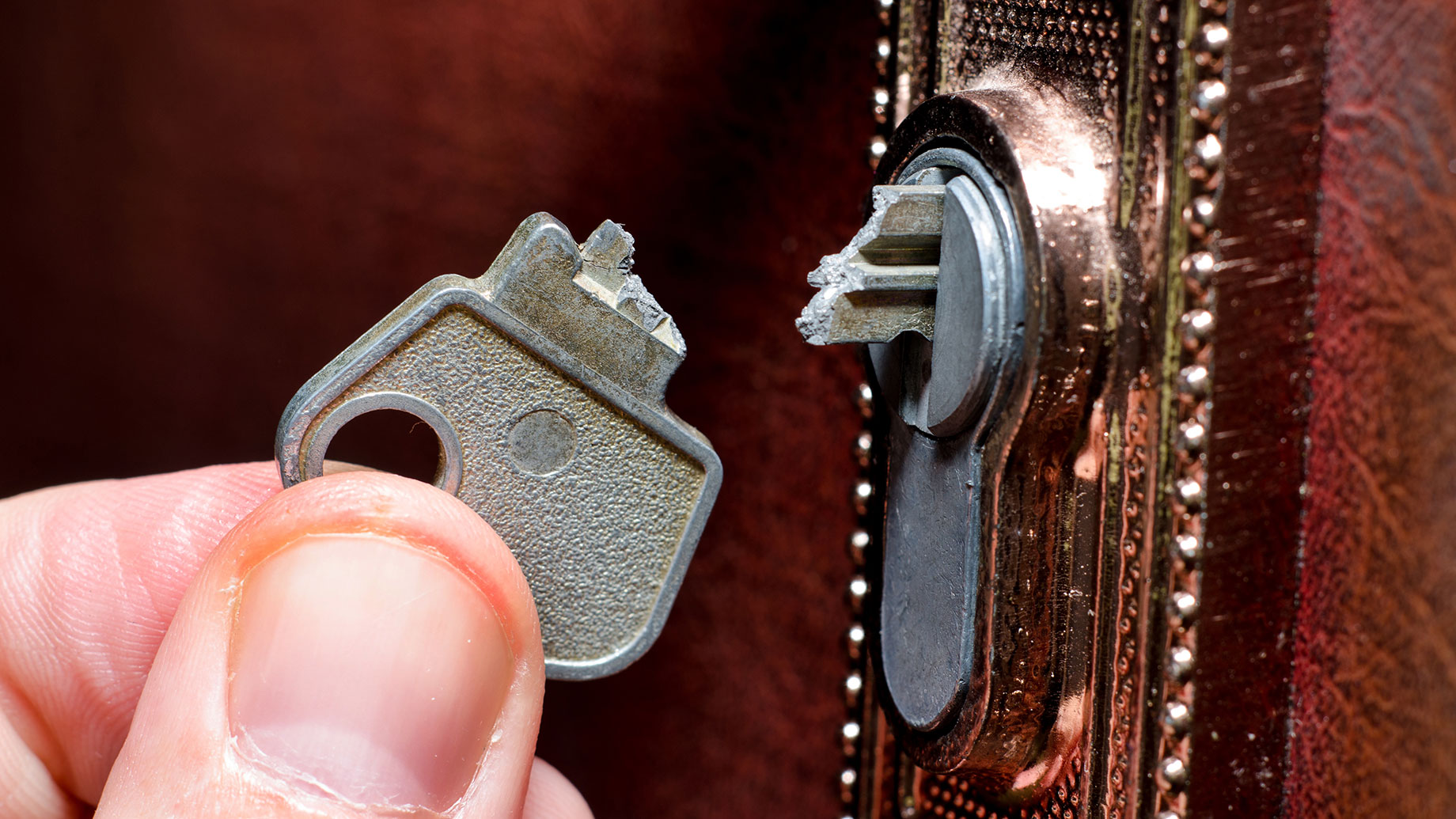
When that fragile key broke off in lock, panic can quickly set in. You’re locked out, the broken metal is jammed, and a pricey locksmith seems inevitable. Stop! Before you reach for the phone or try a destructive maneuver, take a deep breath. Many times, a stuck key fragment can be removed without professional help using simple tools you might already have.
This guide also explains how to get a broken key out of a lock using household items and small tools; keep reading!
Step-by-Step Fixes When the Key Broke Off in the Lock
Assess the Situation First
The moment a key breaks off in the lock, your first reaction should be to stop all movement. Do not try to force the remaining part of the key to turn or twist it. This will only jam the broken piece deeper into the cylinder and make removal much harder.
Take a moment to check the keyhole. If the key broke off in the lock and a sliver is visible, your chances of a DIY extraction go up significantly. Even a tiny sliver is enough to grab onto with the right tool. The visibility of the fragment will determine which removal method you should try next.
Try Basic Household Tools
If a small piece of the key broke off in the lock and is visible outside the keyhole, use tweezers or needle-nose pliers. Gently grip the key fragment as close to the lock face as possible. With a steady hand, pull it straight out. Do not wiggle or twist it as this could break the key piece even further.
To help the extraction process, apply a lubricant. Graphite powder (the best option for locks) or a spray like WD-40 can loosen any debris inside the lock and reduce friction. Spray or puff the lubricant into the keyway, letting it work for a few seconds before trying to pull the key out.
If the key fragment is fully inside the lock, you can try a thin, stiff tool. A jigsaw blade (with the teeth facing the user) or a straightened paperclip are common choices. Carefully insert the tool along the side groove of the keyway. The goal is to hook the broken fragment, then slowly and gently pull the key out.
Finally, some people find success with gentle tapping. Hold the keyway opening facing the ground. Lightly tap the cylinder or the door handle. The vibration might help dislodge the stuck key fragment, allowing gravity to help get the broken key out of the lock.
When DIY Attempts Fail
There comes a point when the damage may be too extensive for a home fix. If your initial attempts with household tools do not work, do not push the key deeper. Forcing it further into the lock could damage the inner workings of the cylinder, turning a simple extraction problem into a costly lock replacement. A broken key in a lock that is lodged out of sight usually requires professional attention.
When to Call a Professional Locksmith
It’s time to seek professional help if:
- The key fragment is lodged deep inside the lock cylinder. If you cannot see or feel the broken piece, forcing a tool in blind may scratch or damage the delicate internal pins.
- The lock feels misaligned or damaged. If the key broke because the lock was already sticky, rusty, or hard to turn, there is likely a larger mechanical issue that requires expert diagnosis.
- You lack the proper tools to remove it safely. If you don’t have suitable tweezers, a jigsaw blade, or the right lubricant, it’s better to pause rather than risk pushing the key fragment further into the mechanism.
A professional locksmith has specialized extraction tools and expertise. They can extract the key without harming the lock or door structure, ensuring your security hardware remains intact and fully functional.
Why Keys Break and How to Prevent It
Common Reasons Keys Break in Locks
- Worn or corroded metal: Keys are subjected to constant friction. Over years of use, the metal thins out and develops tiny cracks, making it structurally weak. Rust or corrosion on the key’s surface also compromises its strength.
- Dirty or jammed locks: The internal mechanism of a lock can accumulate dust, dirt, or rust. This debris increases friction and resistance against the key. When you try to turn the key against this resistance, the stress on the metal causes it to snap.
- Using excessive force: Sometimes, a quick, hard turn seems like the only way to get a sticky lock to open. Applying too much force is a common mistake that can snap even a sturdy, relatively new key.
- Temperature changes: Extreme cold can make metal brittle, while humidity can cause internal components to swell or stiffen. These conditions increase the chance of key failure, particularly if the key is already worn.
How to Prevent Future Key Breakage
- Lubricate locks regularly to keep them smooth and debris-free. Use a dry lubricant like graphite powder or a silicon-based spray, not oil-based products, which can attract dirt.
- Use gentle pressure when unlocking or locking doors. If you feel strong resistance, stop and try to identify the cause rather than forcing the turn.
- Replace old or bent keys before they fail completely. If a key looks thin, has visible stress fractures, or is slightly bent, get a fresh copy made right away.
- Keep spare keys to avoid overusing one key every day. Rotating your keys, especially for high-traffic locks, spreads the wear and tear.
Avoid Broken Keys Altogether with Smart Locks
The most effective way to eliminate the frustration of a broken key is to transition to keyless access. Smart locks offer multiple secure entry options, which drastically reduce reliance on physical metal keys that can wear down and snap.
For a robust and convenient upgrade, the DESLOC D110 Plus Smart Lock directly addresses the problems of physical keys with features like:
- 6-in-1 Unlocking Convenience: Entry methods include lightning-fast Fingerprint Recognition, PIN Codes, an App, IC Cards, and even the included Physical Keys (as a backup). This variety means you barely use the physical key, eliminating wear and tear.
- LockVue Smart Display: The built-in display shows battery levels and lock status at a glance. Low-battery alerts and an emergency USB-C port for backup power ensure you are never caught off guard and tempted to use excessive force on a sticky lock.
- Built-in Wi-Fi: Remote control and monitoring allow you to check the lock status from anywhere, providing peace of mind and reducing the urgent need to fumble with a physical key.
Don’t let a snapped key ruin your day again. Contact DESLOC and upgrade to keyless security today!
