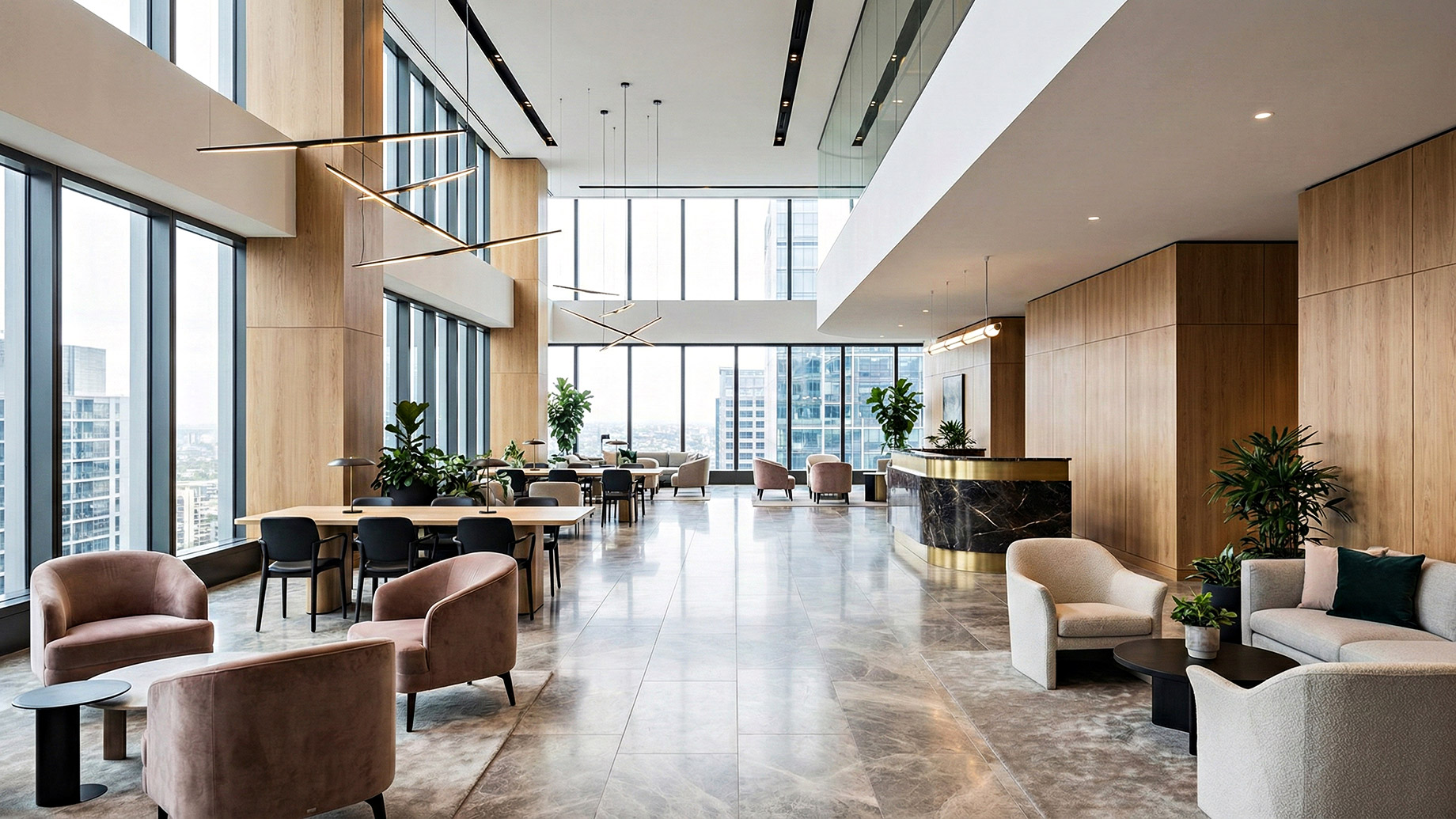
High-value commercial properties demand interior design that reflects quality, purpose, and long-term value. Every design decision influences how tenants, clients, and investors perceive the space. Layout, materials, lighting, and finishes must work together seamlessly.
Poor interior choices can undermine even prime locations. Thoughtful design improves functionality while reinforcing a polished, professional image. It also supports flexibility as commercial needs evolve over time. Well-designed interiors enhance usability without sacrificing visual appeal.
In this article, we’ll explore key interior design considerations that shape performance, perception, and value in premium commercial properties.
Space Planning and Layout Flow
Space planning defines how people move, work, and interact within high-value commercial interiors. A strong layout improves efficiency while supporting comfort and usability.
Research published on ResearchGate highlights the importance of workplace layout in daily performance. The study assessed key design elements, including layout, furniture, lighting, noise levels, temperature, and color schemes. Results showed that layout, furniture, and lighting were rated highly by 80% of employees. Noise levels received moderate ratings at 65%, while temperature scored 60%, signaling design gaps.
These findings show that layout directly shapes workplace experience. Clear circulation paths and well-zoned spaces improve flow. Effective space planning enhances satisfaction and long-term commercial value.
Material Selection and Finish Quality
Premium materials communicate durability, professionalism, and long-term value. Finishes must withstand heavy foot traffic without losing visual appeal. Poor material choices can quickly lead to wear, repairs, and higher maintenance costs. Consistency in textures and finishes creates a polished, cohesive look.
High-quality surfaces also improve occupant comfort and perception. Materials should balance aesthetics with performance requirements. Easy-to-maintain finishes support long-term usability.
Thoughtful material selection helps interiors age gracefully over time. Strong finish quality protects investment value and enhances the overall commercial experience.
Furniture Integration and Interior Fit-Out
Furniture must fit the interior layout, scale, and circulation of high-value commercial spaces. Poorly sized or misplaced furniture can disrupt flow and reduce usability. Careful planning ensures furniture aligns with spatial proportions and intended use. Early coordination of commercial furniture installation helps maintain design consistency and functionality.
FourSpoke notes that installation is one of the most complex phases of workplace projects. This stage demands efficiency, organization, and clear communication to avoid errors.
When furniture is integrated thoughtfully, interiors feel cohesive and purposeful. Proper fit-out supports comfort, productivity, and a polished commercial environment that reflects quality and professionalism.
Lighting Design and Visual Ambience
Well-planned lighting improves comfort, focus, and overall visual clarity in commercial interiors. A study published in ScienceDirect found that cooler and brighter lighting improves primary cognitive performance. The research also showed that visual fatigue and mental workload significantly affect creativity.
Poor lighting increases fatigue, lowering concentration as physiological responses and cognitive performance interact over time.
Layered lighting helps control brightness and reduce glare. Natural daylight enhances ambience and supports occupant well-being. Thoughtful lighting choices create balanced environments that support productivity while reinforcing a refined, high-value commercial atmosphere.
Acoustics and Environmental Comfort
Acoustics and environmental comfort directly influence how people feel and perform in commercial spaces. Poor sound control increases stress and disrupts concentration. A study published in Springer Nature found that prolonged noise exposure between 75 and 85 decibels raises stress levels and reduces cognitive performance. Repeated exposure at or below 85 dB is also linked to hearing loss and psychological strain.
Environmental comfort goes beyond sound. Temperature, airflow, and air quality affect focus and physical well-being. Inconsistent thermal conditions can cause fatigue and discomfort.
Balanced acoustics, proper ventilation, and stable temperatures create calmer, healthier interiors. Together, these factors support productivity and long-term occupant satisfaction in high-value commercial properties.
Cohesive Design Identity Across the Property
Unified materials, finishes, and visual language help commercial interiors feel intentional and well planned. Consistency across lobbies, corridors, and workspaces improves wayfinding and reduces visual clutter. Repeated design elements reinforce brand presence and create familiarity for occupants and visitors. This consistency also influences how tenants perceive quality and reliability.
Research from the Center for Real Estate shows that higher tenant satisfaction delivers measurable outcomes. A one-point increase in satisfaction is linked to 8.6% higher lease renewal willingness.
It also drives an 11.5% greater likelihood of property recommendations. The same research reports a 14.6% lower chance of tenant move-outs. Cohesive design supports engagement, retention, and long-term asset performance.
Frequently Asked Questions
How early should interior design planning begin in a commercial project?
Interior design planning should begin at the earliest project stages, ideally during concept development. Early planning ensures better coordination, fewer design conflicts, and more accurate budgeting. It also supports smoother execution as the project moves from shell space to completed commercial interiors.
Should interiors be designed for specific tenants or future flexibility?
Interiors should be designed for future flexibility rather than only specific tenants. Flexible layouts reduce renovation costs and shorten re-leasing timelines. They also allow spaces to adapt to changing tenant needs while maintaining long-term value and usability.
What interior mistakes are most costly to fix later?
The most costly interior mistakes include poor space planning, inadequate electrical and lighting layouts, weak acoustic design, and inflexible built-ins. These issues often require structural changes later, leading to higher renovation costs, longer downtime, and disruption for tenants.
Turning Design Decisions Into Lasting Value
Interior design plays a critical role in how high-value commercial properties perform over time. From space planning and materials to lighting, acoustics, and furniture integration, each decision affects usability and perception. Thoughtful design supports productivity, tenant satisfaction, and flexibility as needs evolve.
Consistent interiors also strengthen identity and reduce turnover risks. When design choices are made strategically, properties remain attractive, functional, and competitive. Investing in well-planned interiors helps protect asset value while supporting long-term leasing success and occupant experience.
