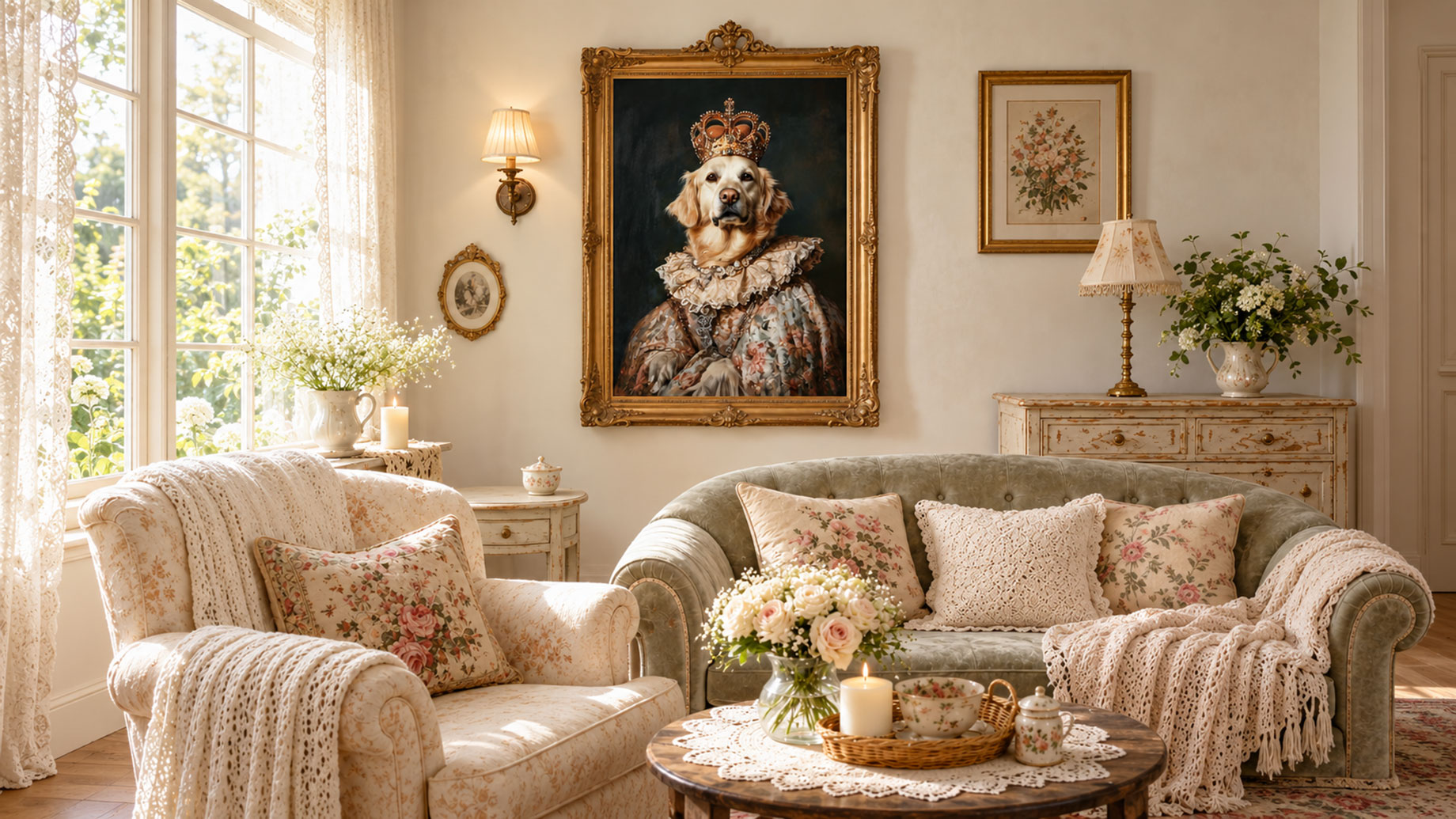
A dog in a formal coat or a cat dressed as an aristocrat brings a particular kind of humor to a living room. From the doorway, the picture might read as a traditional portrait. Step closer, and the subject becomes clear.
That small surprise works especially well in a room with considered furnishings. It introduces something personal among the upholstery, lamps, and objects chosen for their appearance. The challenge is giving the portrait a place where its character feels welcome.
Before ordering a large canvas or choosing an elaborate frame, look at the room you already have. The wall, nearby furniture, and changing daylight will help determine what works.
Choose the Wall Before You Choose the Portrait
An empty wall is an invitation, but it isn’t always the right location. Begin with somewhere you naturally look: the wall beside a favorite chair, the space above a console, or a section of shelving visible from the sofa.
Consider how the portrait will be seen. A smaller piece beside an armchair invites a closer look. Above a sofa, the same size might appear disconnected from the furniture beneath it. A fireplace can provide a strong setting, although the height, heat exposure, and manufacturer’s guidance for the artwork deserve attention.
Take a photograph of the wall from the room’s main entrance. This reveals relationships that are easy to miss when standing directly in front of it. Check whether a door frame, tall lamp, or curtain already occupies much of the available space.
You may find that the quieter wall is the better choice.
Match the Portrait’s Mood to the Room
Start with the atmosphere rather than trying to match every color.
A solemn expression against a dark background can suit a room with walnut furniture, leather, or richly colored upholstery. A lighter composition may sit more comfortably alongside pale wood and linen. In either case, the pet’s face should remain clear enough to hold your attention.
When comparing custom pet portraits, look at the full composition as well as the costume. Notice how much of the image is occupied by the face, whether the background is busy, and how strongly the clothing contrasts with the animal’s coat.
Choose a source photograph that shows the features you recognize: the shape of the ears, a distinctive marking, or a familiar tilt of the head. An elegant composition is more satisfying when the subject still feels unmistakably like the animal living in your home.
Let the Royal Details Bring the Character
The appeal of royal pet portraits often comes from the relationship between a familiar face and unexpectedly formal clothing. A dog who spends most afternoons upside down on the rug acquires a rather different presence in an aristocratic outfit.
Give those details some visual space. If the portrait includes patterned fabric, ornate trim, or a richly colored coat, nearby accessories can be relatively quiet. A plain lampshade or a simple ceramic vessel will usually provide enough company.
You can draw one color from the artwork into the room—a muted red in a cushion, for example—without repeating the entire palette. Too many coordinated accessories can make a personal picture feel like part of a decorating package.
In a contemporary interior, resist the urge to add antique-style objects solely to explain the portrait. Its traditional appearance can provide an interesting point of contrast with clean-lined furniture.
Use the Frame to Connect Old and New
A frame gives the portrait a relationship with the rest of the room.
Dark wood can connect with a cabinet or coffee table. A narrow metal frame may echo the finish of a lamp. An ornamented frame can emphasize the formal portrait style, particularly where the furniture around it is restrained.
Consider the artwork and frame together. Elaborate clothing, a detailed background, and a heavily decorated frame can create more visual activity than a small wall can comfortably accommodate.
If possible, view frame samples beside the room’s existing materials in daylight. An antique gold finish may appear warmer or duller than expected; black can feel quite sharp against pale walls.
For a group of pictures, some consistency helps. Similar frame finishes or spacing can connect a pet portrait with family photographs and other artwork without requiring everything to match.
Get the Scale and Hanging Position Right
Before purchasing, mark the proposed outer dimensions on the wall with paper or removable tape suitable for the surface. Include the frame in those measurements.
Leave the outline in place for a day. Look at it from the sofa, walk past it, and check the view through adjoining doorways. This simple exercise can reveal that a portrait needs to be larger—or that the wall would benefit from more breathing room.
Above furniture, judge the gap between the frame and the piece below it. If that gap feels excessive, the picture can appear to drift away from the arrangement.
Hanging height also depends on how the room is used. A portrait beside a reading chair should be comfortable to enjoy while seated. Use appropriate fixings for the wall and the finished weight of the artwork.
Keep the Surrounding Arrangement Simple
Once the portrait is in place, arrange nearby objects gradually. A lamp and one low object on a console may be sufficient. Leave enough clear surface for the furniture to remain useful.
Check the artwork in the evening as well as during daylight. A window reflection or exposed bulb can obscure the face from your usual seat. Adjust nearby lighting before adding a dedicated picture light.
Then live with the arrangement for a few days. You might move a vase, lower the frame slightly, or decide the shelf beneath it needs nothing else.
The portrait already has a story: this particular animal, dressed with improbable dignity. Give it a comfortable place in the room, and visitors will discover the joke for themselves.
