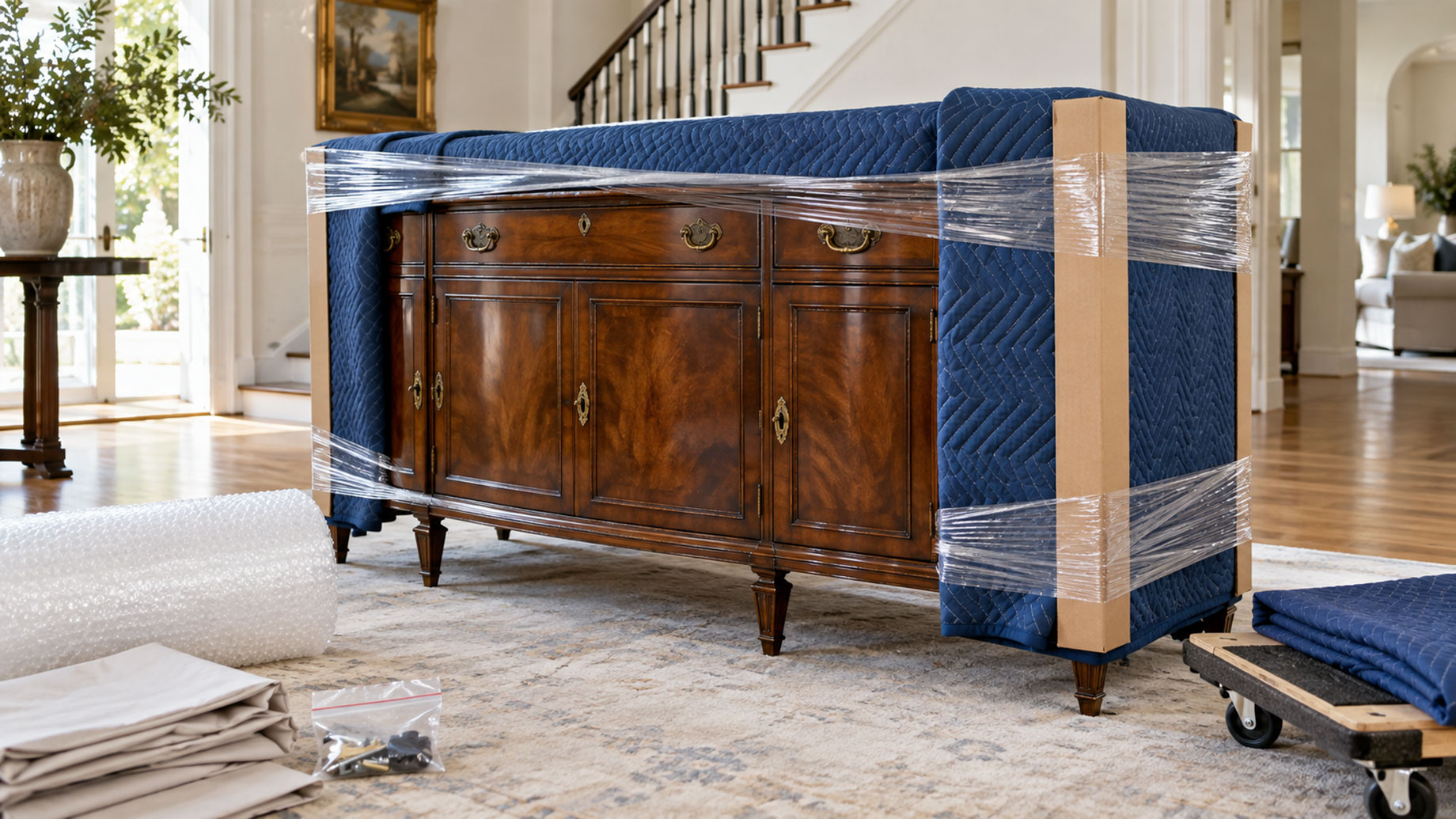
Moving high-value items requires careful planning, proper packing materials, and delicate handling. Fine furniture often has sentimental value alongside significant financial worth, making standard packing methods risky. Protecting these items starts long before loading day arrives.
Gather Professional Packing Materials
Using the right supplies makes a major difference in outcome. Standard moving boxes and old blankets often lack the padding needed for delicate finishes.
Investing in heavy-duty moving blankets, corrugated cardboard sheets, and bubble wrap gives your pieces proper defense. According to an industry packaging report, using corrugated cardboard creates a protective layer around the entire surface to shield against sharp impacts.
Make sure you purchase plenty of high-grade packing tape to fasten the outer padding. Never apply tape directly onto polished furniture wood.
- Heavy-duty quilted moving blankets
- Corrugated cardboard sheets for edge protection
- Acid-free tissue paper for delicate finishes
- Stretch wrap to hold blankets securely in place
Disassemble What You Can
Large dining tables, bed frames, and display cabinets are easier to move when broken down into smaller components. Removing legs, glass shelves, and detachable doors lightens the load and reduces lever force on joint connections.
Keep all screws, bolts, and small brackets in labeled bags. When a relocation involves narrow roads, restricted access, or longer routes across Cornwall, arranging removals for moves starting or finishing in Cornwall with experienced handlers can make transporting bulky furniture much easier. Having a clear path reduces the chances of dropping or dragging heavy items.
Label each bag with a dark marker so reassembly remains simple at your new home. Keep these small hardware bags stored safely inside a dedicated tools box.
Protect Corners and Edges
Corners take the brunt of impacts when navigating tight hallways and doorframes. Adding extra padding to vulnerable edges prevents chips and gouges.
Cardboard corner protectors fit over corners before blankets are applied. Securing these pads prevents unexpected bumps from ruining sharp lines.
Pay extra attention to carved wooden trim along cabinet bases. These decorative details snap easily if bumped against door frames.
Wrap in the Correct Order
Layering materials correctly keeps surfaces safe from friction and pressure marks. A recent industry guide noted that improper packing during fine furniture moving costs 10x the moving fee. Avoiding shortcuts keeps your restoration bills at zero.
Start with a soft cloth or paper layer directly against the wood. Add moving blankets next, then finish with stretch wrap to secure the padding.
Never apply plastic wrap directly to polished wood surfaces – it can trap heat and ruin finishes over time. Proper breathable inner layers preserve delicate varnishes.
Secure Moving Parts and Drawers
Unsecured drawers and swinging cabinet doors cause major balance issues while lifting. They can also fly open and damage surrounding walls.
Remove keys from lockable doors before moving. Using stretch wrap over padded blankets holds doors and drawers shut without leaving sticky tape residue on the wood.
Test each piece to confirm everything remains shut tightly. Loose parts shifting mid-lift can unbalance movers on steep stairs.
Handle Glass Panels Safely
Glass cabinet doors and tabletop covers demand special care to avoid shattering. Cracks can ruin both the glass and the wooden frame beneath it.
Place a large X using tape across glass panes to absorb shockwaves. Wrap the entire glass piece in thick bubble wrap before placing it inside a dedicated frame box or wooden crate.
Label every wrapped glass piece clearly as fragile. Make sure the moving crew loads these panels upright rather than flat.
Plan the Navigation Route
Navigating narrow doorways and tight staircases requires a clear plan. Measuring doorways, hallways, and furniture dimensions in advance prevents awkward jams.
Remove door hinges or wall art if extra clearance is needed. Measure twice to confirm your largest cabinets can clear tight corner angles.
Clear all floor paths of stray boxes, rug edges, or electrical cords. A smooth walkway reduces tripping hazards when carrying heavy furniture pieces.
Utilize Proper Lifting Techniques and Equipment
Lifting heavy wooden pieces using improper form risks personal injury and furniture damage. Never lift a cabinet by its top ledge or decorative trim.
Use furniture straps to distribute weight across your legs and shoulders. Glides or sliders placed under heavy legs allow items to move across floors without gouging hardwood or tearing carpets.
Always lift with two people to keep heavy furniture stable. Communication between movers stops sudden drops or balance loss.
- Heavy-duty furniture dollies
- Shoulder lifting straps
- Floor sliders for hard surfaces
- Ramp extensions for steps
Secure Items Inside the Vehicle
Once loaded onto the truck, items must remain stationary during transit. Sudden stops or sharp turns can shift unsecured cargo easily.
Position heavy wooden pieces against the interior truck walls. Use ratchet straps to tie items down securely to floor and wall anchors, ensuring nothing leans against glass or delicate carvings.
Fill empty gaps between items using extra moving pads or soft boxes. Tight packing prevents items from sliding or tipping over during transit.
Clean Furniture Before Packing
Dust, dirt, and small debris can scratch fine furniture during transport if left on the surface. Cleaning each piece before wrapping removes abrasive particles and allows protective materials to sit flush against the finish.
Use a soft microfiber cloth and furniture cleaner designed for the specific material. Avoid harsh chemicals that may strip wax, polish, or protective coatings. Let every surface dry completely before applying wrapping materials.
Taking photos of your furniture after cleaning also provides a clear record of its condition before the move. These images can be useful for insurance purposes if any damage occurs during transit.
Consider Climate and Weather Conditions
Changes in temperature and humidity can affect natural wood, leather, and upholstered furniture during a move. Excess moisture may cause wood to swell or warp, while extreme heat can weaken adhesives and damage delicate finishes.
If you’re moving during wet weather, protect furniture with waterproof outer coverings while ensuring breathable materials remain against the surface. Avoid leaving valuable pieces sitting in direct sunlight or inside a hot moving truck for extended periods.
Once you arrive, allow furniture to adjust gradually to the indoor environment before placing it near heaters, fireplaces, or air conditioning vents. This helps reduce stress on natural materials.
Inspect Furniture After Delivery
Once the furniture has been unloaded, inspect every piece before removing all of the protective wrapping. Early inspection makes it easier to identify any issues that may have occurred during transport.
Check corners, legs, joints, and decorative trim for scratches, dents, or loose fittings. Reassemble any disassembled components carefully, following the labels you created during packing.
After inspection, clean away any dust from the move and apply an appropriate wood polish or conditioner if needed. Regular maintenance helps preserve the furniture’s appearance and keeps it in excellent condition for years to come.
Taking a slow, methodical approach to packing ensures your valuable furniture arrives at your new space in perfect condition. Proper prep work protects your investment for decades to come.